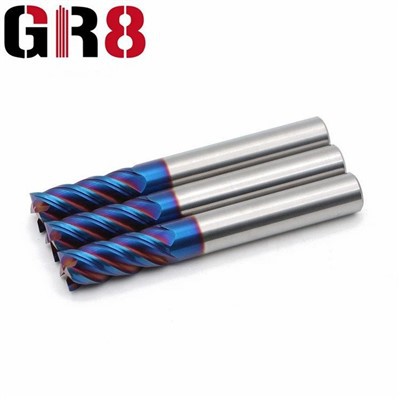
When it comes to square end mills, one of the most frequently asked questions is, "How many flutes should a square end mill have?" As a trusted square end mill supplier, I've encountered this query countless times from customers spanning various industries. In this blog post, I'll delve into the factors that influence the choice of flute count in square end mills and provide insights to help you make an informed decision for your machining needs.
Understanding Flutes in Square End Mills
Before we discuss the optimal flute count, let's first understand what flutes are and their role in the machining process. Flutes are the helical grooves cut into the body of a square end mill. These grooves serve several crucial functions. Firstly, they facilitate the removal of chips generated during the cutting process. As the end mill rotates and cuts into the workpiece, the chips are carried up the flutes and away from the cutting edge, preventing them from clogging the cutting area and causing damage to the tool or the workpiece. Secondly, flutes also play a role in coolant delivery. Coolant can flow through the flutes to the cutting edge, helping to reduce heat and friction, which in turn extends the tool life and improves the surface finish of the machined part.
Factors Influencing Flute Count Selection
The choice of flute count in a square end mill depends on several factors, including the material being machined, the type of operation, the desired surface finish, and the machine's power and rigidity. Let's take a closer look at each of these factors:
Material Being Machined
Different materials have different properties, such as hardness, toughness, and chip formation characteristics, which can influence the optimal flute count. For example, when machining soft materials like aluminum or plastics, a square end mill with fewer flutes (e.g., 2 or 3 flutes) is often preferred. Fewer flutes provide larger chip spaces, allowing the chips to be easily evacuated from the cutting area. This helps prevent chip packing, which can lead to poor surface finish, tool wear, and even tool breakage. On the other hand, when machining harder materials like steel or titanium, a square end mill with more flutes (e.g., 4 or 5 flutes) may be more suitable. More flutes provide more cutting edges, which can increase the feed rate and material removal rate, resulting in faster machining times. However, it's important to note that more flutes also mean smaller chip spaces, so proper chip evacuation must be ensured to avoid chip clogging.
Type of Operation
The type of machining operation also plays a significant role in determining the flute count. For roughing operations, where the goal is to remove a large amount of material quickly, a square end mill with fewer flutes is typically used. The larger chip spaces allow for efficient chip removal, while the fewer cutting edges reduce the cutting forces, which is beneficial for the machine's power and the tool's durability. For finishing operations, where a high-quality surface finish is required, a square end mill with more flutes is often preferred. The additional cutting edges provide a smoother cutting action, resulting in a better surface finish. However, the feed rate may need to be adjusted accordingly to avoid overloading the tool.
Desired Surface Finish
The desired surface finish of the machined part is another important consideration. In general, a square end mill with more flutes will produce a better surface finish than one with fewer flutes. This is because the additional cutting edges provide a more continuous cutting action, reducing the scallop height between adjacent passes. However, achieving a high-quality surface finish also depends on other factors, such as the cutting speed, feed rate, and the sharpness of the tool. Therefore, it's important to optimize these parameters in conjunction with the flute count to achieve the desired surface finish.
Machine's Power and Rigidity
The power and rigidity of the machine used for machining also affect the choice of flute count. A machine with high power and rigidity can handle a square end mill with more flutes and higher feed rates, allowing for faster material removal. On the other hand, a machine with limited power and rigidity may require a square end mill with fewer flutes to avoid overloading the machine and causing vibration or chatter. Therefore, it's important to consider the capabilities of the machine when selecting the flute count.
Common Flute Counts and Their Applications
Now that we've discussed the factors influencing flute count selection, let's take a look at some common flute counts and their typical applications:
2 Flutes
A 2 Flutes Flat End Mill is ideal for roughing operations on soft materials, such as aluminum, brass, and plastics. The large chip spaces allow for efficient chip evacuation, even when removing a large amount of material quickly. 2-flute end mills are also commonly used for slotting and profiling operations, where the ability to remove chips effectively is crucial.


3 Flutes
3-flute square end mills offer a good balance between chip evacuation and cutting performance. They are suitable for a wide range of materials, including aluminum, steel, and cast iron. 3-flute end mills can be used for both roughing and finishing operations, providing a relatively high material removal rate while still maintaining a good surface finish.
4 Flutes
55HRC 4 Flutes Flat End Mill are widely used for finishing operations on a variety of materials, including steel, stainless steel, and titanium. The additional cutting edge provides a smoother cutting action, resulting in a better surface finish. 4-flute end mills are also suitable for high-speed machining applications, where the increased feed rate and material removal rate can significantly reduce machining times.
5 Flutes or More
Square end mills with 5 or more flutes are typically used for high-precision machining operations on hard materials, such as hardened steel and exotic alloys. The additional cutting edges allow for higher feed rates and material removal rates, while the smaller chip spaces help maintain a stable cutting process. However, due to the smaller chip spaces, proper chip evacuation is essential when using high-flute-count end mills.
Specialized Applications and Tooling
In addition to the standard flute counts mentioned above, there are also specialized square end mills available for specific applications. For example, Door Frame Bit Set are designed for machining door frames and other woodworking applications. These end mills typically have a specific flute geometry and coating to optimize performance in wood materials.
Conclusion
In conclusion, the choice of flute count in a square end mill depends on a variety of factors, including the material being machined, the type of operation, the desired surface finish, and the machine's power and rigidity. By understanding these factors and selecting the appropriate flute count, you can optimize your machining process, improve the surface finish of your parts, and extend the tool life. As a square end mill supplier, I'm committed to providing high-quality tools and expert advice to help you achieve the best results in your machining operations. If you have any questions or need assistance in selecting the right square end mill for your application, please don't hesitate to contact me. I'm here to help you make the most informed decision and ensure the success of your machining projects.
References
- "Machining Fundamentals," Industrial Press Inc.
- "Cutting Tool Engineering Handbook," Kennametal Inc.
- "Modern Machining Technology," Society of Manufacturing Engineers.