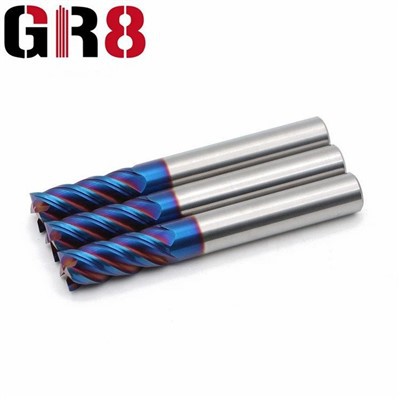
Hey there! As a supplier of Ball Nose End Mills, I often get asked about the cutting diameter of these cool tools. So, let's dig into what the cutting diameter of a ball nose end mill really means.
First off, what's a ball nose end mill? Well, it's a type of milling cutter. Unlike regular end mills, a ball nose end mill has a rounded tip that looks like a ball. This shape makes it super useful for creating 3D contours, rounding edges, and doing detailed work on curved surfaces.
The cutting diameter of a ball nose end mill is a pretty big deal. It's basically the measurement across the widest part of the cutter that's actually doing the cutting. In simpler terms, it's how wide a path the end mill can carve out as it moves through the material.

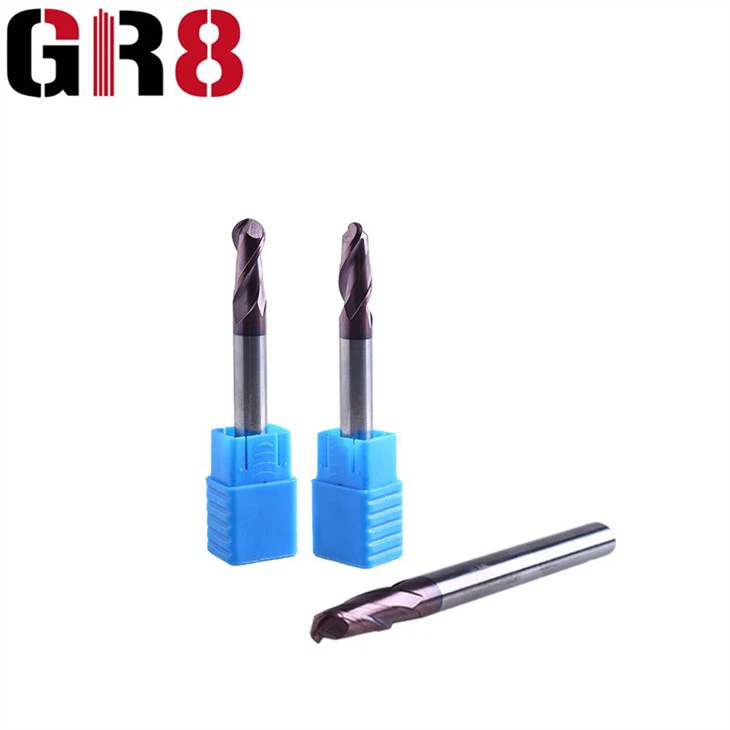
Why does the cutting diameter matter? Well, it has a huge impact on the whole machining process. If you're working on a project that needs fine details, you'll probably want a smaller cutting diameter. A smaller diameter allows for more precise cuts and better control. You can get into those tight spots and create intricate shapes without accidentally cutting into areas you don't want to.
For example, if you're making a custom jewelry piece with elaborate curves and small features, a ball nose end mill with a small cutting diameter like 1mm or 2mm would be your best bet. It lets you add those delicate details that make your piece stand out.
On the other hand, if you're looking to remove a large amount of material quickly, a larger cutting diameter is the way to go. A bigger cutter can cover more area in one pass, which means faster machining times. This is great for roughing out a shape before you do the finishing work.
Say you're making a large aluminum part for a machine. You need to quickly remove a lot of excess material to get close to the final shape. Using a ball nose end mill with a large cutting diameter, like 10mm or 12mm, will save you a ton of time compared to using a smaller one.
Now, at our place, we offer a wide range of ball nose end mills with different cutting diameters to meet all sorts of needs. We've got 4 Flutes Ball Nose End Mill that are great for general-purpose machining. With four flutes, these end mills can handle both roughing and finishing operations. They come in a variety of cutting diameters, so you can find the one that's perfect for your project.
We also have some sweet 2 Flutes Ball Nose End Mill options. These are especially good for materials that are a bit more difficult to cut or when you need more chip evacuation. The two-flute design allows chips to escape more easily, reducing the chances of clogging and improving the overall machining process. And just like our 4-flute end mills, you can pick from different cutting diameters. Another option of 2 Flutes Ball Nose End Mill is also available in our store which has unique features for specific types of jobs.
But how do you choose the right cutting diameter? It all depends on your project. Think about the size of the area you're working on, the level of detail required, and the type of material you're using. Different materials have different properties, and some may require a certain cutting diameter to get the best results.
For soft materials like wood or plastic, you can be a bit more flexible with the cutting diameter. You can use a larger diameter to speed up the process without worrying too much about damaging the material. But for harder materials like steel or titanium, you need to be more careful. A smaller cutting diameter might be necessary to ensure a clean cut and prevent the cutter from wearing out too quickly.
It's also important to consider the machine you're using. Some machines have limitations on the size of the tools they can handle. Make sure the cutting diameter of the ball nose end mill you choose is compatible with your machine's capabilities.
When it comes to actually using a ball nose end mill, the cutting diameter affects the feed rate and the spindle speed. A larger cutting diameter usually means you can increase the feed rate to get more done in less time. But you also need to adjust the spindle speed accordingly to maintain a good cutting performance.
In summary, the cutting diameter of a ball nose end mill is a crucial factor in the machining process. It determines how much material you can remove at once, the level of precision you can achieve, and how well the end mill performs with different materials.
If you're in the market for high-quality ball nose end mills and not sure which cutting diameter is right for your project, don't hesitate to reach out. We're here to help you choose the perfect tool and make your machining process as smooth as possible. Whether you're a hobbyist working on a small project or a professional in a large manufacturing facility, we've got the right ball nose end mill for you. Drop us a line if you have any questions, and let's start talking about how we can help you get the job done.
References
- Machining Handbook: Ball Nose End Mills
- Industry Research on Milling Tools and Cutting Parameters