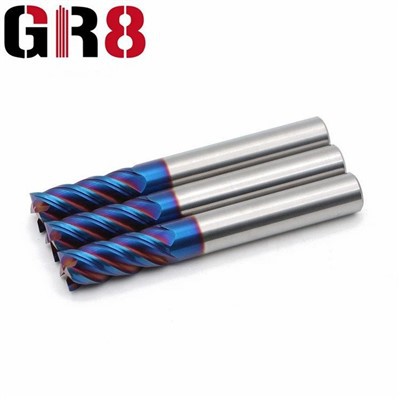
Can a long neck end mill be sharpened? This is a question that many machinists and manufacturers often ask. As a long neck end mill supplier, I've encountered this query numerous times, and I'm here to provide you with a comprehensive answer.
Long neck end mills are essential cutting tools in the machining industry. They are designed with an extended neck, which allows them to reach into deep cavities and perform operations that standard end mills cannot. These tools are used in a wide range of applications, from aerospace and automotive manufacturing to mold making and general machining.
The Sharpening Process
The first thing to understand is that yes, a long neck end mill can be sharpened. However, the process is not as straightforward as sharpening a regular end mill. The extended neck adds an extra level of complexity to the sharpening process, as it requires specialized equipment and techniques to ensure that the cutting edges are restored accurately.
When a long neck end mill becomes dull, it loses its ability to cut efficiently. The cutting edges wear down, resulting in poor surface finish, increased cutting forces, and reduced tool life. Sharpening the end mill restores the cutting edges, allowing it to perform at its optimal level again.
There are two main methods for sharpening long neck end mills: manual sharpening and machine sharpening.
Manual Sharpening
Manual sharpening is a traditional method that involves using a grinding wheel and hand tools to reshape the cutting edges. This method requires a high level of skill and experience, as it is easy to make mistakes that can damage the end mill. Manual sharpening is typically used for small-scale operations or for sharpening end mills with complex geometries.
To manually sharpen a long neck end mill, the machinist must first secure the end mill in a fixture. The fixture holds the end mill in place and allows the machinist to control the angle and pressure of the grinding wheel. The machinist then uses the grinding wheel to remove the dull material from the cutting edges, gradually reshaping them to their original form.
One of the challenges of manual sharpening is maintaining the correct angle and radius of the cutting edges. The long neck of the end mill can make it difficult to access the cutting edges, especially in deep cavities. Additionally, the extended neck can cause the end mill to vibrate during the sharpening process, which can lead to uneven grinding and poor cutting performance.
Machine Sharpening
Machine sharpening is a more automated method that uses computer-controlled grinding machines to sharpen the end mill. This method is more precise and consistent than manual sharpening, as it eliminates the human error associated with hand grinding. Machine sharpening is typically used for large-scale operations or for sharpening end mills with high precision requirements.
To machine sharpen a long neck end mill, the end mill is first loaded into a grinding machine. The machine uses a series of sensors and algorithms to measure the geometry of the end mill and determine the optimal sharpening parameters. The machine then uses a grinding wheel to remove the dull material from the cutting edges, following the pre-programmed sharpening path.
One of the advantages of machine sharpening is that it can be customized to meet the specific requirements of the end mill. The grinding machine can be programmed to sharpen the end mill at different angles and radii, depending on the application. Additionally, machine sharpening can be performed more quickly and efficiently than manual sharpening, reducing downtime and increasing productivity.
Factors to Consider
When deciding whether to sharpen a long neck end mill, there are several factors to consider. These factors include the condition of the end mill, the cost of sharpening, and the availability of sharpening services.
Condition of the End Mill
The first factor to consider is the condition of the end mill. If the end mill is severely damaged or worn beyond repair, it may not be worth sharpening. In some cases, it may be more cost-effective to replace the end mill with a new one.
To determine the condition of the end mill, the machinist should inspect the cutting edges for signs of wear, such as chipping, cracking, or excessive dullness. The machinist should also check the overall geometry of the end mill, including the neck length, diameter, and helix angle. If the end mill has significant damage or wear, it may require more extensive repairs or replacement.
Cost of Sharpening
The second factor to consider is the cost of sharpening. Sharpening a long neck end mill can be expensive, especially if it requires specialized equipment or techniques. The cost of sharpening will depend on several factors, including the size and complexity of the end mill, the type of sharpening method used, and the location of the sharpening service.
In some cases, the cost of sharpening may be higher than the cost of replacing the end mill with a new one. However, if the end mill is a high-quality tool or if it is difficult to obtain, sharpening may be a more cost-effective option.
Availability of Sharpening Services
The third factor to consider is the availability of sharpening services. Not all sharpening services are equipped to handle long neck end mills. The machinist should look for a sharpening service that has experience working with long neck end mills and that uses high-quality equipment and techniques.
The machinist should also consider the turnaround time for the sharpening service. If the end mill is needed urgently, the machinist may need to find a sharpening service that can provide a quick turnaround time.
Benefits of Sharpening
Despite the challenges and costs associated with sharpening long neck end mills, there are several benefits to doing so. These benefits include:
Cost Savings
Sharpening a long neck end mill can be more cost-effective than replacing it with a new one. By extending the life of the end mill, the machinist can reduce the overall cost of tooling. Additionally, sharpening can help to improve the performance of the end mill, reducing the need for frequent tool changes and increasing productivity.
Improved Performance
Sharpening the cutting edges of a long neck end mill can improve its cutting performance. A sharp end mill can cut more efficiently, resulting in better surface finish, reduced cutting forces, and increased tool life. Additionally, a sharp end mill can produce more accurate parts, reducing the need for secondary operations.
Environmental Sustainability
Sharpening a long neck end mill is a more environmentally sustainable option than replacing it with a new one. By reusing the end mill, the machinist can reduce the amount of waste generated by the machining process. Additionally, sharpening can help to conserve natural resources by reducing the demand for new tooling.
Conclusion
In conclusion, a long neck end mill can be sharpened, but the process requires specialized equipment and techniques. The decision to sharpen a long neck end mill should be based on several factors, including the condition of the end mill, the cost of sharpening, and the availability of sharpening services. Despite the challenges and costs associated with sharpening, there are several benefits to doing so, including cost savings, improved performance, and environmental sustainability.
If you are in the market for high-quality long neck end mills, or if you have any questions about sharpening long neck end mills, please feel free to contact us. We are a leading supplier of 2 Flutes Ball Nose Long Neck End Mill and other cutting tools, and we are committed to providing our customers with the best products and services.


References
- Smith, J. (2020). Machining Handbook. New York: McGraw-Hill.
- Jones, R. (2019). Cutting Tool Technology. London: Elsevier.
- Brown, S. (2018). End Mill Sharpening Techniques. Chicago: Industrial Press.