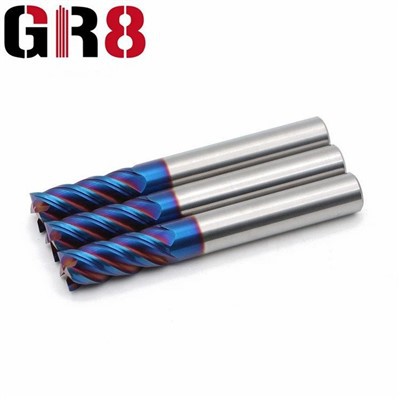
Hey there! As a supplier of Spiral Flute Bits, I get asked a lot whether these bits can be used for both roughing and finishing. Well, let's dive right into it and find out.


First off, let's understand what roughing and finishing mean in the context of machining. Roughing is the initial stage where you're removing a large amount of material quickly. You're not too concerned about the surface finish at this point; the main goal is to shape the workpiece close to the desired dimensions. On the other hand, finishing is all about getting that smooth, precise surface. You're taking off just a small amount of material to achieve the final look and accuracy.
So, can spiral flute bits do both jobs? The short answer is yes, but it depends on a few factors.
One of the key factors is the number of flutes. For instance, 2 Flutes Flat Bits are a popular choice. These bits typically have a relatively large chip load capacity. During roughing, the two flutes can efficiently remove a significant amount of material. The large chips are easily evacuated through the flutes, preventing clogging and allowing for high - speed material removal. When it comes to finishing, the flat tip can create a relatively smooth surface, especially when used with the right cutting parameters. However, compared to bits with more flutes, the surface finish might not be as ultra - smooth.
2 Flutes Ball Nose Bits are also versatile. In roughing operations, they can be used to quickly shape curved surfaces. The ball - nose design allows for a more forgiving cut when dealing with irregular shapes. The two flutes still offer good chip evacuation. For finishing, the ball - nose bit can create smooth, rounded edges and contours. It's great for creating 3D shapes and getting that polished look on the workpiece.
Now, let's talk about One Spiral Flute Bits. These bits are often used for roughing. The single flute provides a large chip space, which is ideal for removing large amounts of material. The spiral design helps in pulling the chips out of the cut. This type of bit can handle high feed rates and deep cuts, making it a workhorse for roughing operations. However, for finishing, the single - flute design might leave more visible tool marks on the surface. But if you're working on a project where a slightly rougher finish is acceptable or if you're going to apply additional finishing processes later, one - spiral flute bits can still be used in a finishing - adjacent step.
Another important aspect is the material of the workpiece. Different materials react differently to spiral flute bits during roughing and finishing. For example, when working with soft materials like wood or plastics, spiral flute bits can generally perform both roughing and finishing quite well. The cutting forces are relatively low, and the chips are easy to manage. You can use a single bit to quickly shape the material and then give it a smooth finish.
However, when dealing with harder materials such as metals, it gets a bit more complicated. For roughing in metal, you need to consider the bit's ability to withstand high cutting forces and heat. Carbide spiral flute bits are often a good choice. They can handle the high - stress environment of metal roughing. But for finishing, you might need to adjust the cutting speed, feed rate, and depth of cut more precisely. You may also want to use a bit with a finer edge or more flutes to achieve a mirror - like finish.
The cutting parameters also play a crucial role. When using spiral flute bits for roughing, you'll typically use higher feed rates and greater depths of cut. This allows you to remove material quickly. But you need to be careful not to overload the bit. If the feed rate is too high or the depth of cut is too large, the bit can break or wear out prematurely.
During finishing, lower feed rates and shallower depths of cut are the norm. This gives the bit more time to create a smooth surface. You also want to use a higher spindle speed to ensure a clean cut. Adjusting these parameters correctly can make the difference between a mediocre finish and a professional - grade one.
In addition to the technical aspects, cost is also a consideration. Using the same bit for both roughing and finishing can be cost - effective. You don't have to invest in multiple types of bits. However, if you're aiming for the absolute best finish in a high - precision project, it might be worth using a dedicated finishing bit.
So, in conclusion, spiral flute bits can be used for both roughing and finishing in many cases. Their versatility makes them a popular choice among machinists and DIY enthusiasts alike. Whether you're working on a small woodworking project or a large - scale metal machining job, there's a spiral flute bit that can fit the bill.
If you're in the market for Spiral Flute Bits and want to discuss your specific roughing and finishing needs, don't hesitate to reach out. We have a wide range of high - quality spiral flute bits that can meet your requirements. Let's have a chat and find the perfect solution for your project.
References
- Machinery's Handbook, 31st Edition
- Cutting Tool Engineering Magazine
- Various industry - specific research papers on machining operations.