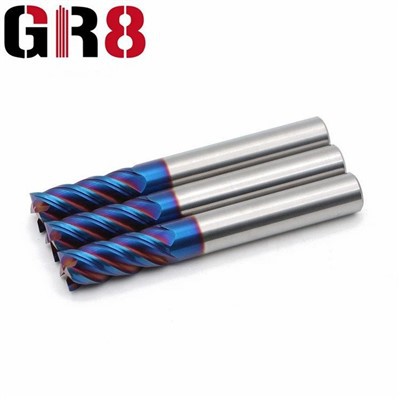
In the world of machining and woodworking, the choice of cutting tools is crucial for achieving high - quality results. Two commonly used types of bits are one spiral flute bits and straight flute bits. As a supplier of One Spiral Flute Bits, I have witnessed firsthand the unique characteristics and performance of these tools. In this blog, I will compare one spiral flute bits to straight flute bits, exploring their differences in design, functionality, and applications.
Design Differences
One of the most obvious differences between one spiral flute bits and straight flute bits lies in their flute design. Straight flute bits have flutes that run parallel to the axis of the bit. This simple design is easy to manufacture and has been a staple in machining for a long time. The straight flutes allow for straightforward chip removal in a linear direction, which is suitable for some basic cutting operations.
On the other hand, one spiral flute bits feature a single spiral - shaped flute that wraps around the body of the bit. The spiral design is engineered to provide several advantages. Firstly, the spiral shape helps to direct chips away from the cutting edge more efficiently. As the bit rotates, the chips are carried up the spiral flute and out of the cutting area, reducing the chances of chip recutting and clogging. Secondly, the spiral flute creates a helical cutting action, which can result in a smoother cut compared to straight flute bits.


Cutting Performance
When it comes to cutting performance, the two types of bits have distinct characteristics. Straight flute bits are known for their ability to make clean, precise cuts in materials such as wood, plastics, and some metals. They are often used for tasks that require a high degree of dimensional accuracy, such as slotting and grooving. The straight flutes provide a stable cutting edge, which helps to minimize deflection and ensure a consistent cut width.
However, straight flute bits can be prone to chip clogging, especially when working with materials that produce long or stringy chips. This can lead to increased heat generation, which may damage the bit and affect the quality of the cut. In addition, the linear cutting action of straight flute bits can sometimes result in a rougher surface finish compared to spiral flute bits.
One spiral flute bits, on the other hand, excel in chip evacuation. The spiral design allows chips to be quickly and efficiently removed from the cutting area, even when working with materials that are difficult to chip. This reduces the heat buildup at the cutting edge, extending the tool life and improving the overall cutting performance. The helical cutting action of one spiral flute bits also tends to produce a smoother surface finish, which is desirable in many applications.
Material Compatibility
Both one spiral flute bits and straight flute bits can be used with a variety of materials, but their performance may vary depending on the material properties. Straight flute bits are well - suited for softer materials such as wood and some plastics. They can make clean cuts in these materials without too much difficulty. However, when working with harder materials like metals, straight flute bits may require more frequent sharpening due to the increased wear on the cutting edge.
One spiral flute bits are more versatile in terms of material compatibility. They can be used effectively with a wide range of materials, including wood, plastics, composites, and even some metals. The efficient chip evacuation of one spiral flute bits makes them particularly suitable for materials that are prone to chip clogging, such as fiberglass and carbon fiber composites.
Applications
The choice between one spiral flute bits and straight flute bits often depends on the specific application. Straight flute bits are commonly used in applications where precise, linear cuts are required. For example, they are frequently used in woodworking for making dados, rabbets, and tenons. In metalworking, straight flute bits are used for drilling holes and creating internal grooves.
One spiral flute bits, on the other hand, are more suitable for applications that require efficient chip removal and a smooth surface finish. They are widely used in industries such as aerospace, automotive, and electronics, where high - quality machining is essential. In woodworking, one spiral flute bits can be used for contouring, profiling, and edge trimming. They are also popular for cutting materials like MDF and plywood, where chip clogging can be a problem.
Tool Life
Tool life is an important consideration when choosing between one spiral flute bits and straight flute bits. The efficient chip evacuation of one spiral flute bits helps to reduce the wear on the cutting edge, which can extend the tool life. In addition, the lower heat generation during cutting also contributes to a longer tool life.
Straight flute bits, however, may have a shorter tool life, especially when working with materials that are prone to chip clogging. The buildup of chips can cause the cutting edge to wear more quickly, and the increased heat can lead to tool deformation and breakage. Regular sharpening and maintenance are required to keep straight flute bits in good working condition.
Cost
In general, the cost of one spiral flute bits and straight flute bits can vary depending on factors such as the size, material, and brand. Straight flute bits are often less expensive to manufacture, which is reflected in their lower price point. They are a cost - effective option for basic cutting tasks and applications where high - end performance is not required.
One spiral flute bits, on the other hand, may be more expensive due to their more complex design and manufacturing process. However, the longer tool life and improved cutting performance of one spiral flute bits can offset the initial cost in the long run. For applications where high - quality results and tool longevity are important, investing in one spiral flute bits can be a wise decision.
Conclusion
In conclusion, both one spiral flute bits and straight flute bits have their own unique advantages and disadvantages. Straight flute bits are suitable for applications that require precise, linear cuts and are cost - effective for basic cutting tasks. One spiral flute bits, on the other hand, offer superior chip evacuation, a smoother surface finish, and longer tool life, making them a better choice for more demanding applications and materials that are difficult to chip.
As a supplier of One Spiral Flute Bits, I believe that one spiral flute bits can provide significant benefits to your machining operations. If you are looking for high - quality cutting tools that can improve your productivity and the quality of your work, I encourage you to consider using one spiral flute bits. We also offer a range of related products such as 2 Flutes Ball Nose Bits and 2 Flutes Flat Bits to meet your specific needs.
If you are interested in learning more about our products or have any questions regarding the selection of cutting tools, please feel free to contact us. We are always ready to assist you in finding the best solutions for your machining requirements.
References
- "Machining Fundamentals", Industrial Press Inc.
- "Woodworking Tools and Techniques", Taunton Press.
- Manufacturer's specifications and technical data sheets for one spiral flute bits and straight flute bits.