

Hey there! As a supplier of flat milling cutters, I've seen firsthand how different factors can impact the performance of these tools. One of the most crucial aspects that often gets overlooked is the clearance angle. In this blog post, I'll dive into how the clearance angle affects the performance of a flat milling cutter and why it matters to you.
What is the Clearance Angle?
Before we get into the nitty - gritty of how it affects performance, let's quickly define what the clearance angle is. The clearance angle is the angle between the flank of the cutting edge and a line perpendicular to the workpiece surface. In simpler terms, it's the space that allows the cutter to move freely without rubbing against the workpiece.
Impact on Cutting Force
The clearance angle has a direct impact on the cutting force. When the clearance angle is too small, the flank of the cutting edge rubs against the workpiece. This friction not only increases the cutting force but also generates a significant amount of heat. High cutting forces can lead to premature tool wear and even breakage. On the other hand, if the clearance angle is too large, the cutting edge becomes weaker. It may not be able to withstand the cutting forces effectively, and the cutter can chip or break during the milling process.
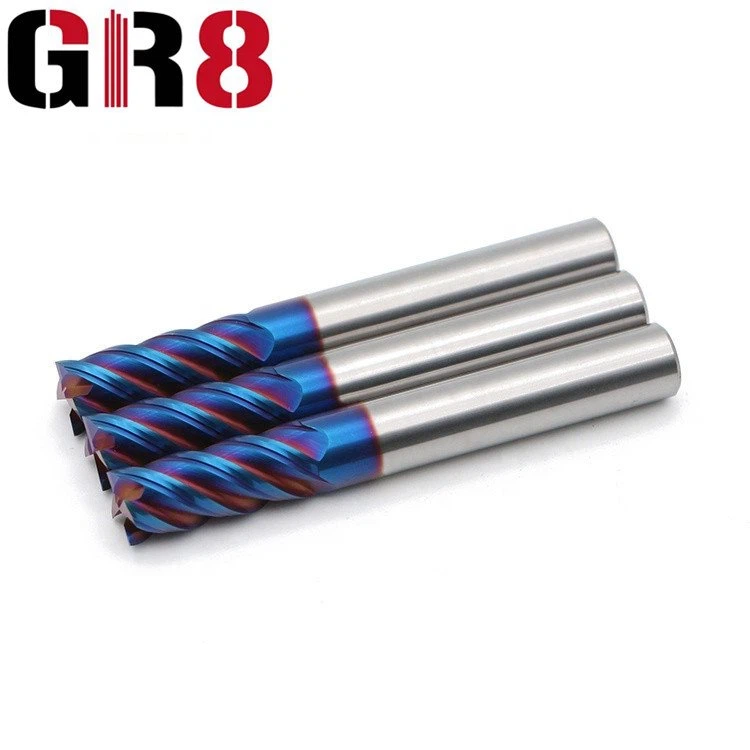
For example, in our 65HRC 4 Flutes Flat End Mill, we've carefully optimized the clearance angle. This ensures that the cutting force is kept at an optimal level, allowing for smooth and efficient milling operations.
Heat Generation
As I mentioned earlier, a small clearance angle causes increased friction, which in turn generates heat. Excessive heat can have a detrimental effect on the cutter. It can cause the cutting edge to lose its hardness, leading to rapid wear. Moreover, high temperatures can also affect the surface finish of the workpiece. The heat can cause the material to melt or deform slightly, resulting in a poor - quality surface.
By having an appropriate clearance angle, we can reduce the friction and heat generation. Our 65HRC 4 Flutes Flat End Mill is designed to dissipate heat effectively. The right clearance angle allows for better chip evacuation, which also helps in reducing the heat build - up.
Chip Evacuation
Chip evacuation is another critical aspect of milling. If chips are not removed properly, they can get trapped between the cutter and the workpiece. This can cause the cutter to jam, increase the cutting force, and damage the workpiece surface. The clearance angle plays a vital role in chip evacuation. A well - designed clearance angle provides enough space for the chips to flow out freely.
When the clearance angle is too small, the chips have less space to escape, and they tend to pile up. This can lead to a build - up of pressure, which can cause the cutter to break. In contrast, a proper clearance angle allows the chips to be ejected smoothly, ensuring a continuous and efficient milling process. Our flat milling cutters are engineered to have an ideal clearance angle for optimal chip evacuation.

Surface Finish
The surface finish of the workpiece is directly related to the performance of the flat milling cutter. A poor clearance angle can result in a rough surface finish. When the cutter rubs against the workpiece due to a small clearance angle, it can leave marks on the surface. These marks can be visible as ridges or scratches, which are unacceptable in many applications.
With the right clearance angle, the cutter can cut through the material cleanly, leaving a smooth surface. Our flat milling cutters are designed to provide excellent surface finishes. Whether you're working on a precision part or a large - scale project, the proper clearance angle ensures that the final product meets your quality standards.
Tool Life
Tool life is a major concern for any manufacturer or machinist. A cutter that wears out quickly means more frequent tool changes, which can increase costs and downtime. The clearance angle has a significant impact on tool life. As we've discussed, a small clearance angle leads to increased friction, heat, and cutting force, all of which contribute to faster tool wear.
By optimizing the clearance angle, we can extend the tool life of our flat milling cutters. Our 65HRC 4 Flutes Flat End Mill is a prime example. The carefully selected clearance angle reduces wear and tear on the cutting edge, allowing the cutter to last longer and provide consistent performance over time.
Different Materials and Clearance Angles
The ideal clearance angle can vary depending on the material being milled. For softer materials like aluminum, a larger clearance angle may be suitable. This is because softer materials are easier to cut, and a larger clearance angle can help with chip evacuation. On the other hand, for harder materials like stainless steel or titanium, a smaller clearance angle may be required. Harder materials require more cutting force, and a smaller clearance angle can provide more support to the cutting edge.
At our company, we understand the importance of matching the clearance angle to the material. We offer a range of flat milling cutters, including our Other Handrail Bit, which are designed to perform well with different materials.
Conclusion
In conclusion, the clearance angle is a crucial factor that affects the performance of a flat milling cutter in many ways. It impacts cutting force, heat generation, chip evacuation, surface finish, and tool life. As a supplier of flat milling cutters, we take great care in designing our products with the optimal clearance angle for different applications.
If you're in the market for high - quality flat milling cutters, we'd love to have a chat with you. Whether you need a cutter for a specific material or a particular project, we can provide you with the right solution. Contact us to start a discussion about your milling needs, and let's work together to find the perfect flat milling cutter for you.
References
- Boothroyd, G., & Knight, W. A. (2006). Fundamentals of machining and machine tools. CRC Press.
- Kalpakjian, S., & Schmid, S. R. (2010). Manufacturing engineering and technology. Pearson.


