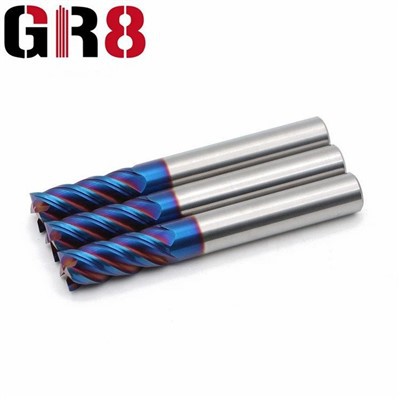
Selecting the appropriate cutting fluid for a 2 Flutes Flat End Mill is a crucial decision that can significantly impact the performance, tool life, and quality of your machining operations. As a supplier of 2 Flutes Flat End Mills, I understand the complexities involved in this choice. In this blog, I'll guide you through the key factors to consider when choosing the right cutting fluid for your specific needs.
Understanding the Role of Cutting Fluid
Cutting fluids play several vital roles in machining processes. Firstly, they cool the cutting tool and the workpiece. During the cutting operation, a substantial amount of heat is generated due to friction between the tool and the material. Excessive heat can lead to tool wear, deformation of the workpiece, and poor surface finish. A good cutting fluid dissipates this heat effectively, maintaining the integrity of both the tool and the workpiece.
Secondly, cutting fluids lubricate the cutting interface. By reducing friction, they minimize the force required for cutting, which in turn reduces tool wear and improves the efficiency of the machining process. Additionally, cutting fluids help to flush away chips from the cutting area, preventing them from interfering with the cutting operation and causing damage to the tool or the workpiece.


Types of Cutting Fluids
There are several types of cutting fluids available in the market, each with its own characteristics and applications.
1. Straight Oils
Straight oils are petroleum-based or synthetic oils that provide excellent lubrication. They are particularly suitable for heavy-duty machining operations where high levels of lubrication are required, such as broaching, gear cutting, and deep hole drilling. However, straight oils have relatively poor cooling properties compared to other types of cutting fluids, and they can be messy to handle.
2. Soluble Oils
Soluble oils are a mixture of mineral oil, emulsifiers, and additives. When mixed with water, they form an emulsion that combines the lubricating properties of oil with the cooling properties of water. Soluble oils are versatile and can be used for a wide range of machining operations, including turning, milling, and grinding. They are also relatively easy to clean up compared to straight oils.
3. Synthetic Fluids
Synthetic fluids are made from chemical compounds rather than petroleum-based oils. They offer excellent cooling properties, high resistance to oxidation and corrosion, and good microbial stability. Synthetic fluids are often used in high-speed machining operations where heat generation is a major concern, such as aerospace and automotive manufacturing. However, they can be more expensive than other types of cutting fluids.
4. Semi-Synthetic Fluids
Semi-synthetic fluids are a blend of synthetic and mineral oil components. They combine the advantages of both synthetic and soluble oils, offering good lubrication, cooling, and corrosion protection. Semi-synthetic fluids are widely used in a variety of machining applications, including general machining, precision machining, and CNC machining.
Factors to Consider When Choosing a Cutting Fluid
When selecting a cutting fluid for a 2 Flutes Flat End Mill, the following factors should be taken into account:
1. Workpiece Material
The type of workpiece material is one of the most important factors to consider when choosing a cutting fluid. Different materials have different machining characteristics and require different types of cutting fluids. For example, materials such as aluminum and brass are relatively soft and require a cutting fluid with good lubrication properties to prevent built-up edge and improve surface finish. On the other hand, materials such as stainless steel and titanium are hard and generate a lot of heat during machining, so a cutting fluid with excellent cooling properties is needed.
2. Machining Operation
The type of machining operation also affects the choice of cutting fluid. For example, drilling and tapping operations require a cutting fluid with good lubrication to reduce friction and prevent tool breakage. Milling operations, on the other hand, often require a cutting fluid with good cooling properties to dissipate the heat generated during the cutting process. Additionally, the cutting speed, feed rate, and depth of cut can also influence the selection of a cutting fluid.
3. Tool Material
The material of the 2 Flutes Flat End Mill also plays a role in the choice of cutting fluid. For example, carbide tools are more heat-resistant than high-speed steel tools, so they can tolerate higher cutting speeds and temperatures. However, carbide tools are also more brittle and require a cutting fluid with good lubrication to prevent chipping and breakage.
4. Environmental and Health Considerations
It is important to consider the environmental and health impacts of the cutting fluid. Some cutting fluids contain harmful chemicals such as heavy metals, chlorinated solvents, and biocides, which can pose a risk to human health and the environment. When choosing a cutting fluid, look for products that are environmentally friendly and comply with relevant regulations.
5. Cost
Cost is also an important factor to consider when choosing a cutting fluid. While it may be tempting to choose the cheapest option, it is important to remember that the quality of the cutting fluid can have a significant impact on the performance and tool life of the 2 Flutes Flat End Mill. A high-quality cutting fluid may cost more upfront, but it can save you money in the long run by reducing tool wear, improving surface finish, and increasing productivity.
Recommended Cutting Fluids for 2 Flutes Flat End Mills
Based on the factors mentioned above, here are some recommended cutting fluids for 2 Flutes Flat End Mills:
1. For Aluminum and Brass
For machining aluminum and brass, a soluble oil or a semi-synthetic fluid with good lubrication properties is recommended. These fluids can help to prevent built-up edge and improve surface finish. Some examples of suitable cutting fluids include [brand name] Soluble Oil and [brand name] Semi-Synthetic Fluid.
2. For Stainless Steel and Titanium
When machining stainless steel and titanium, a synthetic fluid or a semi-synthetic fluid with excellent cooling properties is needed. These fluids can help to dissipate the heat generated during the cutting process and prevent tool wear. Some examples of suitable cutting fluids include [brand name] Synthetic Fluid and [brand name] Semi-Synthetic Fluid.
3. For General Machining
For general machining operations, a semi-synthetic fluid is a good choice. Semi-synthetic fluids offer a good balance of lubrication and cooling properties, and they are suitable for a wide range of workpiece materials and machining operations. Some examples of suitable cutting fluids include [brand name] Semi-Synthetic Fluid and [brand name] Universal Cutting Fluid.
Conclusion
Choosing the right cutting fluid for a 2 Flutes Flat End Mill is a critical decision that can have a significant impact on the performance, tool life, and quality of your machining operations. By considering the factors mentioned above and choosing a high-quality cutting fluid that is suitable for your specific needs, you can improve the efficiency and productivity of your machining processes and achieve better results.
If you are interested in purchasing 2 Flutes Flat End Mills or need more information about cutting fluids, please feel free to contact us for a consultation. We are a leading supplier of high-quality cutting tools and can provide you with the products and services you need to succeed in your machining operations.
References
- "Machining Technology: An Introduction" by Robert L. Norton
- "Cutting Fluids: Selection, Application, and Maintenance" by John A. Schey
- "Metalworking Fluids: A Guide to Selection, Use, and Maintenance" by the Society of Tribologists and Lubrication Engineers