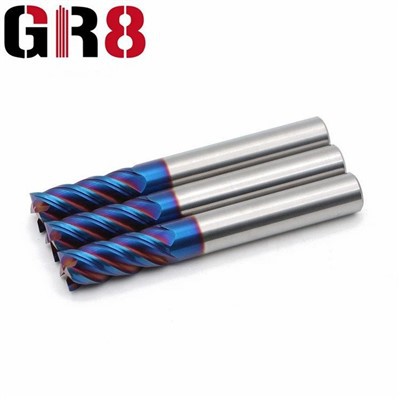
Copper is a widely used metal in various industries due to its excellent electrical conductivity, thermal conductivity, and corrosion resistance. Machining copper with a flat end mill is a common process in manufacturing, but it requires careful consideration of several factors to achieve optimal results. As a flat end mill supplier, I have extensive experience in this area and would like to share some valuable insights on how to machine copper effectively.
Understanding Copper's Properties
Before delving into the machining process, it's crucial to understand the properties of copper. Copper is a relatively soft and ductile metal, which means it has a tendency to stick to the cutting tool during machining. This can lead to built - up edge (BUE) formation, where chips of the workpiece material adhere to the cutting edge of the tool. BUE can cause poor surface finish, dimensional inaccuracies, and premature tool wear. Additionally, copper has high thermal conductivity, which can cause heat to dissipate quickly from the cutting zone. While this can be beneficial in some ways, it also means that the cutting forces need to be carefully controlled to avoid excessive tool wear.
Selecting the Right Flat End Mill
The choice of flat end mill is critical when machining copper. For copper, high - speed steel (HSS) or carbide end mills are commonly used. Carbide end mills are generally preferred for their superior hardness, wear resistance, and ability to maintain sharp cutting edges at high cutting speeds.
When selecting a flat end mill, consider the number of flutes. For copper machining, a 4 - flute flat end mill is often a good choice. The four flutes provide a good balance between chip evacuation and cutting edge strength. A 55HRC 4 Flutes Flat End Mill is suitable for general - purpose copper machining. It offers a good combination of hardness and toughness, allowing for efficient cutting without excessive tool wear. If you are dealing with more demanding applications or need to machine copper at higher speeds, a 65HRC 4 Flutes Flat End Mill might be a better option. The higher hardness of the 65HRC end mill provides enhanced wear resistance and longer tool life.
Cutting Parameters
Cutting Speed
The cutting speed is one of the most important parameters in copper machining. Since copper is a soft metal, relatively high cutting speeds can be used. However, the exact cutting speed depends on several factors, such as the type of flat end mill, the diameter of the end mill, and the specific grade of copper being machined. As a general guideline, for a carbide 4 - flute flat end mill with a diameter of 6 mm, a cutting speed of around 100 - 200 m/min can be used. It's important to note that higher cutting speeds can reduce the formation of BUE, but they also increase the heat generated at the cutting edge. Therefore, proper cooling and lubrication are essential when using high cutting speeds.
Feed Rate
The feed rate determines how fast the end mill moves through the workpiece. A higher feed rate can increase the material removal rate, but it also increases the cutting forces. When machining copper, a feed rate of 0.05 - 0.2 mm/tooth is typically recommended for a 4 - flute flat end mill. This feed rate range helps to ensure efficient chip evacuation and prevent the formation of long, stringy chips that can wrap around the end mill and cause problems.
Depth of Cut
The depth of cut refers to the amount of material removed in a single pass. For copper machining, a depth of cut of 0.5 - 2 mm is commonly used. A shallower depth of cut can reduce the cutting forces and improve the surface finish, but it also requires more passes to remove the desired amount of material. On the other hand, a deeper depth of cut can increase the material removal rate, but it may also lead to higher cutting forces and potential tool breakage if not properly controlled.
Cooling and Lubrication
Cooling and lubrication play a vital role in copper machining. As mentioned earlier, copper has high thermal conductivity, and proper cooling can help to dissipate the heat generated during cutting. A coolant or lubricant can also reduce friction between the cutting tool and the workpiece, which helps to prevent BUE formation and improve the surface finish.
There are several types of coolants and lubricants available for copper machining. Water - soluble coolants are commonly used as they provide good cooling and lubrication properties. They can also help to flush away chips from the cutting zone. In some cases, a light - duty lubricant such as mineral oil can be used for small - scale or precision machining operations.
Chip Evacuation
Efficient chip evacuation is essential when machining copper. Since copper is a ductile metal, it tends to produce long, stringy chips. These chips can wrap around the end mill, causing problems such as poor surface finish, increased cutting forces, and premature tool wear. To ensure proper chip evacuation, use a flat end mill with appropriate flute geometry. A 4 - flute flat end mill with a helical flute design can help to break up the chips and carry them away from the cutting zone.
In addition, the cutting parameters, such as feed rate and depth of cut, should be adjusted to promote chip breakage. A higher feed rate can help to break the chips into smaller pieces, making them easier to evacuate.
Tool Path Strategies
The tool path strategy can also affect the quality of the machined surface and the tool life. When machining copper with a flat end mill, a climb milling strategy is often preferred. In climb milling, the cutting tool rotates in the same direction as the feed direction. This results in a more consistent cutting force and better surface finish compared to conventional milling.
For complex geometries, a roughing and finishing strategy can be used. During the roughing process, a larger depth of cut and higher feed rate can be used to remove the bulk of the material quickly. Then, a finishing pass with a smaller depth of cut and lower feed rate can be performed to achieve the desired surface finish and dimensional accuracy.
Special Considerations for Different Copper Alloys
There are various copper alloys available, each with its own unique properties. For example, brass is a copper - zinc alloy that is harder than pure copper. When machining brass, the cutting parameters may need to be adjusted slightly. A slightly lower cutting speed and feed rate may be required to account for the increased hardness of brass.
Bronze, which is a copper - tin alloy, also has different machining characteristics. Bronze is generally more brittle than pure copper, so care should be taken to avoid excessive cutting forces that could cause cracking or chipping of the workpiece.
Applications of Flat End Mills in Copper Machining
Flat end mills are used in a wide range of copper machining applications. In the electrical industry, they are used to machine copper components such as busbars, connectors, and printed circuit board (PCB) frames. In the plumbing industry, flat end mills are used to machine copper pipes and fittings. They are also used in the manufacturing of decorative items, where precise machining of copper is required to achieve the desired aesthetic effects. For more specialized applications, an Ogee Door Frame Bit Set can be used to create unique and intricate door frame designs from copper.


Conclusion
Machining copper with a flat end mill requires a combination of the right tool selection, appropriate cutting parameters, effective cooling and lubrication, and proper chip evacuation. By understanding the properties of copper and following the guidelines outlined in this blog, you can achieve high - quality machining results and extend the tool life.
As a flat end mill supplier, we are committed to providing high - quality products and technical support to our customers. If you are interested in purchasing flat end mills for copper machining or have any questions about the machining process, please feel free to contact us for further discussion and procurement negotiations.
References
- "Machining of Metals: An Introduction" by John A. Schey
- "Tool and Manufacturing Engineers Handbook, Volume 3: Machining" by Society of Manufacturing Engineers