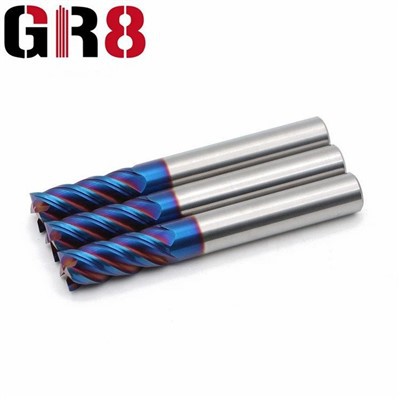
Optimizing the cutting speed for a good surface finish with straight flutes end mills is a crucial aspect of machining operations. As a supplier of Straight Flutes End Mills, I understand the significance of achieving the right balance between cutting speed and surface quality. In this blog post, I will share some insights and tips on how to optimize the cutting speed to obtain an excellent surface finish.
Understanding the Basics of Cutting Speed
Cutting speed, often measured in surface feet per minute (SFM) or meters per minute (m/min), refers to the speed at which the cutting edge of the end mill moves across the workpiece. It is a critical parameter that affects not only the surface finish but also the tool life, material removal rate, and overall machining efficiency.
A higher cutting speed generally results in a faster material removal rate, which can increase productivity. However, if the cutting speed is too high, it can lead to excessive heat generation, tool wear, and poor surface finish. On the other hand, a lower cutting speed may produce a better surface finish but at the cost of reduced productivity.


Factors Affecting Cutting Speed
Several factors influence the optimal cutting speed for straight flutes end mills. These include:
Material of the Workpiece
Different materials have different cutting characteristics. For example, softer materials like aluminum can tolerate higher cutting speeds compared to harder materials like stainless steel or titanium. When machining a workpiece, it is essential to consider its hardness, toughness, and thermal conductivity to determine the appropriate cutting speed.
Tool Material and Geometry
The material and geometry of the end mill also play a significant role in determining the cutting speed. Carbide end mills, for instance, can withstand higher cutting speeds than high-speed steel (HSS) end mills due to their superior hardness and heat resistance. Additionally, the number of flutes, helix angle, and cutting edge geometry of the end mill can affect the cutting forces and chip evacuation, which in turn influence the cutting speed.
Machine Tool Capability
The capabilities of the machine tool, such as its spindle speed range, power, and rigidity, must be taken into account when selecting the cutting speed. Using a cutting speed that exceeds the machine tool's capabilities can result in poor surface finish, tool breakage, and damage to the machine.
Coolant and Lubrication
Proper coolant and lubrication can significantly improve the cutting performance and surface finish. Coolants help to dissipate heat, reduce friction, and flush away chips, allowing for higher cutting speeds and longer tool life. Different types of coolants, such as water-soluble oils, synthetic coolants, and cutting fluids, are available, and the choice depends on the material being machined and the machining operation.
Tips for Optimizing Cutting Speed
Based on my experience as a Straight Flutes End Mills supplier, here are some tips to help you optimize the cutting speed for a good surface finish:
Start with the Manufacturer's Recommendations
Most end mill manufacturers provide recommended cutting speeds for their products based on the material being machined and the tool geometry. These recommendations are a good starting point, but they may need to be adjusted based on the specific machining conditions.
Conduct Test Cuts
Before starting a production run, it is advisable to conduct test cuts on a sample workpiece using different cutting speeds. This will allow you to evaluate the surface finish, tool wear, and material removal rate at each speed and determine the optimal cutting speed for your application.
Monitor the Cutting Process
During the machining process, it is essential to monitor the cutting forces, temperature, and surface finish. If you notice any signs of excessive tool wear, poor surface finish, or abnormal cutting forces, it may be necessary to adjust the cutting speed.
Use the Right Coolant and Lubrication
As mentioned earlier, proper coolant and lubrication are crucial for optimizing the cutting speed. Make sure to use the appropriate coolant for the material being machined and follow the manufacturer's recommendations for coolant concentration and flow rate.
Consider the Tool Path
The tool path can also affect the cutting speed and surface finish. Using a smooth and continuous tool path can reduce the cutting forces and improve the surface finish. Additionally, avoiding sudden changes in direction or feed rate can help to prevent tool breakage and improve the overall machining quality.
Examples of Optimized Cutting Speeds
To illustrate the importance of optimizing the cutting speed, let's consider some examples of machining different materials using straight flutes end mills.
Machining Aluminum
Aluminum is a relatively soft material that can tolerate high cutting speeds. When machining aluminum with a carbide straight flutes end mill, a cutting speed of 600 - 1000 SFM (180 - 300 m/min) is typically recommended. However, this speed may need to be adjusted based on the specific grade of aluminum, the tool geometry, and the machining conditions.
Machining Stainless Steel
Stainless steel is a harder and more difficult-to-machine material compared to aluminum. When machining stainless steel with a carbide straight flutes end mill, a cutting speed of 100 - 200 SFM (30 - 60 m/min) is usually recommended. Again, this speed may need to be adjusted based on the specific grade of stainless steel, the tool geometry, and the machining conditions.
Machining Titanium
Titanium is a very hard and tough material that requires special machining techniques. When machining titanium with a carbide straight flutes end mill, a cutting speed of 30 - 60 SFM (9 - 18 m/min) is typically recommended. Due to the high cutting forces and heat generation when machining titanium, it is essential to use a proper coolant and lubrication and to monitor the cutting process closely.
The Role of Straight Flutes End Mills in Achieving a Good Surface Finish
Straight flutes end mills are commonly used in machining operations due to their simplicity and versatility. They are particularly suitable for applications where a high surface finish is required, such as engraving and finishing operations.
The straight flutes design of these end mills allows for a smooth and consistent cutting action, which helps to minimize surface roughness and improve the overall surface finish. Additionally, straight flutes end mills are available in a variety of sizes and geometries, making them suitable for a wide range of machining applications.
If you are looking for high-quality straight flutes end mills for your machining operations, I recommend checking out our Straight Flutes End Mills. We also offer Straight Flutes Engraving End Mills for precision engraving applications and Corn End Mill for specific machining requirements.
Conclusion
Optimizing the cutting speed for a good surface finish with straight flutes end mills requires a thorough understanding of the machining process and the factors that affect cutting speed. By considering the material of the workpiece, tool material and geometry, machine tool capability, coolant and lubrication, and tool path, you can select the appropriate cutting speed to achieve the desired surface finish and machining efficiency.
If you have any questions or need further assistance in selecting the right straight flutes end mills or optimizing the cutting speed for your machining applications, please feel free to contact us. We are here to help you achieve the best results in your machining operations.
References
- "Machining Fundamentals," Industrial Press Inc.
- "Cutting Tool Engineering Handbook," Society of Manufacturing Engineers.