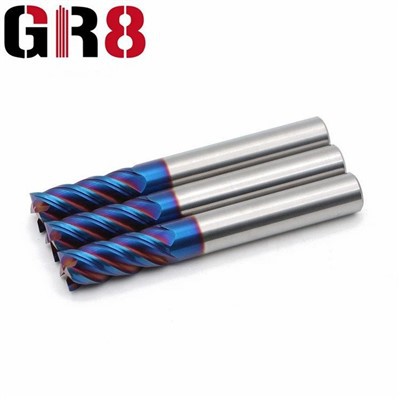
Dry machining with straight flutes end mills presents a unique set of challenges that can significantly impact the quality of the finished product and the efficiency of the machining process. As a supplier of Straight Flutes End Mills, I have witnessed firsthand the difficulties faced by manufacturers in this area. In this blog post, I will share some insights and strategies on how to overcome these challenges and achieve optimal results in dry machining operations.
Understanding the Challenges of Dry Machining with Straight Flutes End Mills
Dry machining, which involves machining without the use of cutting fluids, offers several advantages, such as reduced environmental impact, lower operating costs, and improved chip evacuation. However, it also presents several challenges, especially when using straight flutes end mills. Some of the key challenges include:
Heat Generation
One of the primary challenges of dry machining is the generation of heat. Without the cooling effect of cutting fluids, the heat generated during the machining process can cause the workpiece and the cutting tool to overheat. This can lead to thermal damage to the workpiece, such as surface hardening, cracking, and dimensional inaccuracies. It can also cause premature wear and failure of the cutting tool, reducing its lifespan and increasing tooling costs.


Chip Evacuation
Another challenge of dry machining is chip evacuation. During the machining process, chips are produced as the cutting tool removes material from the workpiece. In dry machining, these chips can accumulate around the cutting edge of the tool, causing clogging and reducing the cutting efficiency. This can lead to poor surface finish, increased cutting forces, and even tool breakage.
Tool Wear
Dry machining also accelerates tool wear. The high temperatures and cutting forces generated during dry machining can cause the cutting edge of the tool to wear out quickly. This can result in a decrease in cutting performance, such as reduced cutting speed, feed rate, and surface finish. It can also lead to the need for frequent tool changes, which can increase downtime and production costs.
Strategies to Overcome the Challenges
To overcome the challenges of dry machining with straight flutes end mills, several strategies can be employed. These strategies focus on reducing heat generation, improving chip evacuation, and minimizing tool wear.
Optimize Cutting Parameters
One of the most effective ways to overcome the challenges of dry machining is to optimize the cutting parameters. This includes adjusting the cutting speed, feed rate, and depth of cut. By selecting the appropriate cutting parameters, it is possible to reduce the heat generated during the machining process and improve the cutting efficiency.
For example, reducing the cutting speed can help to reduce the heat generated by the cutting process. However, it is important to find the right balance, as too low a cutting speed can also lead to increased tool wear and poor surface finish. Similarly, adjusting the feed rate and depth of cut can help to optimize the chip formation and evacuation, reducing the risk of chip clogging and tool breakage.
Use High-Quality Cutting Tools
Using high-quality cutting tools is another important strategy for overcoming the challenges of dry machining. High-quality straight flutes end mills are made from advanced materials, such as carbide, which have excellent heat resistance and wear resistance properties. These tools can withstand the high temperatures and cutting forces generated during dry machining, reducing tool wear and extending the tool lifespan.
In addition, high-quality cutting tools are designed with features that improve chip evacuation, such as special flute geometries and coatings. For example, some straight flutes end mills are designed with a helical flute geometry, which helps to break up the chips and improve their evacuation from the cutting zone. Coatings, such as titanium nitride (TiN) or titanium aluminum nitride (TiAlN), can also be applied to the cutting tool to reduce friction and heat generation, improving the cutting performance and tool lifespan.
Improve Chip Evacuation
Improving chip evacuation is crucial for successful dry machining. There are several ways to improve chip evacuation, including using appropriate chip breakers, adjusting the cutting parameters, and using external chip removal devices.
Chip breakers are features on the cutting tool that are designed to break up the chips into smaller, more manageable pieces. This helps to prevent chip clogging and improve the chip evacuation. Some straight flutes end mills are designed with built-in chip breakers, while others can be retrofitted with external chip breakers.
Adjusting the cutting parameters can also help to improve chip evacuation. For example, increasing the feed rate can help to break up the chips and make them easier to evacuate. However, it is important to ensure that the feed rate is not too high, as this can lead to increased cutting forces and tool wear.
External chip removal devices, such as air blowers or vacuum systems, can also be used to improve chip evacuation. These devices help to remove the chips from the cutting zone, preventing them from accumulating around the cutting edge of the tool.
Apply Cooling Techniques
Although dry machining does not use cutting fluids, some cooling techniques can still be applied to reduce heat generation. One such technique is the use of compressed air or nitrogen. Compressed air or nitrogen can be directed at the cutting zone to cool the cutting tool and the workpiece. This helps to reduce the temperature and prevent thermal damage to the workpiece and the cutting tool.
Another cooling technique is the use of cryogenic cooling. Cryogenic cooling involves the use of liquid nitrogen or carbon dioxide to cool the cutting tool and the workpiece. This technique can significantly reduce the heat generated during the machining process, improving the cutting performance and tool lifespan. However, it is important to note that cryogenic cooling requires specialized equipment and can be more expensive than other cooling techniques.
The Role of Tool Selection
In addition to the above strategies, tool selection also plays a crucial role in overcoming the challenges of dry machining with straight flutes end mills. Different types of straight flutes end mills are available, each with its own unique features and advantages.
For example, Compression End Mill is designed to provide both up-cut and down-cut action in a single tool. This helps to improve chip evacuation and reduce the risk of chip clogging. It is particularly suitable for machining materials that are prone to delamination, such as wood and composites.
Corn End Mill, on the other hand, is designed with a rounded cutting edge. This helps to reduce the cutting forces and heat generation, making it suitable for dry machining of hard materials, such as stainless steel and titanium.
When selecting a straight flutes end mill for dry machining, it is important to consider the material being machined, the cutting parameters, and the specific requirements of the machining operation. By choosing the right tool, it is possible to optimize the cutting performance and overcome the challenges of dry machining.
Conclusion
Dry machining with straight flutes end mills presents several challenges, including heat generation, chip evacuation, and tool wear. However, by employing the strategies outlined in this blog post, such as optimizing cutting parameters, using high-quality cutting tools, improving chip evacuation, and applying cooling techniques, these challenges can be overcome.
As a supplier of Straight Flutes End Mills, I am committed to providing high-quality cutting tools and technical support to help manufacturers overcome the challenges of dry machining. If you are facing challenges in your dry machining operations or are interested in learning more about our products, I encourage you to contact us for a consultation. We can work together to develop a customized solution that meets your specific needs and helps you achieve optimal results in your machining processes.
References
- Astakhov, V. P. (2010). Metal Cutting Theory and Practice. CRC Press.
- Kalpakjian, S., & Schmid, S. R. (2009). Manufacturing Engineering and Technology. Pearson.
- Trent, E. M., & Wright, P. K. (2000). Metal Cutting. Butterworth-Heinemann.