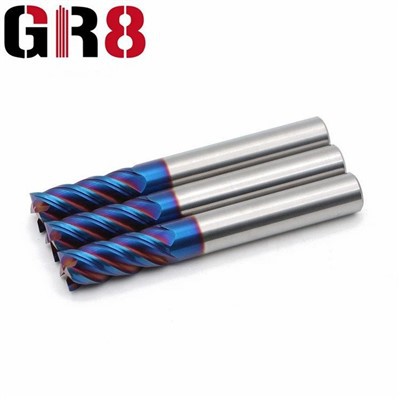
Interrupted cutting is a common machining operation in various industries, including automotive, aerospace, and general manufacturing. It involves cutting materials that have irregular surfaces, holes, or other interruptions. Carbide flat cutters are widely used for interrupted cutting due to their high hardness, wear resistance, and ability to maintain sharp cutting edges. However, using carbide flat cutters for interrupted cutting also presents several challenges that need to be addressed to ensure efficient and effective machining. As a carbide flat cutter supplier, I have witnessed these challenges firsthand and would like to share some insights in this blog.
1. Vibration and Chatter
One of the most significant challenges of using carbide flat cutters for interrupted cutting is vibration and chatter. When the cutter encounters an interruption in the workpiece, such as a hole or a slot, it experiences sudden changes in cutting forces. These changes can cause the cutter to vibrate, leading to chatter marks on the workpiece surface and premature tool wear.
Vibration and chatter can be caused by several factors, including:
- Tool Geometry: The geometry of the carbide flat cutter plays a crucial role in reducing vibration. Cutters with a high helix angle can help to reduce the cutting forces and minimize vibration. For example, our 2 Flutes Flat End Mill is designed with an optimized helix angle to improve cutting performance and reduce vibration.
- Cutting Parameters: Incorrect cutting parameters, such as high cutting speeds, feed rates, or depth of cut, can also contribute to vibration and chatter. It is essential to select the appropriate cutting parameters based on the workpiece material, cutter geometry, and machine tool capabilities. For instance, when using our 65HRC 4 Flutes Flat End Mill for interrupted cutting, we recommend using lower cutting speeds and feed rates to reduce the risk of vibration.
- Machine Tool Stability: The stability of the machine tool is another critical factor in reducing vibration. A rigid machine tool with good damping characteristics can help to absorb the vibration and prevent chatter. It is also important to ensure that the machine tool is properly maintained and calibrated to ensure optimal performance.
2. Tool Wear and Breakage
Another challenge of using carbide flat cutters for interrupted cutting is tool wear and breakage. The sudden changes in cutting forces during interrupted cutting can cause the cutter to wear out quickly or even break. This can result in increased tool costs, reduced productivity, and poor surface finish of the workpiece.
Tool wear and breakage can be caused by several factors, including:
- Workpiece Material: The hardness and toughness of the workpiece material can significantly affect tool wear. Harder materials, such as stainless steel and titanium, can cause more wear on the carbide flat cutter compared to softer materials. For example, when machining stainless steel with our 55HRC 4 Flutes Flat End Mill, it is important to use a coolant to reduce the cutting temperature and extend the tool life.
- Cutting Edge Geometry: The cutting edge geometry of the carbide flat cutter can also affect tool wear. A sharp cutting edge can reduce the cutting forces and minimize tool wear. However, a sharp cutting edge is also more prone to chipping and breakage. Therefore, it is important to select the appropriate cutting edge geometry based on the workpiece material and cutting conditions.
- Cutting Fluids: The use of cutting fluids can help to reduce tool wear and extend the tool life. Cutting fluids can cool the cutting zone, reduce friction, and flush away the chips. However, it is important to select the appropriate cutting fluid based on the workpiece material, cutter geometry, and cutting conditions.
3. Surface Finish
Achieving a good surface finish is another challenge when using carbide flat cutters for interrupted cutting. The vibration and chatter caused by interrupted cutting can result in poor surface finish, including chatter marks, roughness, and waviness.
To improve the surface finish, the following measures can be taken:


- Tool Selection: Selecting the right carbide flat cutter is crucial for achieving a good surface finish. Cutters with a fine-grained carbide substrate and a high-quality coating can help to reduce friction and improve the surface finish. For example, our carbide flat cutters are coated with advanced coatings, such as TiAlN and TiCN, to enhance the cutting performance and surface finish.
- Cutting Parameters Optimization: Optimizing the cutting parameters, such as cutting speed, feed rate, and depth of cut, can also help to improve the surface finish. Lower cutting speeds and feed rates can reduce the vibration and chatter, resulting in a better surface finish.
- Coolant Application: Proper coolant application can help to improve the surface finish by reducing the cutting temperature and flushing away the chips. It is important to ensure that the coolant is applied directly to the cutting zone to achieve the best results.
4. Chip Control
Chip control is also a significant challenge when using carbide flat cutters for interrupted cutting. The sudden changes in cutting forces can cause the chips to break into irregular shapes, which can lead to chip clogging, tool damage, and poor surface finish.
To improve chip control, the following methods can be adopted:
- Cutter Geometry Design: The cutter geometry can be designed to promote chip breaking and evacuation. For example, cutters with chip breakers or special flute designs can help to break the chips into smaller, more manageable pieces.
- Cutting Parameters Adjustment: Adjusting the cutting parameters, such as feed rate and depth of cut, can also affect chip control. Higher feed rates can help to break the chips more effectively, while appropriate depth of cut can prevent chip clogging.
- Coolant and Lubrication: Adequate coolant and lubrication can help to reduce the friction between the cutter and the workpiece, making it easier for the chips to be removed from the cutting zone.
Conclusion
Using carbide flat cutters for interrupted cutting presents several challenges, including vibration and chatter, tool wear and breakage, surface finish issues, and chip control problems. However, by understanding these challenges and taking appropriate measures, such as selecting the right cutter, optimizing the cutting parameters, and using proper coolant and lubrication, these challenges can be effectively addressed.
As a carbide flat cutter supplier, we are committed to providing high-quality products and technical support to help our customers overcome these challenges. If you are facing any difficulties in interrupted cutting or need advice on selecting the right carbide flat cutter, please feel free to contact us for procurement and further discussion. We look forward to working with you to achieve the best machining results.
References
- Kalpakjian, S., & Schmid, S. R. (2009). Manufacturing Engineering and Technology. Pearson Prentice Hall.
- Trent, E. M., & Wright, P. K. (2000). Metal Cutting. Butterworth-Heinemann.