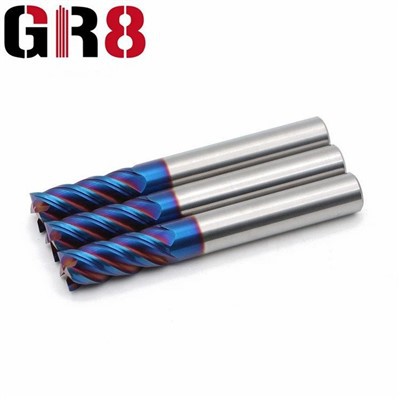
Hey there, folks! As a supplier of roughing end mills, I've seen my fair share of mistakes that people make when using these tools. In this blog post, I'm gonna share some of the most common ones with you, so you can avoid them and get the best results from your roughing end mills.
Incorrect Selection of the Roughing End Mill
One of the biggest mistakes I often see is the incorrect selection of the roughing end mill. Different jobs require different types of end mills. For example, if you're working on a job that needs high - speed material removal, you might want a 3 Flutes Roughing End Mill. This type of end mill is designed to handle large amounts of material quickly.
But if you pick the wrong number of flutes, it can cause all sorts of problems. A mill with too few flutes might not be able to remove material efficiently, while one with too many flutes can lead to over - heating and breakage, especially when dealing with heavy - duty roughing.
Another aspect to consider is the material of the end mill. You wouldn't use a high - speed steel end mill for machining super - hard materials like titanium. You'd need a carbide end mill, which is much tougher and can withstand the high temperatures and pressures involved in cutting hard materials.
Improper Cutting Parameters
Setting the wrong cutting parameters is another common blunder. Cutting speed, feed rate, and depth of cut are all crucial factors. If the cutting speed is too high, the end mill can overheat, leading to premature wear and even breakage. On the flip side, if the speed is too low, you're not making the most of the tool's capabilities, and the machining process will take forever.
The feed rate is also important. A feed rate that's too fast can cause excessive stress on the end mill, while a rate that's too slow won't remove enough material. It's all about finding that sweet spot. And when it comes to the depth of cut, going too deep can put too much strain on the end mill, while a shallow cut might not be effective in roughing out the material.
Let's say you're using a 3 Flutes Roughing Milling Cutter. You need to adjust these parameters according to the material you're working on, the size of the cutter, and the machine you're using. There's no one - size - fits - all solution here, so it's important to do your research or consult with an expert.
Poor Tool Holding
Tool holding might not seem like a big deal, but it can really mess things up. If the end mill isn't held securely in the tool holder, it can wobble during operation. This wobbling can cause uneven cutting, poor surface finish, and even damage to the end mill.
You need to make sure that the tool holder is clean and in good condition. Any dirt or debris in the holder can prevent a proper fit. Also, the clamping force should be just right - not too loose and not too tight. If it's too loose, the end mill will move around, and if it's too tight, you might damage the tool or the holder.
Lack of Coolant or Lubrication
Using a roughing end mill without proper coolant or lubrication is a recipe for disaster. When the end mill is cutting through material, a lot of heat is generated. Without coolant, this heat can build up quickly, causing the end mill to wear out faster and potentially change the properties of the material being cut.
Coolant also helps to flush away the chips produced during the cutting process. If the chips aren't removed, they can get stuck between the end mill and the material, causing further damage.
There are different types of coolants available, and you need to choose the right one for your application. Some coolants are better for certain materials, and some are more environmentally friendly. Make sure to use the coolant at the correct concentration and flow rate for optimal performance.
Ignoring Tool Wear
It's easy to keep using a roughing end mill until it breaks, but that's a bad idea. Ignoring tool wear can lead to poor machining quality and even more damage to the machine. You should regularly inspect your end mills for signs of wear, such as chipping, dulling, or excessive edge wear.
Once you notice significant wear, it's time to replace the end mill. Continuing to use a worn - out end mill can not only slow down your production but also create a safety hazard. It's better to replace the tool earlier and maintain a consistent level of quality in your machining.
Inadequate Machine Rigidity
The rigidity of the machine you're using also plays a role in how well your roughing end mill performs. If the machine isn't rigid enough, it can vibrate during the cutting process. These vibrations can cause uneven cutting, poor surface finish, and premature tool wear.
Before you start using a roughing end mill, make sure your machine is properly maintained and calibrated. Check for any loose parts or worn - out components that could contribute to vibration. If you're having problems with vibration, you might need to upgrade your machine or add some vibration - dampening features.
Not Considering the Workpiece Material
Different workpiece materials have different properties, and you need to take these into account when using a roughing end mill. For example, soft materials like aluminum can be cut relatively easily, but you need to be careful not to create too much heat, as aluminum can melt at a relatively low temperature.
On the other hand, hard materials like stainless steel require a more robust end mill and different cutting parameters. If you try to use the same approach for all materials, you're likely to run into problems.


Conclusion
Well, there you have it - some of the most common mistakes when using a roughing end mill. By avoiding these mistakes, you can improve the performance of your end mills, reduce costs, and increase the quality of your machining.
If you're in the market for high - quality roughing end mills like the 3 Flutes Roughing Milling Cutter, we're here to help. We offer a wide range of roughing end mills that are designed to meet the needs of different applications. Whether you're a small - scale workshop or a large - scale manufacturing plant, we've got the right tools for you.
If you have any questions or want to discuss your specific requirements, don't hesitate to reach out. We're always happy to help you find the best solutions for your machining needs.
References
- "Machining Handbook" by Industrial Press Inc.
- "Cutting Tool Engineering Handbook" by Society of Manufacturing Engineers