

Hey there! As a supplier of DLC coated end mills, I often get asked about the recommended cutting speeds for these bad boys. DLC, or Diamond-Like Carbon, is a super cool coating that brings a bunch of benefits to end mills, like reduced friction, increased wear resistance, and better chip evacuation. But to really make the most of these features, you gotta use the right cutting speeds.
Let's start by understanding what cutting speed actually means. Cutting speed is basically how fast the cutting edge of the end mill moves across the workpiece. It's measured in surface feet per minute (SFM) in the imperial system or meters per minute (m/min) in the metric system. Picking the right cutting speed is crucial because if it's too slow, you'll waste time and might get a poor surface finish. On the other hand, if it's too fast, you can overheat the end mill, wear it out quickly, and even damage the workpiece.
Now, the recommended cutting speeds for DLC coated end mills can vary depending on a few factors. One of the biggest factors is the material you're cutting. Different materials have different hardness, toughness, and thermal conductivity, which all affect how the end mill interacts with them.
Cutting Aluminum with DLC Coated End Mills
Aluminum is a super common material in machining, and DLC coated end mills are great for working with it. Aluminum is relatively soft and has good thermal conductivity, which means you can usually use higher cutting speeds compared to other materials.
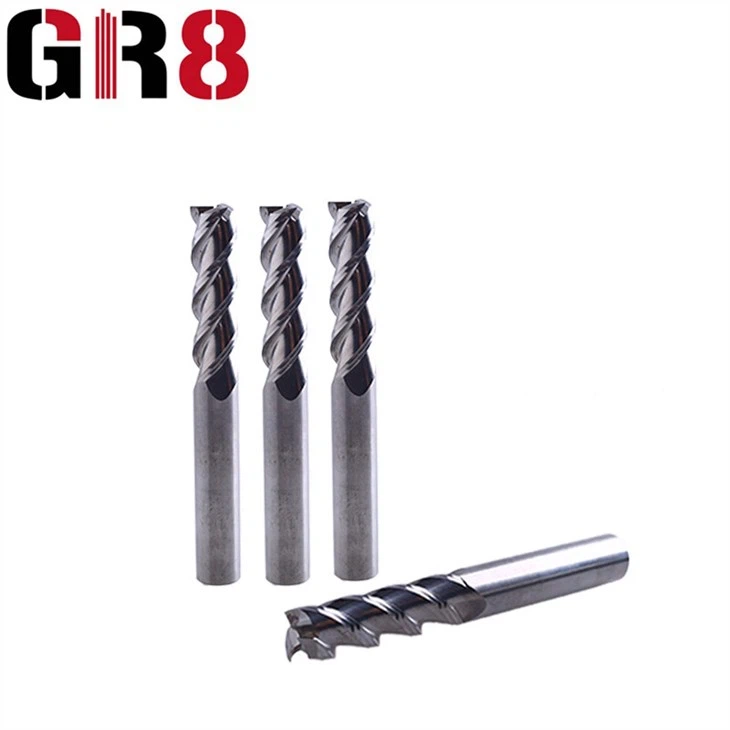
For general aluminum alloys, a cutting speed in the range of 600 - 2000 SFM (183 - 610 m/min) is often recommended. But if you're using our 3 Flutes Aluminum Processing End Mill, you can push the limits a bit. The 3-flute design provides better chip evacuation and stability, allowing you to increase the cutting speed towards the higher end of that range.
If you're dealing with a more delicate aluminum job or a thinner-walled part, you might want to start with a lower cutting speed, around 600 - 1000 SFM (183 - 305 m/min). This gives you more control and reduces the risk of vibration or chatter, which can affect the surface finish.
On the other hand, if you're cutting a solid block of aluminum or a thick-walled part, you can go for a higher cutting speed, up to 1500 - 2000 SFM (457 - 610 m/min). Just make sure your machine can handle it and that you have proper coolant or lubrication to keep the temperature in check.
Our 1 Flutes Aluminum Processing End Mill is also a great option for certain aluminum applications. The single-flute design is ideal for deep slotting or profiling, where chip evacuation can be a challenge. You can use a cutting speed similar to the 3-flute end mill, but you might need to adjust the feed rate to ensure smooth cutting.
Cutting Steel with DLC Coated End Mills
Steel is a bit more challenging to cut compared to aluminum because it's harder and has lower thermal conductivity. This means you need to be more careful with the cutting speed to avoid overheating the end mill.
For mild steel, a cutting speed of 100 - 300 SFM (30 - 91 m/min) is a good starting point. If you're using a DLC coated end mill, you can usually get away with a slightly higher cutting speed compared to an uncoated end mill because the DLC coating reduces friction and heat generation.
For high-strength steels or stainless steels, the recommended cutting speed drops to around 50 - 150 SFM (15 - 46 m/min). These steels are even harder and more prone to work hardening, so you need to take it slow to prevent excessive wear on the end mill.
Other Factors Affecting Cutting Speed
Apart from the material, there are a few other factors that can affect the recommended cutting speeds for DLC coated end mills.
The diameter of the end mill is one of them. Generally, larger diameter end mills can handle higher cutting speeds because they have a larger surface area and can dissipate heat more effectively. For example, if you're using a 1/2" diameter DLC coated end mill, you might be able to use a slightly higher cutting speed compared to a 1/8" diameter end mill when cutting the same material.

The type of operation also matters. For roughing operations, where you're removing a large amount of material quickly, you can usually use a higher cutting speed and feed rate. But for finishing operations, where you're aiming for a smooth surface finish, you'll want to reduce the cutting speed and feed rate to minimize tool marks.
Coolant and lubrication are also crucial. Using the right coolant or lubricant can help reduce friction, lower the temperature, and improve chip evacuation. This allows you to use higher cutting speeds without overheating the end mill. There are different types of coolants and lubricants available, such as water-soluble coolants, oil-based lubricants, and dry machining additives. Make sure to choose the one that's suitable for your material and operation.
Finding the Sweet Spot
Finding the perfect cutting speed for your DLC coated end mill might take a bit of trial and error. It's always a good idea to start with the recommended cutting speeds based on the material and other factors, and then make small adjustments based on how the end mill performs.
Keep an eye on the cutting forces, the surface finish of the workpiece, and the wear on the end mill. If you notice excessive vibration, poor surface finish, or rapid wear on the end mill, it might be a sign that you need to adjust the cutting speed or feed rate.
Conclusion
In conclusion, the recommended cutting speeds for DLC coated end mills depend on the material you're cutting, the diameter of the end mill, the type of operation, and other factors. By understanding these factors and using the right cutting speeds, you can maximize the performance and lifespan of your DLC coated end mills.
If you're interested in our DLC coated end mills or have any questions about cutting speeds or other machining parameters, feel free to reach out. We're here to help you find the best solutions for your machining needs. Whether you're looking for our 3 Flutes Aluminum Processing End Mill or any other product in our range, we've got you covered.
References
- "Machining Handbook" - A comprehensive guide to machining processes and parameters.
- Manufacturer's specifications for DLC coated end mills.
- Industry research on cutting speeds and tool performance.


