

In the world of machining, ball nose end mills are widely recognized tools, known for their versatility and ability to create smooth, contoured surfaces. As a supplier of ball nose end mills, I've had the privilege of witnessing their widespread use across various industries, from aerospace to automotive and beyond. However, like any tool, ball nose end mills are not without their drawbacks. In this blog post, I'll delve into the disadvantages of ball nose end mills, providing insights that can help machinists make informed decisions when selecting the right tool for their projects.
1. Lower Material Removal Rate
One of the primary disadvantages of ball nose end mills is their relatively lower material removal rate compared to other types of end mills, such as square end mills. The rounded tip of a ball nose end mill means that the cutting edge is distributed over a larger area, resulting in less concentrated cutting force. This can lead to slower machining times, especially when removing large amounts of material.
For example, when roughing a large block of metal, a square end mill can remove material more quickly because it has a flat cutting edge that can engage with the workpiece over a wider area. In contrast, a ball nose end mill has to cut through the material in a more gradual manner, which can significantly increase the machining time. This lower material removal rate can be a significant drawback in high-volume production environments where time is of the essence.
2. Higher Cutting Forces and Tool Wear
The design of ball nose end mills also leads to higher cutting forces and increased tool wear. The rounded tip of the mill creates a larger contact area between the cutting edge and the workpiece, which can result in higher cutting forces being exerted on the tool. These higher forces can cause the tool to deflect, leading to poor surface finish and dimensional accuracy.

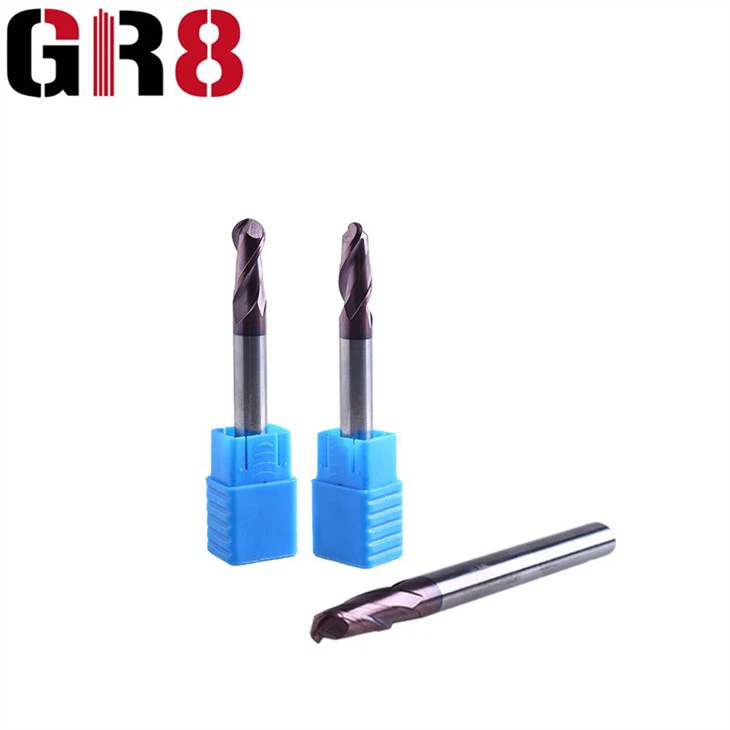
Moreover, the increased contact area also means that the cutting edge is subjected to more wear and tear. Over time, this can lead to the premature dulling of the tool, requiring more frequent tool changes. Tool changes not only increase the cost of production but also result in downtime, which can have a negative impact on productivity.
3. Limited Chip Evacuation
Another disadvantage of ball nose end mills is their limited chip evacuation capabilities. The rounded shape of the mill can make it difficult for chips to escape from the cutting zone, leading to chip clogging. When chips accumulate in the cutting zone, they can interfere with the cutting process, causing poor surface finish and increasing the risk of tool breakage.
In addition, the presence of chips in the cutting zone can also increase the cutting temperature, which can further accelerate tool wear. To mitigate these issues, machinists often have to use high-pressure coolant systems to flush the chips out of the cutting zone. However, these systems can be expensive to install and maintain, adding to the overall cost of machining.
4. Difficulty in Machining Hard Materials
Ball nose end mills can also be challenging to use when machining hard materials. The rounded tip of the mill makes it difficult to penetrate the hard surface of the workpiece, resulting in slower cutting speeds and increased tool wear. In addition, the high cutting forces generated when machining hard materials can cause the tool to deflect, leading to poor surface finish and dimensional accuracy.
To overcome these challenges, machinists often have to use specialized coatings and geometries on the ball nose end mills. However, these specialized tools can be more expensive than standard ball nose end mills, which can increase the cost of production.
5. Higher Cost
Finally, ball nose end mills are generally more expensive than other types of end mills. The complex design and manufacturing process of ball nose end mills require specialized equipment and expertise, which can drive up the cost of production. In addition, the higher tool wear and more frequent tool changes associated with ball nose end mills also contribute to the overall cost of machining.
For small businesses or hobbyists, the higher cost of ball nose end mills can be a significant barrier to entry. Even for larger companies, the increased cost can have a negative impact on the bottom line, especially in high-volume production environments.
Despite these disadvantages, ball nose end mills still have their place in the machining industry. Their ability to create smooth, contoured surfaces makes them ideal for applications such as mold making, aerospace component manufacturing, and artistic machining. However, it's important for machinists to be aware of the limitations of ball nose end mills and to consider these factors when selecting the right tool for their projects.
If you're in the market for ball nose end mills, we offer a wide range of products to meet your needs. Our 2 Flutes Ball Nose End Mill and 2 Flutes Ball Nose End Mill are designed for high-performance machining, while our 4 Flutes Ball Nose End Mill offers increased stability and chip evacuation.
We understand that every machining project is unique, and we're committed to providing our customers with the best possible solutions. If you have any questions or need assistance in selecting the right ball nose end mill for your project, please don't hesitate to contact us. Our team of experts is always ready to help you make an informed decision and ensure the success of your machining operations.
References
- Boothroyd, G., & Knight, W. A. (2006). Fundamentals of machining and machine tools. CRC Press.
- Kalpakjian, S., & Schmid, S. R. (2009). Manufacturing engineering and technology. Pearson Prentice Hall.
- Trent, E. M., & Wright, P. K. (2000). Metal cutting. Butterworth-Heinemann.


