Hey there! As a supplier of Corner Radius End Mills, I often get asked about the inspection methods for these tools. In this blog post, I'll share some of the key inspection methods that we use to ensure the quality of our products.
1. Visual Inspection
Visual inspection is the most basic yet crucial step in checking a new corner radius end mill. It's like giving your tool a quick once - over to spot any obvious issues.
First, take a close look at the overall appearance of the end mill. Check for any signs of damage, such as cracks, chips, or scratches on the cutting edges and the shank. A damaged cutting edge can lead to poor machining results and even cause the tool to break during operation. The shank should be smooth and free from any deformities, as a deformed shank may not fit properly in the tool holder, resulting in unstable machining.
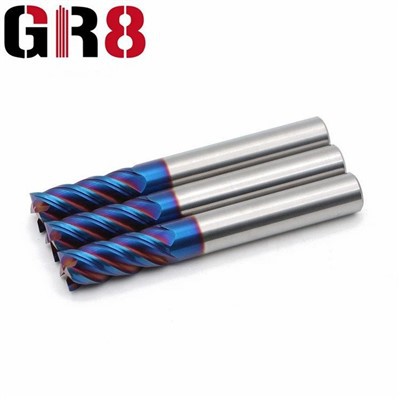
Inspect the coating of the end mill if it has one. A good coating can enhance the tool's performance and durability. Look for any peeling, unevenness, or discoloration in the coating. For example, if the coating on a 4 Flutes Corner Radius End Mill is peeling, it might not provide the expected protection against wear and heat.
2. Dimensional Inspection
Accurate dimensions are vital for a corner radius end mill to work effectively. We use precision measuring tools to check the key dimensions of the end mill.
Shank Diameter
The shank diameter needs to be within the specified tolerance. We use micrometers or calipers to measure the shank diameter at multiple points along its length. Any deviation from the standard diameter can cause problems with the tool holder's grip, leading to vibration and inaccurate machining.


Cutting Edge Length
The length of the cutting edge is another important dimension. It determines the depth of cut that the end mill can achieve. Using a height gauge or a coordinate measuring machine (CMM), we measure the cutting edge length to ensure it meets the design requirements. For instance, if the cutting edge length of a Beading Bit is too short, it may not be able to create the desired bead shape.
Corner Radius
As the name suggests, the corner radius is a critical feature of a corner radius end mill. We use specialized radius gauges or optical measuring systems to measure the corner radius accurately. A wrong corner radius can result in an incorrect shape being machined on the workpiece.
3. Surface Finish Inspection
The surface finish of the end mill affects its performance and the quality of the machined surface. A rough surface finish can cause increased friction, heat generation, and tool wear.
We use surface roughness testers to measure the surface roughness of the cutting edges and the flutes. The cutting edges should have a smooth finish to reduce chip adhesion and improve chip evacuation. A smooth flute surface also helps in the efficient removal of chips from the cutting zone.
4. Hardness Testing
The hardness of the end mill material is directly related to its wear resistance and cutting performance. We use hardness testing methods such as the Rockwell or Vickers hardness test.
A proper hardness level ensures that the end mill can withstand the high cutting forces and temperatures during machining. If the hardness is too low, the end mill will wear out quickly. On the other hand, if it's too high, the end mill may become brittle and prone to chipping.
5. Cutting Performance Testing
After all the physical and dimensional inspections, we also conduct cutting performance tests. This involves using the end mill in a real - world machining scenario.
We set up a test fixture with a suitable workpiece material and run the end mill at the recommended cutting parameters. During the test, we monitor several factors:
Chip Formation
The shape and size of the chips can tell us a lot about the cutting performance. For example, long, continuous chips indicate good cutting conditions, while short, broken chips may suggest problems such as dull cutting edges or incorrect cutting parameters.
Cutting Forces
We use force sensors to measure the cutting forces. High cutting forces can lead to increased tool wear and may also cause the workpiece to deform. By monitoring the cutting forces, we can adjust the cutting parameters if necessary.
Surface Finish of the Workpiece
The surface finish of the machined workpiece is a direct indicator of the end mill's performance. A smooth and uniform surface finish means that the end mill is cutting effectively. If the surface has roughness, tool marks, or other defects, it may be a sign of a problem with the end mill.
Why These Inspections Matter
All these inspection methods are essential for ensuring that our corner radius end mills meet the highest quality standards. When you purchase a corner radius end mill from us, you can be confident that it has undergone a rigorous inspection process.
Our 4 Flutes Corner Radius End Mill is one of our top - selling products. Thanks to our comprehensive inspection methods, it offers excellent cutting performance, long tool life, and high - quality machining results.
Conclusion
In conclusion, the inspection of a new corner radius end mill involves a combination of visual, dimensional, surface finish, hardness, and cutting performance tests. Each of these inspections plays a crucial role in ensuring the quality and performance of the end mill.
If you're in the market for high - quality corner radius end mills, we'd love to have a chat with you. Whether you need more information about our products, want to discuss your specific machining requirements, or are ready to place an order, feel free to reach out. We're here to help you find the perfect end mill for your needs.
References
- "Cutting Tool Engineering Handbook", Industrial Press Inc.
- "Machining Technology: An Introduction", John A. Schey