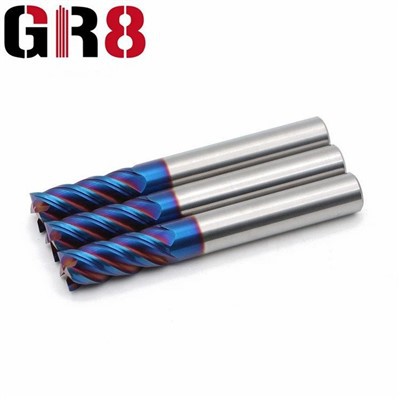
Hey there, folks! As a supplier of long neck end mills, I've seen my fair share of these tools in action. And one question that comes up a lot is, "What are the signs that a long neck end mill needs to be replaced?" Well, I'm here to break it down for you.
First off, let's talk about what a long neck end mill is. It's a type of cutting tool that's used in machining operations. The long neck design allows it to reach into deep or hard - to - access areas. You can check out our 2 Flutes Ball Nose Long Neck End Mill for a great example of this type of tool.
1. Dull Cutting Edges
One of the most obvious signs that your long neck end mill needs to be replaced is dull cutting edges. When the edges of the end mill get dull, it won't cut through the material as smoothly as it should. You'll start to notice that the cutting process becomes more difficult. The mill might start to chatter or vibrate, which can lead to a poor surface finish on the workpiece.
For instance, if you're using the end mill to cut through aluminum, a sharp end mill will make clean, precise cuts. But as the edges dull, the cuts will become ragged, and you might even see some burrs forming on the edges of the cut. You can try to inspect the cutting edges with a magnifying glass. If you see that the edges are rounded or have lost their sharpness, it's probably time for a new end mill.
2. Excessive Wear on the Flutes
The flutes of a long neck end mill are the spiral grooves that run along the length of the tool. These flutes are important because they help to chip evacuation. When the flutes start to show excessive wear, it can cause problems.
Excessive wear on the flutes can lead to poor chip evacuation. Chips can get stuck in the flutes, which can cause the end mill to overheat. Overheating can, in turn, lead to further damage to the end mill and the workpiece. You might notice that the chips aren't coming out as easily as they used to, or that the end mill is getting hot quickly during the cutting process.
Another sign of flute wear is a change in the chip shape. A healthy end mill will produce long, continuous chips. But as the flutes wear, the chips might start to break into smaller pieces or become irregular in shape.
3. Breakage or Chipping
Breakage or chipping of the end mill is a clear sign that it needs to be replaced. Even a small chip on the cutting edge can affect the performance of the end mill. A chipped end mill will not be able to make precise cuts, and it can also cause damage to the workpiece.


There are several reasons why an end mill might break or chip. It could be due to excessive cutting forces, improper feed rates, or hitting a hard spot in the material. If you hear a loud noise during the cutting process or notice a sudden change in the cutting performance, it's a good idea to stop and check the end mill for breakage or chipping.
4. Poor Surface Finish
As I mentioned earlier, a sharp long neck end mill will produce a good surface finish on the workpiece. But if you start to see a deterioration in the surface finish, it could be a sign that the end mill needs to be replaced.
A poor surface finish can manifest in different ways. You might see rough spots, striations, or unevenness on the surface of the workpiece. This can be caused by a dull end mill, excessive wear on the flutes, or breakage of the cutting edges.
If you're aiming for a high - quality finish on your workpiece, and you're not getting it, it's worth taking a closer look at your end mill.
5. Increased Cutting Forces
When a long neck end mill is in good condition, it will require a certain amount of cutting force to make the cuts. But as the end mill wears, the cutting forces will increase.
You can notice an increase in cutting forces in a few ways. The machine might start to strain more during the cutting process. You might hear the motor working harder or see that the feed rate has to be reduced to keep the cutting process going. An increase in cutting forces can also lead to increased tool wear and can put more stress on the machine itself.
6. Unusual Noise or Vibration
Unusual noise or vibration during the cutting process is another sign that something is wrong with the long neck end mill. A well - functioning end mill will make a smooth, consistent noise. But if you start to hear a rattling, grinding, or high - pitched noise, it could be a sign of a problem.
Vibration can also be an issue. Excessive vibration can cause the end mill to wear out faster and can lead to a poor surface finish on the workpiece. It can be caused by a dull end mill, improper tool setup, or a problem with the machine itself.
7. Changes in Cutting Performance
If you notice a change in the cutting performance of the long neck end mill, it's a red flag. For example, if the end mill used to cut through a certain material at a particular speed and feed rate, and now it's struggling to do so, it could be time for a replacement.
You might also notice that the end mill is not cutting as deep as it used to or that it's taking longer to complete a cut. These changes in cutting performance can be due to wear and tear on the end mill.
Conclusion
So, there you have it - the signs that a long neck end mill needs to be replaced. Keeping an eye out for these signs can help you avoid costly mistakes and ensure that your machining operations run smoothly.
If you're in the market for a new long neck end mill, I'd love to have a chat with you. We've got a wide range of high - quality long neck end mills that are designed to meet your needs. Whether you're working on a small - scale project or a large - scale industrial job, we've got the right tool for you. Don't hesitate to reach out if you have any questions or if you're ready to start a purchase.
References
- Tooling and Machining Handbook
- Industrial Cutting Tool Technology Journal