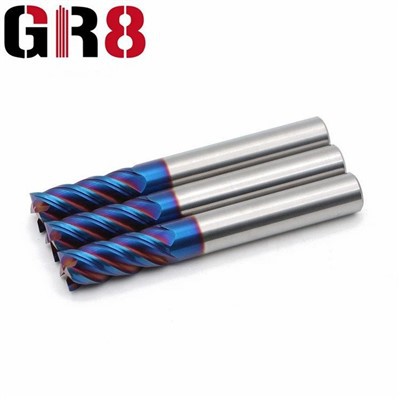
As a supplier of Corner Radius End Mills, I've witnessed firsthand the transformative impact that coatings can have on these essential cutting tools. In this blog, we'll delve into the various effects of coating on a corner radius end mill, exploring how it enhances performance, durability, and overall value.
Improved Wear Resistance
One of the primary benefits of coating a corner radius end mill is the significant improvement in wear resistance. The cutting edges of an end mill are subjected to extreme stress and friction during the machining process. Without proper protection, these edges can quickly wear down, leading to reduced cutting performance and shorter tool life.
Coatings act as a protective barrier between the tool and the workpiece, reducing direct contact and minimizing wear. For example, titanium nitride (TiN) is a commonly used coating that provides a hard, wear-resistant surface. This coating can withstand high temperatures and abrasive materials, ensuring that the end mill maintains its sharpness for a longer period.
When using a coated corner radius end mill, you'll notice a decrease in the frequency of tool replacements. This not only saves you money on tooling costs but also reduces downtime associated with changing tools. In high-volume machining operations, the long-term savings can be substantial.
Enhanced Heat Resistance
Machining generates a significant amount of heat, especially when working with hard materials or at high cutting speeds. Excessive heat can cause the tool to soften, leading to premature wear and even failure. Coatings can help to mitigate this problem by improving the heat resistance of the end mill.


Aluminum titanium nitride (AlTiN) is a popular coating known for its excellent heat resistance. This coating forms a stable oxide layer on the tool surface when exposed to high temperatures, which acts as an insulator and helps to dissipate heat. As a result, the end mill can maintain its hardness and cutting performance even under extreme heat conditions.
By using a coated corner radius end mill with enhanced heat resistance, you can increase cutting speeds and feeds without worrying about overheating the tool. This can lead to significant improvements in productivity, as you can complete machining operations more quickly.
Reduced Friction
Friction between the tool and the workpiece can cause several problems, including increased cutting forces, poor surface finish, and premature tool wear. Coatings can help to reduce friction by providing a smooth, low-friction surface.
Diamond-like carbon (DLC) coatings are known for their excellent lubricity and low friction coefficient. These coatings can significantly reduce the amount of force required to cut through the material, resulting in smoother cutting and improved surface finish. Additionally, the reduced friction can help to extend the tool life by minimizing wear on the cutting edges.
When using a coated corner radius end mill with reduced friction, you'll notice a decrease in the amount of chatter and vibration during machining. This can lead to a more stable cutting process and better overall machining results.
Improved Chip Evacuation
Efficient chip evacuation is crucial for maintaining the performance of a corner radius end mill. If chips are not removed from the cutting area quickly, they can become trapped between the tool and the workpiece, causing damage to the tool and poor surface finish.
Some coatings are designed to improve chip evacuation by providing a smooth surface that allows chips to slide off easily. For example, a titanium carbonitride (TiCN) coating can help to reduce chip adhesion and improve chip flow. This ensures that chips are removed from the cutting area quickly, preventing them from interfering with the cutting process.
By using a coated corner radius end mill with improved chip evacuation, you can achieve better surface finish and reduce the risk of chip-related problems, such as built-up edge and chip welding.
Better Surface Finish
The surface finish of the machined part is an important consideration in many applications. A poor surface finish can affect the functionality and aesthetics of the part, as well as increase the cost of post-processing. Coatings can help to improve the surface finish by reducing friction, minimizing built-up edge, and providing a smooth cutting surface.
A coated corner radius end mill can produce a cleaner, smoother cut, resulting in a better surface finish. This can eliminate the need for additional finishing operations, such as grinding or polishing, which can save time and money. In applications where a high-quality surface finish is required, a coated end mill can be a valuable asset.
Versatility
Coatings can also enhance the versatility of a corner radius end mill. Different coatings are suitable for different materials and machining operations. For example, a TiN-coated end mill is ideal for general-purpose machining of a wide range of materials, including steels, aluminums, and plastics. On the other hand, an AlTiN-coated end mill is better suited for high-speed machining of hard materials, such as stainless steel and titanium.
By choosing the right coating for your specific application, you can optimize the performance of the end mill and achieve the best results. As a supplier, we offer a wide range of coated corner radius end mills to meet the diverse needs of our customers. Whether you're machining soft materials or hard alloys, we have a coated end mill that's right for you.
Conclusion
In conclusion, the effects of coating on a corner radius end mill are significant and far-reaching. Coatings can improve wear resistance, heat resistance, reduce friction, enhance chip evacuation, provide a better surface finish, and increase versatility. By using a coated end mill, you can achieve higher productivity, better quality, and lower costs in your machining operations.
If you're interested in learning more about our 4 Flutes Corner Radius End Mill or 4 Flutes Corner Radius End Mill, or our Beading Bit, please don't hesitate to contact us. We'd be happy to discuss your specific requirements and help you choose the right coated corner radius end mill for your application. Let's work together to optimize your machining processes and achieve your production goals.
References
- Kalpakjian, S., & Schmid, S. R. (2009). Manufacturing Engineering and Technology. Pearson Prentice Hall.
- Trent, E. M., & Wright, P. K. (2000). Metal Cutting. Butterworth-Heinemann.