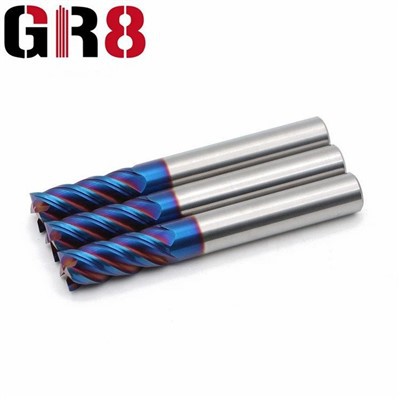
Hey there! As a supplier of flat carbide cutting tools, I've seen firsthand how important it is to understand the vibration characteristics of these tools during cutting. Vibration can have a huge impact on the performance, lifespan, and quality of the cutting process. So, let's dive in and take a closer look at what's going on when our trusty flat carbide cutting tools are hard at work.
Basics of Vibration in Cutting
First things first, you gotta know that vibration in cutting is a complex phenomenon. It’s a result of the interaction between the cutting tool, the workpiece, and the cutting machine. When the tool comes into contact with the workpiece, forces are generated. These forces can cause the tool to vibrate in different ways.
There are usually two main types of vibrations during cutting: natural vibrations and forced vibrations. Natural vibrations are like the tool's own "personality" vibrations. Every tool has its own set of natural frequencies, which are determined by its shape, size, and material properties. When the cutting conditions match these natural frequencies, it can lead to a resonance situation, which is a big no - no. Resonance can cause excessive vibration, pretty quickly wear out the tool, and seriously affect the quality of the cut.
Forced vibrations, on the other hand, are caused by external forces. These external forces can come from things like uneven material in the workpiece, irregularities in the cutting feed rate, or even the machine's own imperfections. When these external forces act on the flat carbide cutting tool, they can make it vibrate in an unwanted way.
Vibration Characteristics of Flat Carbide Cutting Tools
Now, let's talk specifically about flat carbide cutting tools. These tools are known for their high hardness, wear resistance, and excellent cutting performance. But they're not immune to vibration problems.
One of the key vibration characteristics of flat carbide cutting tools is their relatively high stiffness. Carbide is a very hard material, and this gives the tool a high resistance to deformation. However, this high stiffness can also mean that the tool is more likely to transmit vibrations rather than absorb them. So, if there are any vibrations in the cutting process, they're going to travel through the tool pretty easily.


Another important characteristic is the tool's geometry. The shape of the flat carbide cutting tool, such as the number of flutes, the rake angle, and the clearance angle, can have a big impact on its vibration behavior. For example, a tool with more flutes will generally have a smoother cutting action because it distributes the cutting forces over a larger area. This can help reduce vibration. You can check out our 2 Flutes Flat End Mill which has a unique design that affects its vibration characteristics.
The rake angle also plays a role. A positive rake angle can make the cutting process easier, reducing the cutting forces and potentially the vibrations. On the flip side, a negative rake angle can increase the tool's strength but may also lead to higher cutting forces and more vibration.
Impact of Vibration on Cutting Performance
Vibration during cutting can mess up a whole bunch of things. First, it can affect the surface quality of the workpiece. Excessive vibration can cause chatter marks on the surface, making it rough and uneven. No one wants that, especially when you're aiming for a high - quality finish.
Second, vibration can accelerate tool wear. The constant back - and - forth movement can cause the carbide to chip or wear more quickly. This means you'll have to replace your tools more often, which can get pretty expensive over time.
It can also reduce the cutting efficiency. When there's a lot of vibration, the cutting forces become inconsistent. This can make it harder for the tool to cut through the material smoothly, and you may end up spending more time on each cut.
Controlling Vibration in Flat Carbide Cutting Tools
So, what can we do to control the vibration of flat carbide cutting tools? Well, there are a few strategies.
Cutting Parameters: Adjusting the cutting parameters can have a big impact. You can change the cutting speed, feed rate, and depth of cut. For example, reducing the cutting speed can sometimes reduce the cutting forces and thus the vibration. But you have to be careful not to go too slow, or you'll sacrifice efficiency.
Tool Selection: Choosing the right tool for the job is crucial. Consider the material of the workpiece, the required surface finish, and the cutting conditions. We offer a wide range of flat carbide cutting tools, like the Recoveralbe Bead Glass Door Bit Set and Door Frame Bit Set, which are designed to perform well under different conditions and minimize vibration.
Machine Setup: Making sure your cutting machine is properly set up and maintained is also important. Check for any loose parts, make sure the spindle is running smoothly, and ensure that the workpiece is securely clamped. A stable machine setup can go a long way in reducing vibration.
Conclusion and Call to Action
Understanding the vibration characteristics of flat carbide cutting tools is essential for anyone involved in the cutting process. It can help you improve the quality of your work, extend the lifespan of your tools, and increase your overall cutting efficiency.
As a supplier of flat carbide cutting tools, we're here to help you find the best solutions for your specific needs. Whether you're dealing with vibration issues or just looking for high - quality cutting tools, we've got you covered. If you're interested in learning more about our products or have any questions about cutting tool vibration, feel free to reach out and start a conversation with us. We're always happy to discuss your requirements and help you make the right choices for your business.
References
- Smith, J. (2018). "Cutting Tool Technology: Principles and Applications". Publisher: ABC Publishing.
- Johnson, M. (2020). "Vibration Analysis in Machining Processes". Journal of Manufacturing Science, Vol. 15, pp. 45 - 60.