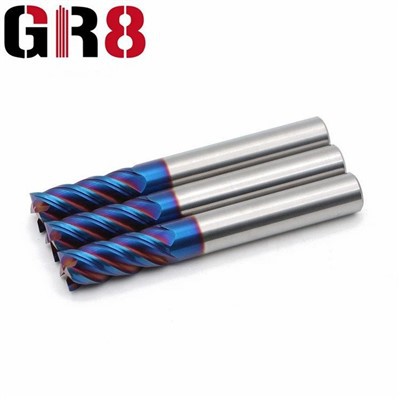
Hey there! As a supplier of Taper Ball Nose Endmills, I often get asked about the heat resistance of these tools. It's a crucial factor, especially when it comes to high - speed machining and tough materials. So, let's dig into what the heat resistance of a Taper Ball Nose Endmill really means.
What is Heat Resistance in a Taper Ball Nose Endmill?
Heat resistance refers to the ability of a Taper Ball Nose Endmill to withstand high temperatures generated during the machining process without losing its cutting performance or structural integrity. When we're cutting materials like steel, titanium, or hardened alloys, a huge amount of heat is produced due to the friction between the endmill and the workpiece.
If an endmill doesn't have good heat resistance, it can lead to a bunch of problems. The cutting edges can wear out quickly, the tool can deform, and the surface finish of the workpiece can be affected. In some extreme cases, the endmill might even break, which is a real headache for machinists.
Factors Affecting Heat Resistance
Material of the Endmill
The material of the Taper Ball Nose Endmill plays a major role in its heat resistance. High - speed steel (HSS) endmills are quite common. They're affordable and can handle a decent amount of heat. But when it comes to really high - temperature applications, HSS might not be the best choice.


Carbide endmills, on the other hand, are a game - changer. Carbide is much harder and more heat - resistant than HSS. It can withstand temperatures up to 1000°C or even higher in some cases. This makes carbide Taper Ball Nose Endmills ideal for high - speed machining and cutting tough materials.
Coating
Coating is another important factor. A good coating can significantly improve the heat resistance of an endmill. For example, titanium nitride (TiN) coating is one of the most common ones. It forms a hard, wear - resistant layer on the endmill surface and helps to reduce friction. This, in turn, reduces the heat generated during cutting.
There are also more advanced coatings like titanium aluminum nitride (TiAlN). TiAlN coatings can withstand even higher temperatures than TiN. They're great for high - speed machining of hard materials. If you're interested in coated endmills, check out our 2F Taper Ball Nose Endmill with Coating.
Geometry of the Endmill
The geometry of the Taper Ball Nose Endmill also affects heat resistance. The helix angle, for instance, can influence how the chips are removed from the cutting zone. A higher helix angle can help to evacuate chips more efficiently, which reduces the heat build - up.
The number of flutes is another aspect. Endmills with fewer flutes generally have more space for chip evacuation, which can be beneficial for heat management. However, endmills with more flutes can provide a better surface finish. We have 2F Taper Ball Nose Milling Cutter without Coating and 2F Taper Ball Nose Milling Cutter Without Coating options that offer different flute configurations to suit various needs.
Measuring Heat Resistance
Measuring the heat resistance of a Taper Ball Nose Endmill isn't straightforward. There isn't a single standard test that can give us a definitive answer. However, there are a few ways to get an idea.
One way is to look at the tool life. If an endmill can maintain its cutting performance for a long time under high - temperature conditions, it's likely to have good heat resistance. Machinists often conduct real - world tests by running the endmill at different cutting speeds and feeds on various materials and then measuring how long it takes for the tool to wear out.
Another approach is to use thermal imaging cameras. These cameras can measure the temperature distribution on the endmill during cutting. By analyzing the temperature patterns, we can understand how well the endmill is handling the heat.
Importance of Heat Resistance in Different Applications
Aerospace Industry
In the aerospace industry, where materials like titanium and nickel - based alloys are commonly used, heat resistance is crucial. These materials are extremely tough and generate a lot of heat during machining. A Taper Ball Nose Endmill with poor heat resistance won't be able to handle the high - temperature environment, leading to frequent tool changes and increased production costs.
Automotive Industry
The automotive industry also relies on Taper Ball Nose Endmills with good heat resistance. When machining engine components, gears, and other parts, high - speed machining is often required. Heat - resistant endmills can ensure a high - quality surface finish and longer tool life, which is essential for mass production.
Mold Making
In mold making, precision is key. The heat generated during the machining of mold cavities can affect the dimensional accuracy of the mold. A heat - resistant Taper Ball Nose Endmill can help to maintain the shape and size of the mold, resulting in better - quality products.
Tips for Maximizing Heat Resistance
Proper Cutting Parameters
Using the right cutting parameters is essential. Cutting speed, feed rate, and depth of cut all need to be optimized. If the cutting speed is too high, it can generate excessive heat. On the other hand, if the feed rate is too low, the endmill might rub against the workpiece instead of cutting it, also leading to heat build - up.
Coolant Usage
Coolant plays a vital role in reducing heat. It helps to dissipate the heat generated during cutting and also lubricates the cutting edges. There are different types of coolants available, such as water - based and oil - based coolants. Choosing the right coolant for the material being machined is important.
Tool Maintenance
Regular tool maintenance can also improve heat resistance. Keeping the endmill clean and sharp can reduce friction and heat generation. Machinists should also inspect the endmill regularly for signs of wear and replace it when necessary.
Conclusion
So, there you have it! The heat resistance of a Taper Ball Nose Endmill is a complex but important aspect. It depends on factors like the material, coating, and geometry of the endmill. Understanding heat resistance can help machinists choose the right endmill for their applications and improve the efficiency and quality of their machining processes.
If you're in the market for high - quality Taper Ball Nose Endmills with excellent heat resistance, we're here to help. Whether you need a coated or uncoated endmill, we have a wide range of options to meet your needs. Don't hesitate to reach out for a purchase negotiation. We're looking forward to working with you!
References
- "Machining Handbook" by Industrial Press Inc.
- "Cutting Tool Technology" by Stephenson and Agapiou.