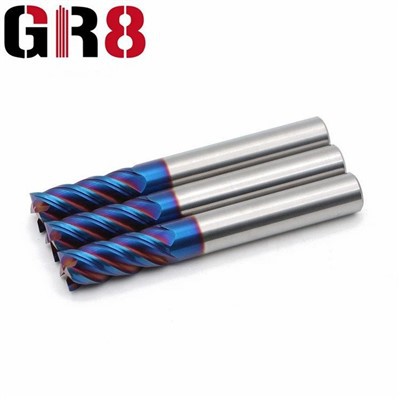
Hey there! As a supplier of flat milling cutters, I often get asked if a flat milling cutter can be used for roughing. Well, let's dive right into this topic and find out.
First off, what exactly is roughing in the world of machining? Roughing is the initial stage of the machining process where a large amount of material is removed from the workpiece to get it close to the desired shape. The goal here is to take off as much material as quickly as possible, sacrificing some surface finish for speed.
Now, let's talk about flat milling cutters. Flat milling cutters, as the name suggests, have a flat end. They come in different shapes, sizes, and flute configurations. These cutters are commonly used for various milling operations, including face milling, slotting, and profiling.
So, can a flat milling cutter be used for roughing? The short answer is yes, it can. But there are a few things to consider.
One of the main factors is the flute configuration. Flutes are the grooves on the cutter that help in chip evacuation. For roughing, cutters with fewer flutes are generally preferred. Why? Well, fewer flutes mean more space between them, which allows for better chip removal. When you're removing a large amount of material, you don't want the chips to get stuck in the flutes, as this can lead to poor cutting performance, increased tool wear, and even breakage.
For example, a 2 Flutes Flat End Mill can be a great choice for roughing. With only two flutes, it provides ample space for the chips to escape. This type of cutter can handle heavy cuts and high feed rates, making it suitable for quickly removing material from the workpiece.


Another important aspect is the material of the cutter. High-speed steel (HSS) and carbide are two common materials used for flat milling cutters. Carbide cutters are generally more suitable for roughing, especially when dealing with hard materials. They are harder, more wear-resistant, and can withstand higher cutting speeds and feeds compared to HSS cutters.
Let's say you're working on a project where you need to rough out a block of hardened steel. In this case, a 65HRC 4 Flutes Flat End Mill would be a good option. The 65HRC indicates the hardness of the carbide, which means it can handle the tough cutting conditions of roughing hardened steel.
However, using a flat milling cutter for roughing also has its limitations. Since the main goal of roughing is to remove material quickly, the surface finish of the workpiece may not be very smooth. If you need a high-quality surface finish, you'll likely need to follow up with a finishing operation using a different cutter or a different machining process.
Also, when using a flat milling cutter for roughing, you need to pay attention to the cutting parameters. The cutting speed, feed rate, and depth of cut all play a crucial role in the performance of the cutter. If the cutting speed is too high, the cutter may overheat and wear out quickly. On the other hand, if the feed rate is too low, it will take longer to remove the material, reducing the efficiency of the process.
In addition to the standard flat milling cutters, there are also specialized cutters available for roughing. Other Handrail Bit can be used in certain roughing applications where the shape of the workpiece requires a specific cutting edge. These specialized cutters are designed to optimize the roughing process for specific tasks, providing better performance and efficiency.
So, in conclusion, a flat milling cutter can definitely be used for roughing. With the right flute configuration, material, and cutting parameters, it can effectively remove a large amount of material from the workpiece in a relatively short time. However, it's important to understand the limitations and choose the appropriate cutter for the specific application.
If you're in the market for flat milling cutters for your roughing operations, we've got you covered. We offer a wide range of high-quality flat milling cutters that are designed to meet the needs of different machining applications. Whether you need a 2-flute cutter for heavy roughing or a carbide cutter for hard materials, we have the right product for you.
Don't hesitate to reach out if you have any questions or if you're interested in discussing your specific requirements. We're here to help you find the best solution for your machining needs. Let's work together to make your projects a success!
References
- Machinery's Handbook, 31st Edition
- Cutting Tool Engineering Magazine