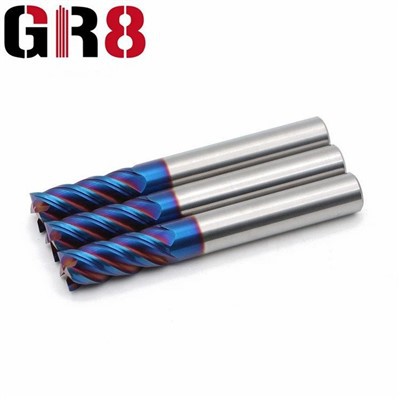
Selecting the appropriate cutting edge radius for a roughing end mill is crucial for achieving optimal performance in machining operations. As a roughing end mill supplier, I've seen firsthand how the right choice can significantly impact efficiency, tool life, and the overall quality of the finished product. In this blog post, I'll share some insights on how to make this important decision.
Understanding the Basics of Cutting Edge Radius
First off, let's talk about what the cutting edge radius is. It's the rounded part at the tip of the end mill's cutting edge. This radius plays a huge role in how the end mill interacts with the workpiece. A smaller cutting edge radius means a sharper edge, which is great for getting into tight spots and making precise cuts. On the other hand, a larger cutting edge radius provides more strength and durability, which can be beneficial when dealing with tough materials or heavy roughing operations.


Factors to Consider When Selecting the Cutting Edge Radius
Material of the Workpiece
The material you're machining is one of the most important factors. For softer materials like aluminum or brass, a smaller cutting edge radius can work well. These materials are easier to cut, so a sharper edge can make quick work of them without too much wear on the tool. For example, a cutting edge radius of 0.005 - 0.01 inches might be suitable for aluminum.
However, when you're dealing with harder materials such as stainless steel or titanium, a larger cutting edge radius is usually better. These materials put more stress on the tool, and a larger radius helps distribute that stress more evenly, reducing the risk of chipping or breaking the cutting edge. A cutting edge radius of 0.015 - 0.03 inches could be a good choice for stainless steel.
Machining Operation
The type of machining operation also matters. If you're doing light roughing or finishing work, a smaller cutting edge radius can give you better surface finish and more precise cuts. But for heavy roughing, where you're removing a large amount of material quickly, a larger cutting edge radius is often preferred. It can handle the high forces involved in heavy material removal and prevent the tool from wearing out too fast.
Tool Life
Tool life is always a concern. A larger cutting edge radius generally leads to longer tool life because it can withstand more wear and tear. However, it might not be the best choice if you need a high level of precision. You'll need to find a balance between tool life and the quality of the finished product.
Our Roughing End Mill Offerings
We offer a wide range of 3 Flutes Roughing Milling Cutter with different cutting edge radii to meet various machining needs. Our 3 Flutes Roughing End Mill is designed to provide excellent performance in both light and heavy roughing operations. And if you're looking for a reliable source of high - quality roughing end mills, our 3 Flutes Roughing End Mill factory can offer you cost - effective solutions.
Tips for Making the Right Choice
Test and Evaluate
Don't be afraid to test different cutting edge radii on a small sample of the workpiece. This can give you a better idea of how each radius performs in terms of cutting speed, surface finish, and tool life. Keep track of your results and use them to make an informed decision for your full - scale production.
Consult with Experts
If you're still unsure about which cutting edge radius to choose, don't hesitate to consult with our team. We have years of experience in the industry and can provide you with personalized advice based on your specific needs.
Conclusion
Selecting the appropriate cutting edge radius for a roughing end mill is a complex but important decision. By considering factors such as the material of the workpiece, the machining operation, and tool life, you can make a choice that will improve the efficiency and quality of your machining operations.
If you're interested in our roughing end mills or need more information on selecting the right cutting edge radius, feel free to reach out to us. We're here to help you find the best solution for your machining needs.
References
- "Machining Handbook" by Industrial Press Inc.
- "Cutting Tool Engineering" magazine articles on end mill selection.