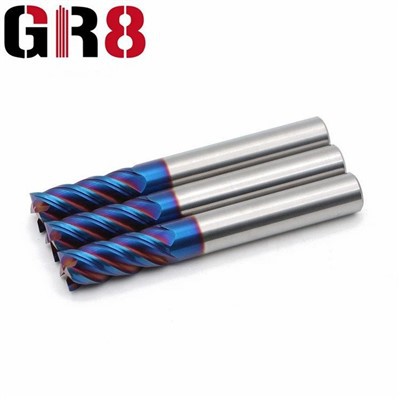
As a supplier of 3 Flutes Roughing End Mills, I've witnessed firsthand the significance of understanding their vibration performance. In the machining industry, vibration can significantly impact the quality of the end - product, the lifespan of the tool, and overall productivity. This blog aims to delve deep into the vibration performance of 3 Flutes Roughing End Mills, exploring what affects it and how to optimize it.
Understanding Vibration in 3 Flutes Roughing End Mills
Vibration in a 3 Flutes Roughing End Mill occurs during the cutting process. When the cutter engages with the workpiece, forces are generated. These forces can cause the tool to vibrate. There are two main types of vibrations that we often encounter: forced vibration and self - excited vibration.
Forced vibration is caused by external factors such as the rotation speed of the spindle, the feed rate, and the unevenness of the workpiece material. For example, if the spindle speed is set too high and the cutter is not well - balanced, it can lead to forced vibration. Self - excited vibration, on the other hand, is caused by the interaction between the cutting process and the dynamics of the machine - tool - workpiece system. This type of vibration is more complex and often more difficult to control.
Factors Affecting Vibration Performance
Geometric Design
The geometric design of the 3 Flutes Roughing End Mill plays a crucial role in its vibration performance. The number of flutes, in this case, three, affects the cutting force distribution. Three flutes provide a good balance between chip evacuation and cutting stability. Compared to end mills with fewer flutes, 3 Flutes Roughing End Mills can handle larger cutting loads with less vibration. The helix angle of the flutes also matters. A larger helix angle can reduce the cutting force and thus minimize vibration.
The rake angle and relief angle of the cutting edges are other important geometric parameters. A proper rake angle can reduce the cutting force, while an appropriate relief angle can prevent the tool from rubbing against the workpiece, which can cause vibration. Our 3 Flutes Roughing End Mill is designed with optimized geometric parameters to ensure excellent vibration performance.
Material and Coating
The material of the end mill and its coating can significantly impact vibration. High - speed steel (HSS) and carbide are two common materials for end mills. Carbide end mills are generally more rigid and have better heat resistance than HSS end mills. This rigidity helps to reduce vibration during cutting.
Coatings such as TiN (Titanium Nitride), TiAlN (Titanium Aluminum Nitride), and AlTiN (Aluminum Titanium Nitride) can improve the wear resistance and lubricity of the end mill. A well - coated end mill can reduce the friction between the tool and the workpiece, which in turn reduces vibration. Our 3 Flutes Roughing Milling Cutter uses high - quality carbide material with advanced coatings to enhance its vibration performance.
Machining Parameters
Machining parameters, including spindle speed, feed rate, and depth of cut, have a direct impact on vibration. If the spindle speed is too high, the cutting force can increase rapidly, leading to vibration. Similarly, an excessive feed rate or depth of cut can also cause the tool to vibrate. It is essential to select the appropriate machining parameters based on the material of the workpiece, the type of end mill, and the machine tool's capabilities.
For example, when machining a hard - to - machine material, a lower spindle speed and feed rate may be required to reduce vibration. On the other hand, for a softer material, higher machining parameters can be used while still maintaining good vibration performance. We recommend consulting our technical experts to determine the optimal machining parameters for your specific application when using our 3 Flutes Roughing End Mill.
Effects of Vibration on Machining
Surface Finish
Vibration can have a detrimental effect on the surface finish of the machined part. When the end mill vibrates, it creates uneven cutting marks on the workpiece surface. These marks can reduce the surface quality and dimensional accuracy of the part. In some high - precision machining applications, even a slight vibration can lead to unacceptable surface roughness.
Tool Life
Excessive vibration can also shorten the tool life of the 3 Flutes Roughing End Mill. The vibration causes additional stress on the cutting edges, which can lead to premature wear, chipping, and even breakage of the tool. By reducing vibration, we can extend the tool life and reduce the tool replacement cost.
Productivity
Vibration can limit the machining productivity. When vibration occurs, the operator may need to reduce the machining parameters to control it, which slows down the machining process. In addition, if the tool breaks due to vibration, it will cause downtime for tool replacement and machine setup. Therefore, optimizing the vibration performance of the 3 Flutes Roughing End Mill is crucial for improving productivity.
Methods to Optimize Vibration Performance
Machine Tool Selection and Maintenance
Choosing a high - quality machine tool with good dynamic characteristics is essential for reducing vibration. A machine tool with a rigid structure, accurate spindle, and stable feed system can provide a better foundation for the machining process. Regular maintenance of the machine tool, including checking the spindle runout, lubricating the moving parts, and tightening the bolts, can also help to maintain its stability and reduce vibration.


Tool Holder and Setup
Using a high - quality tool holder is crucial for minimizing vibration. A tool holder with good concentricity and clamping force can ensure that the end mill is firmly held during cutting. Proper tool setup, including correct tool length and overhang, is also important. A shorter tool overhang can reduce the tool's flexibility and thus minimize vibration.
Adaptive Machining Techniques
Adaptive machining techniques, such as real - time monitoring and adjustment of machining parameters, can be used to optimize vibration performance. By installing sensors on the machine tool or the end mill, we can monitor the cutting force, vibration, and temperature in real - time. Based on the monitored data, the machining parameters can be adjusted automatically to maintain a stable cutting process and reduce vibration.
Conclusion
In conclusion, the vibration performance of a 3 Flutes Roughing End Mill is influenced by various factors, including geometric design, material and coating, and machining parameters. Understanding these factors and taking appropriate measures to optimize them can significantly improve the vibration performance, which in turn leads to better surface finish, longer tool life, and higher productivity.
As a leading supplier of 3 Flutes Roughing End Mill, we are committed to providing high - quality products with excellent vibration performance. If you are interested in our products or need more information about optimizing the vibration performance of 3 Flutes Roughing End Mills, please feel free to contact us for procurement and further discussions.
References
- Smith, J. (2018). Machining Handbook. Industrial Press.
- Brown, A. (2020). Cutting Tool Technology. McGraw - Hill.
- Johnson, R. (2019). Vibration Analysis in Machining Processes. Elsevier.