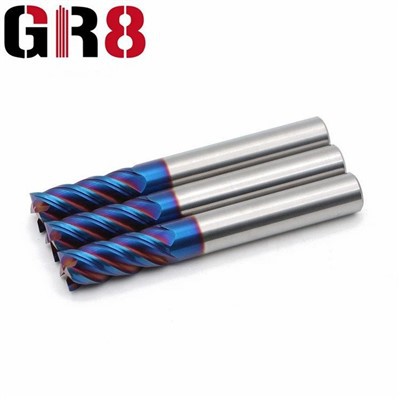
Determining the maximum depth of cut for a flat milling cutter is a crucial aspect in machining operations. As a supplier of flat milling cutters, I understand the significance of this parameter for achieving optimal performance, efficiency, and quality in milling processes. In this blog post, I will share some key factors and methods to help you determine the maximum depth of cut for a flat milling cutter.
Factors Affecting the Maximum Depth of Cut
Material Properties
The material being machined plays a vital role in determining the maximum depth of cut. Harder materials, such as 45HRC 4 Flutes Flat End Mill and 65HRC 4 Flutes Flat End Mill which are designed for high - hardness materials, require more cutting force. When dealing with hard alloys or steels, the depth of cut should be relatively small to avoid excessive tool wear and breakage. Softer materials like aluminum or brass can generally tolerate larger depths of cut because they offer less resistance to the cutting edge. For example, when machining aluminum, you can often achieve deeper cuts compared to machining stainless steel.
Tool Geometry
The geometry of the flat milling cutter is another critical factor. The number of flutes affects chip evacuation and cutting forces. Cutters with fewer flutes, such as two - flute cutters, usually have more space for chip removal, which allows for larger depths of cut in some cases. However, they may produce a rougher surface finish. On the other hand, cutters with more flutes, like 65HRC 4 Flutes Flat End Mill, can provide a better surface finish but may have limitations on the depth of cut due to reduced chip - carrying capacity. The cutter's diameter also matters. Larger diameter cutters can generally handle greater depths of cut because they have more cutting edge length and can distribute the cutting forces over a larger area.


Machine Rigidity
The rigidity of the milling machine is essential. A rigid machine can better withstand the cutting forces generated during the milling process. If the machine is not rigid enough, excessive vibrations will occur when taking large depths of cut. These vibrations can lead to poor surface finish, premature tool wear, and even damage to the machine. For instance, a heavy - duty industrial milling machine can support larger depths of cut compared to a lightweight benchtop milling machine. Before determining the maximum depth of cut, it is necessary to assess the machine's rigidity and its ability to handle the cutting forces.
Cutting Conditions
Cutting speed and feed rate are closely related to the maximum depth of cut. Higher cutting speeds can increase the cutting temperature, which may affect tool life. If you increase the depth of cut, you may need to adjust the cutting speed and feed rate accordingly. A general rule is that as the depth of cut increases, the cutting speed should be reduced to prevent overheating of the tool. Similarly, the feed rate should be carefully selected to ensure proper chip formation and removal. If the feed rate is too high, it can cause the tool to overload, while a too - low feed rate may result in excessive rubbing and poor productivity.
Methods for Determining the Maximum Depth of Cut
Manufacturer's Recommendations
One of the simplest ways to determine the maximum depth of cut is to refer to the manufacturer's recommendations. Tool manufacturers usually provide guidelines on the optimal cutting parameters, including the maximum depth of cut, for their flat milling cutters. These recommendations are based on extensive testing and research. When you purchase a flat milling cutter from us, we provide detailed technical specifications and usage instructions, which can serve as a starting point for your machining operations. However, it should be noted that these are general guidelines, and you may need to make adjustments according to your specific machining conditions.
Trial and Error
Trial and error is a practical method, especially when dealing with new materials or unique machining requirements. Start with a small depth of cut and gradually increase it while monitoring the cutting process. Observe the surface finish of the workpiece, the tool wear, and the cutting forces. If you notice any signs of excessive tool wear, poor surface finish, or vibrations, it may indicate that the depth of cut is too large. By making small incremental changes, you can find the maximum depth of cut that is suitable for your specific situation. This method requires patience and careful observation but can provide accurate results for your particular machining setup.
Mathematical Calculations
There are also some mathematical models and formulas that can be used to estimate the maximum depth of cut. These calculations take into account factors such as the material properties, tool geometry, and cutting conditions. For example, the cutting force formula can be used to calculate the cutting forces based on the depth of cut, feed rate, and cutting speed. By comparing the calculated cutting forces with the maximum allowable cutting force of the tool and the machine, you can estimate the maximum depth of cut. However, these calculations are often complex and require a good understanding of machining theory.
Importance of Correctly Determining the Maximum Depth of Cut
Tool Life
Determining the correct maximum depth of cut can significantly extend the tool life. When the depth of cut is too large, the tool is subjected to excessive stress and wear, which can cause the cutting edge to dull quickly or even break. By using the appropriate depth of cut, the tool can operate within its designed limits, reducing the frequency of tool changes and saving costs on tool replacement.
Surface Finish
The depth of cut also affects the surface finish of the workpiece. An improper depth of cut can result in a rough or uneven surface. By choosing the right depth of cut, you can achieve a smooth and precise surface finish, which is often crucial in applications where high - quality surfaces are required, such as in the production of precision parts.
Productivity
Optimal depth of cut can improve productivity. Taking the maximum depth of cut that the tool, machine, and material can tolerate allows you to remove more material in each pass. This reduces the number of passes required to complete the machining operation, saving time and increasing the overall efficiency of the production process.
Conclusion
Determining the maximum depth of cut for a flat milling cutter is a complex process that involves considering multiple factors such as material properties, tool geometry, machine rigidity, and cutting conditions. As a flat milling cutter supplier, we are committed to providing high - quality tools and professional advice to help you make the right decisions. Whether you rely on our manufacturer's recommendations, use the trial - and - error method, or perform mathematical calculations, it is essential to find the optimal depth of cut for your specific machining needs.
If you have any questions about flat milling cutters or need assistance in determining the maximum depth of cut for your applications, please feel free to contact us. We are more than happy to engage in procurement discussions and provide you with the best solutions for your machining operations.
References
- Boothroyd, G., & Knight, W. A. (2006). Fundamentals of Machining and Machine Tools. CRC Press.
- Kalpakjian, S., & Schmid, S. R. (2009). Manufacturing Engineering and Technology. Pearson Prentice Hall.