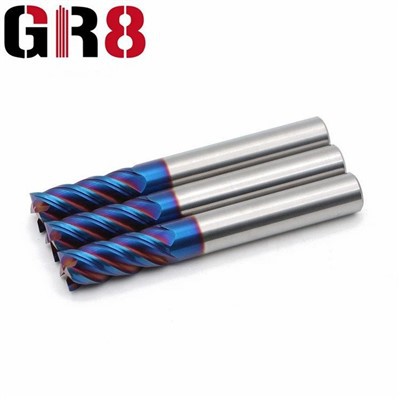
In the ever - evolving world of machining, the choice of cutting tools is crucial, especially when dealing with challenging materials like nickel - based alloys. As a supplier of DLC Coated End Mills, I often receive inquiries about the suitability of these tools for machining nickel - based alloys. In this blog, we will explore this topic in depth, analyzing the properties of both DLC coated end mills and nickel - based alloys, and discussing the practical aspects of using these tools in such applications.
Understanding DLC Coated End Mills
Diamond - Like Carbon (DLC) coating is a thin - film coating that offers several advantages in machining operations. The coating is applied to the surface of end mills, which are cutting tools used for milling operations. DLC coatings are known for their high hardness, low friction coefficient, and excellent wear resistance.
The high hardness of DLC coatings allows the end mills to maintain their cutting edge for a longer time, reducing the frequency of tool replacement. This is particularly important in high - volume machining operations, where downtime for tool changes can significantly impact productivity. The low friction coefficient of DLC coatings reduces the heat generated during cutting, which in turn can improve the surface finish of the machined part and extend the tool life.
Moreover, DLC coatings provide good chemical stability, which means they are less likely to react with the workpiece material. This is beneficial in preventing built - up edge (BUE) formation, a common problem in machining that can lead to poor surface finish and reduced tool performance.
Properties of Nickel - Based Alloys
Nickel - based alloys are a group of materials that are widely used in various industries, including aerospace, power generation, and chemical processing. These alloys are known for their excellent high - temperature strength, corrosion resistance, and good mechanical properties.
One of the key challenges in machining nickel - based alloys is their high strength and toughness. These materials have a tendency to work - harden during machining, which can make the cutting process more difficult and increase the wear on the cutting tools. Additionally, nickel - based alloys have a relatively low thermal conductivity, which means that heat generated during cutting is not dissipated easily. This can lead to high cutting temperatures, which can cause rapid tool wear and reduce the quality of the machined surface.
Can DLC Coated End Mills Be Used for Machining Nickel - Based Alloys?
The answer to whether DLC coated end mills can be used for machining nickel - based alloys is not straightforward. On one hand, the high hardness and low friction coefficient of DLC coatings suggest that they could potentially be effective in machining these challenging materials. The wear resistance of DLC coatings could help to withstand the high cutting forces and work - hardening effects associated with nickel - based alloys.
However, there are also some limitations. The high cutting temperatures generated during the machining of nickel - based alloys can potentially degrade the DLC coating. The coating may start to lose its properties at elevated temperatures, which can lead to reduced tool performance. Additionally, the chemical reactivity of nickel - based alloys with the DLC coating needs to be carefully considered. In some cases, there may be a chemical interaction between the coating and the workpiece material, which could affect the tool life and the quality of the machined surface.
Practical Considerations
In practice, the use of DLC coated end mills for machining nickel - based alloys depends on several factors, including the specific composition of the nickel - based alloy, the machining parameters, and the application requirements.
Alloy Composition
Different nickel - based alloys have different properties, and some may be more suitable for machining with DLC coated end mills than others. For example, alloys with a lower content of hardening elements may be less likely to cause excessive wear on the coating. It is important to understand the specific alloy composition and its properties before deciding on the cutting tool.
Machining Parameters
The choice of machining parameters, such as cutting speed, feed rate, and depth of cut, is crucial when using DLC coated end mills for machining nickel - based alloys. Lower cutting speeds and feed rates may be necessary to reduce the cutting forces and heat generation. This can help to prevent the degradation of the DLC coating and improve the tool life.
Application Requirements
The requirements of the application, such as the desired surface finish and dimensional accuracy, also play a role in determining the suitability of DLC coated end mills. If a high - quality surface finish is required, the performance of the DLC coating in preventing BUE formation can be an advantage. However, if the application involves heavy - duty machining with high material removal rates, the limitations of the coating at high temperatures may become more apparent.

Case Studies
To illustrate the practical use of DLC coated end mills in machining nickel - based alloys, let's consider a few case studies.
In a aerospace manufacturing application, a company was machining a nickel - based alloy for a turbine component. They initially used uncoated carbide end mills, but faced issues with rapid tool wear and poor surface finish. After switching to DLC Coated End Mills, they noticed a significant improvement in tool life. The low friction coefficient of the DLC coating reduced the heat generation, and the wear resistance of the coating allowed the end mills to maintain their cutting edge for a longer time. As a result, the surface finish of the machined components improved, and the overall productivity increased.
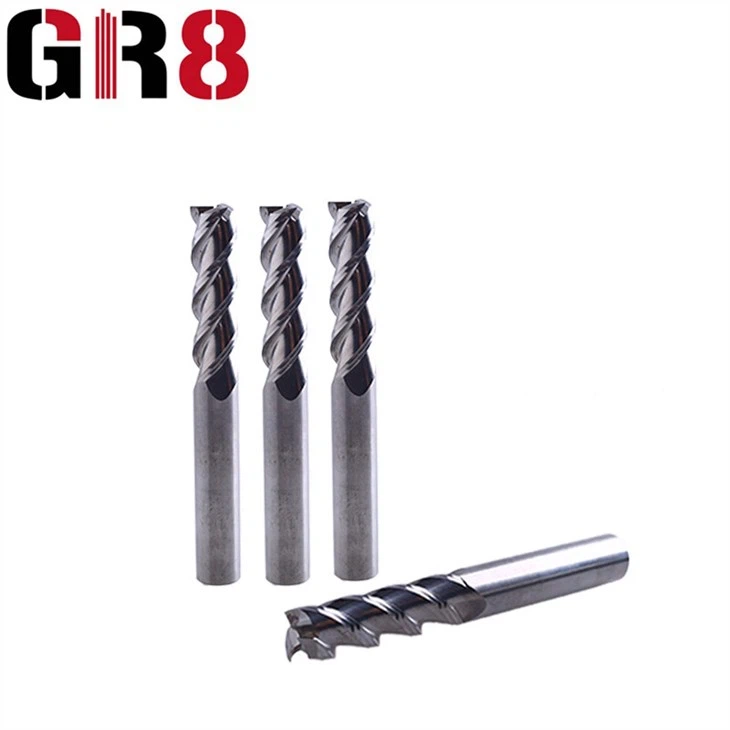
In another case, a power generation company was machining a nickel - based alloy for a steam turbine blade. They found that the 3 Flutes Aluminum Processing End Mill with DLC coating was effective in achieving the desired dimensional accuracy. The three - flute design provided a good balance between material removal rate and cutting force, and the DLC coating helped to prevent BUE formation, resulting in a smooth surface finish.
Conclusion
In conclusion, DLC coated end mills can be a viable option for machining nickel - based alloys, but their effectiveness depends on various factors. While the high hardness, low friction coefficient, and wear resistance of DLC coatings offer potential benefits, the high cutting temperatures and chemical reactivity associated with nickel - based alloys need to be carefully considered.
By understanding the properties of both the DLC coated end mills and the nickel - based alloys, and by optimizing the machining parameters, it is possible to achieve good results in terms of tool life, surface finish, and productivity.
If you are interested in exploring the use of DLC coated end mills for your nickel - based alloy machining applications, we encourage you to contact us for further discussion. Our team of experts can provide you with detailed information and technical support to help you make the best choice for your specific needs.
References
- "Machining of Nickel - Based Alloys: A Review" by X. Y. Zhang et al.
- "Diamond - Like Carbon Coatings for Cutting Tools" by A. Matthews and B. N. Zhou.
- "Advanced Machining Processes for High - Performance Alloys" edited by Y. Altintas and M. P. Sealy.