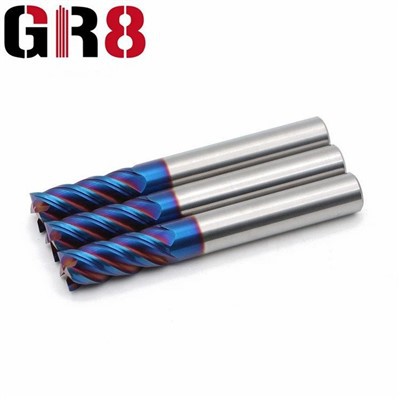
When it comes to using a Corn End Mill, selecting the appropriate coolant is crucial for achieving optimal performance, prolonging tool life, and ensuring high - quality machining results. As a reputable Corn End Mill supplier, we understand the significance of this decision and are here to guide you through the process.
The Role of Coolant in Milling Operations
Coolants play several vital roles in milling operations. Firstly, they help to dissipate heat generated during the cutting process. Milling, especially at high speeds, can produce a significant amount of heat, which can lead to thermal expansion of the tool and the workpiece. This thermal expansion can cause dimensional inaccuracies in the machined part and also accelerate tool wear. By carrying away the heat, coolants maintain a more stable temperature in the cutting zone, reducing the risk of these issues.
Secondly, coolants act as lubricants. They reduce the friction between the cutting edge of the Corn End Mill and the workpiece material. Lower friction means less force is required for cutting, which in turn reduces tool wear and power consumption. Additionally, better lubrication results in a smoother surface finish on the machined part.
Finally, coolants help to flush away chips from the cutting area. Chips can interfere with the cutting process, causing uneven cuts, tool breakage, and surface defects. A well - chosen coolant can effectively remove chips, ensuring a clean and efficient cutting environment.
Types of Coolants
1. Water - Based Coolants
Water - based coolants are the most commonly used type in milling operations. They offer several advantages. One of the main benefits is their excellent cooling capacity. Water has a high specific heat capacity, which means it can absorb a large amount of heat before its temperature rises significantly.
There are two subtypes of water - based coolants: soluble oils and synthetic coolants. Soluble oils are made by emulsifying mineral oil in water. They provide good lubrication and are relatively inexpensive. However, they can be prone to bacterial growth, which can lead to unpleasant odors and reduced coolant performance over time.
Synthetic coolants, on the other hand, are formulated without oil. They are known for their long service life, good corrosion protection, and excellent cooling properties. They also tend to be more environmentally friendly than soluble oils. However, they may not provide as much lubrication as soluble oils in some applications.
2. Straight Oils
Straight oils are pure mineral or vegetable oils. They offer superior lubrication compared to water - based coolants. This makes them a good choice for difficult - to - machine materials such as titanium and stainless steel. Straight oils also provide excellent corrosion protection for the cutting tool.
However, straight oils have some drawbacks. They have poor cooling properties compared to water - based coolants. This means that in high - speed milling operations, they may not be able to dissipate heat quickly enough, leading to overheating of the tool and workpiece. Additionally, straight oils can be messy to work with and may pose a fire hazard in some environments.
3. Semi - Synthetic Coolants
Semi - synthetic coolants combine the advantages of both water - based and straight oils. They contain a small amount of oil (usually between 5% - 30%) in a water - based solution. This gives them a good balance of cooling and lubrication properties.
Semi - synthetic coolants are less likely to cause bacterial growth than soluble oils and offer better lubrication than synthetic coolants. They are suitable for a wide range of materials and machining operations, making them a versatile choice for many workshops.
Choosing the Right Coolant for a Corn End Mill
The choice of coolant for a Corn End Mill depends on several factors.
1. Workpiece Material
Different workpiece materials have different machining requirements. For example, when machining soft materials like aluminum, a coolant with good flushing properties is important to remove chips quickly. Water - based coolants, especially synthetic ones, are often a good choice for aluminum because they can effectively cool the cutting area and flush away chips without leaving a residue.
When machining hard materials such as steel or titanium, a coolant with excellent lubrication is needed to reduce friction and tool wear. Straight oils or semi - synthetic coolants may be more suitable in these cases.
2. Cutting Speed and Feed Rate
Higher cutting speeds and feed rates generate more heat. In such situations, a coolant with good cooling capacity is essential. Water - based coolants, particularly synthetic coolants, are well - suited for high - speed milling operations because of their superior cooling properties.
3. Machining Operation
The type of machining operation also influences the coolant choice. For example, in roughing operations, where large amounts of material are being removed quickly, a coolant that can effectively flush away chips is crucial. Water - based coolants are often preferred in these cases.
In finishing operations, where a high - quality surface finish is required, lubrication becomes more important. Straight oils or semi - synthetic coolants may be a better option to achieve a smooth surface.
Coolant Compatibility with Corn End Mills
When using a Corn End Mill, it is important to consider the coolant's compatibility with the tool material. Most Corn End Mills are made of carbide, which is a hard and wear - resistant material.
Water - based coolants are generally compatible with carbide tools. However, care should be taken to ensure that the coolant does not cause corrosion. Some synthetic coolants are formulated with corrosion inhibitors specifically for carbide tools.
Straight oils can also be used with carbide Corn End Mills, but they may leave a residue on the tool, which can affect the cutting performance over time. It is important to clean the tool regularly when using straight oils.
Special Considerations for Different Workpiece Materials
1. Wood
When using a Corn End Mill to machine wood, water - based coolants are often a good choice. They can effectively cool the tool and flush away wood chips. Straight Flutes Engraving End Mills and Straight Flutes End Mills are also commonly used in woodworking.
Water - based coolants can help to prevent the wood from charring due to heat generated during the cutting process. They also provide a clean and efficient cutting environment. However, it is important to ensure that the coolant does not cause the wood to warp or swell.
2. Metal
For metal machining, the choice of coolant depends on the type of metal. As mentioned earlier, for soft metals like aluminum, water - based coolants are often preferred. For harder metals like steel and titanium, straight oils or semi - synthetic coolants may be more appropriate.
When machining stainless steel, a coolant with good lubrication and anti - corrosion properties is needed. Synthetic coolants or semi - synthetic coolants with additives for stainless steel machining can be a good choice.
Maintenance and Monitoring of Coolants
Once you have chosen the right coolant for your Corn End Mill, it is important to maintain and monitor it properly.
Regularly check the coolant concentration. If the concentration is too low, the coolant may not provide adequate lubrication or cooling. If it is too high, it can lead to excessive foam, poor chip flushing, and increased costs.
Monitor the coolant's pH level. A stable pH level is important for preventing corrosion and maintaining coolant performance. Most water - based coolants should have a pH level between 8 and 9.5.
Keep the coolant clean. Remove any debris, chips, or tramp oil from the coolant tank regularly. This will ensure that the coolant can function effectively and prolong its service life.
Conclusion
Selecting the right coolant for a Corn End Mill is a critical decision that can significantly impact the machining process. By considering factors such as the type of workpiece material, cutting speed, machining operation, and coolant compatibility with the tool, you can choose a coolant that will optimize performance, extend tool life, and produce high - quality machined parts.
As a leading supplier of Corn End Mills, we are committed to helping our customers make the best choices for their machining needs. If you have any questions about coolant selection or need more information about our products, please do not hesitate to contact us for procurement discussions. We look forward to working with you to achieve your machining goals.


References
- Boothroyd, G., & Knight, W. A. (2006). Fundamentals of Machining and Machine Tools. CRC Press.
- Kalpakjian, S., & Schmid, S. R. (2010). Manufacturing Engineering and Technology. Pearson.
- ASM Handbook Committee. (2000). ASM Handbook: Machining. ASM International.