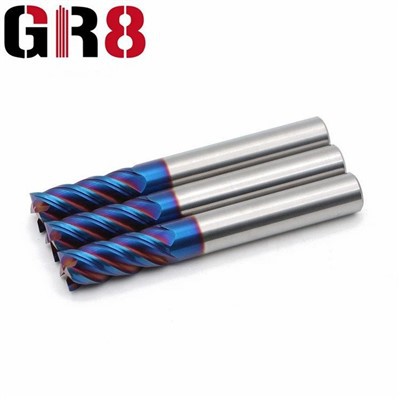
Hey there! As a supplier of carbide flat cutters, I'm super stoked to dive into how these nifty tools work. Carbide flat cutters are like the unsung heroes in the machining world, and understanding their operation can really level up your machining game.
Let's start with the basics. A carbide flat cutter, also known as a flat end mill, is a cutting tool used in milling operations. It's made of carbide, which is an extremely hard and wear - resistant material. This makes it perfect for cutting through tough materials like metal, wood, and plastics.
The design of a carbide flat cutter is pretty straightforward. It has a cylindrical body with cutting edges at the end. These cutting edges are what do the actual work of removing material from the workpiece. The number of cutting edges, or flutes, can vary. You'll commonly find 2, 3, 4, or more flutes on a carbide flat cutter.
When it comes to how it works, it all boils down to rotation and feed. The carbide flat cutter is mounted on a milling machine, which spins it at high speeds. As it rotates, the cutting edges come into contact with the workpiece. The rotation of the cutter creates a shearing force on the material of the workpiece. This shearing force is what causes the material to be removed in small chips.
The feed rate is also a crucial factor. The feed rate refers to how fast the workpiece is moved towards the rotating cutter. If the feed rate is too slow, the cutter will take a long time to remove the material, and it might even cause excessive heat buildup. On the other hand, if the feed rate is too fast, the cutter could break or cause a poor surface finish on the workpiece.
Let's talk about the different types of cuts that a carbide flat cutter can make. One of the most common cuts is the face milling cut. In face milling, the cutter is used to machine a flat surface on the workpiece. The cutter moves across the surface of the workpiece, removing material as it goes. This is great for creating smooth, flat surfaces on parts.
Another type of cut is the slot milling cut. When you need to create a slot or a groove in a workpiece, a carbide flat cutter is the tool to use. The cutter is fed into the workpiece at a specific depth and width to create the desired slot. This is often used in manufacturing parts where you need to fit other components into the slots.
Now, let's get into the advantages of using a carbide flat cutter. First and foremost, as I mentioned earlier, carbide is incredibly hard and wear - resistant. This means that the cutter can last a long time, even when cutting through tough materials. You won't have to replace the cutter as often as you would with a less durable tool, which can save you a lot of money in the long run.
Carbide flat cutters also offer excellent precision. They can make very accurate cuts, which is essential in industries where tight tolerances are required. Whether you're making parts for aerospace, automotive, or any other high - precision industry, a carbide flat cutter can help you achieve the accuracy you need.
If you're interested in exploring other related tools, check out our Other Handrail Bit. It's a great option for specific milling tasks. Also, our 65HRC 4 Flutes Flat End Mill is a top - notch product with high hardness and multiple flutes for efficient cutting. And for a wider range of options, head over to our Carbide End Mills page.
When it comes to using a carbide flat cutter, there are a few things to keep in mind. You need to make sure that the cutter is properly lubricated. Lubrication helps to reduce friction between the cutter and the workpiece, which in turn reduces heat buildup and wear on the cutter. It also improves the surface finish of the workpiece.
You should also be careful about the depth of cut. Taking too deep of a cut can put too much stress on the cutter, leading to breakage. It's better to take multiple shallow cuts to achieve the desired depth.
In addition, the spindle speed of the milling machine is important. Different materials require different spindle speeds. For example, when cutting aluminum, you can usually use a higher spindle speed compared to when cutting steel. You need to adjust the spindle speed according to the material you're working with to get the best results.
If you're new to using carbide flat cutters, it might take a little practice to get the hang of it. But once you do, you'll realize how versatile and useful these tools are. They can be used in a wide variety of applications, from small - scale hobby projects to large - scale industrial manufacturing.
Whether you're a professional machinist or a DIY enthusiast, having a good quality carbide flat cutter in your toolbox can make a world of difference. It can help you create high - quality parts with ease and efficiency.
If you're interested in purchasing carbide flat cutters or have any questions about our products, don't hesitate to reach out. We're always here to help you find the right tool for your needs and guide you through the purchasing process. Whether you're looking for a specific type of cutter or need advice on how to use them, we've got you covered.

References
- "Modern Machining Technology" by some well - known author in the machining field (I can't recall the exact details right now, but it's a great resource for understanding milling operations).
- Industry - specific technical manuals that cover the operation of milling machines and cutting tools.