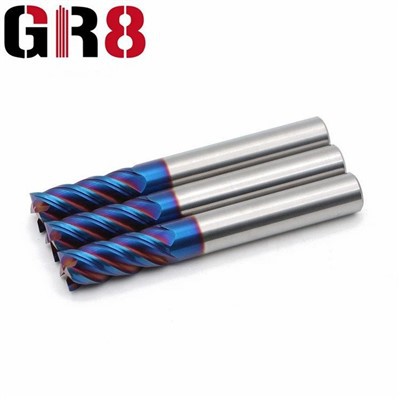
Hey there! As a supplier of 2 Flutes Ball Nose Bits, I've seen firsthand how the material of these bits can have a huge impact on their performance. In this blog, I'm gonna break down the different materials used for 2 Flutes Ball Nose Bits and how they affect the way these tools work.
High - Speed Steel (HSS) 2 Flutes Ball Nose Bits
High - Speed Steel is one of the most common materials for 2 Flutes Ball Nose Bits. It's been around for a long time, and there's a reason for that. HSS bits are relatively inexpensive compared to some other materials. This makes them a great choice for those on a budget or for less demanding applications.
HSS has good toughness. It can withstand a fair amount of abuse without breaking. This means that if you're working on a project where there might be some vibrations or sudden impacts, an HSS 2 Flutes Ball Nose Bit can handle it. For example, when you're doing general woodworking or working on softer metals like aluminum, HSS bits can get the job done.


However, HSS does have its limitations. It doesn't hold an edge as well as some other materials. When you're using it for long - term or high - speed cutting, the bit can dull quickly. Also, it's not the best at handling high temperatures. If you're pushing the bit too hard, the heat can cause the steel to lose its hardness, and the performance will drop off.
Carbide 2 Flutes Ball Nose Bits
Carbide is another popular material for 2 Flutes Ball Nose Bits. Carbide bits are known for their excellent hardness. They can hold an edge for a really long time, even when cutting through tough materials like stainless steel or hard plastics. This makes them ideal for precision work where you need a sharp bit throughout the entire project.
One of the big advantages of carbide is its heat resistance. It can handle high - speed cutting without losing its hardness due to heat. So, if you're running your CNC machine at high RPMs, a carbide 2 Flutes Ball Nose Bit will keep performing well. This also means that you can get a smoother finish on your workpiece because the bit stays sharp and cuts cleanly.
But carbide isn't without its drawbacks. It's more brittle than HSS. If you accidentally hit a hard object or apply too much force in the wrong way, the bit can chip or break. Also, carbide bits are more expensive than HSS bits. So, if you're on a tight budget or only doing occasional light - duty work, the cost might be a deterrent.
Cobalt 2 Flutes Ball Nose Bits
Cobalt is a material that offers a bit of a middle ground between HSS and carbide. Cobalt - alloyed high - speed steel bits have better heat resistance than regular HSS. They can handle higher cutting speeds without losing their hardness as quickly. This makes them suitable for applications where you need a bit more performance than HSS can offer but don't want to invest in carbide.
Cobalt bits are also tougher than carbide, so they're less likely to break under normal working conditions. They're a good choice for cutting through harder steels and alloys. For example, if you're working on tool steels or nickel - based alloys, a cobalt 2 Flutes Ball Nose Bit can give you a good balance of performance and durability.
However, like carbide, cobalt bits are more expensive than HSS. And while they're tougher than carbide, they still don't have the same edge - holding ability. So, for very long - term, high - precision work, carbide might still be the better option.
How Material Affects Cutting Performance
The material of the 2 Flutes Ball Nose Bit directly affects the cutting performance. A harder material like carbide will cut more cleanly and leave a smoother finish on the workpiece. This is because the sharp edge of the carbide bit can slice through the material with less tearing or chipping.
On the other hand, a softer material like HSS might cause more tear - out, especially when cutting through fibrous materials like wood. The dulling of the HSS bit over time can also lead to a rougher finish.
The heat generated during cutting is another important factor. A bit that can handle heat well, such as carbide or cobalt, can maintain its cutting performance at higher speeds. This means you can get the job done faster without sacrificing quality. In contrast, an HSS bit might overheat at high speeds, leading to a loss of hardness and a decrease in cutting efficiency.
How Material Affects Tool Life
Tool life is a major consideration when choosing a 2 Flutes Ball Nose Bit. As mentioned earlier, carbide bits have the longest tool life because they hold their edge well and can withstand high temperatures. If you're doing a large - scale production job, investing in carbide bits can save you money in the long run because you won't have to replace them as often.
HSS bits, on the other hand, have a shorter tool life. They need to be sharpened or replaced more frequently, especially when used for high - speed or heavy - duty cutting. Cobalt bits offer a longer tool life than HSS but not as long as carbide.
Impact on Different Workpiece Materials
The choice of bit material also depends on the workpiece material. For softwood and soft plastics, HSS 2 Flutes Ball Nose Bits are usually sufficient. They're cost - effective and can handle the relatively easy cutting process.
When working on harder woods, such as oak or maple, or softer metals like brass, cobalt bits can provide better performance and longer tool life.
For cutting through hard metals like titanium or hardened steels, carbide bits are the way to go. They can handle the high pressures and temperatures generated during the cutting process and give you a high - quality finish.
Other Considerations
Apart from the material itself, the coating on the bit can also affect its performance. Coatings like titanium nitride (TiN) can increase the hardness and reduce friction. This can improve the cutting performance and extend the tool life of the 2 Flutes Ball Nose Bit, regardless of the base material.
The flute design of the bit also plays a role. The 2 - flute design of these bits provides a good balance between chip evacuation and cutting performance. It allows the chips to be removed from the cutting area efficiently, preventing them from clogging the bit and affecting the cut quality.
In conclusion, the material of 2 Flutes Ball Nose Bits has a significant impact on their performance, including cutting performance, tool life, and the quality of the finish on the workpiece. Whether you choose HSS, carbide, or cobalt depends on your specific needs, the type of workpiece material, and your budget.
If you're in the market for high - quality 2 Flutes Ball Nose Bits, we've got you covered. We offer a wide range of bits made from different materials to suit various applications. Check out our 2 Flutes Ball Nose Bits page to see our full selection. And if you're also interested in other types of bits, we have One Spiral Flute Bits and 2 Flutes Flat Bits available as well.
If you have any questions or want to discuss your specific requirements, don't hesitate to reach out. We're here to help you find the perfect bit for your project. Let's start a conversation and see how we can meet your needs!
References
- "Machining Fundamentals" by an industry - leading machining textbook author.
- Various research papers on cutting tool materials from well - known engineering journals.