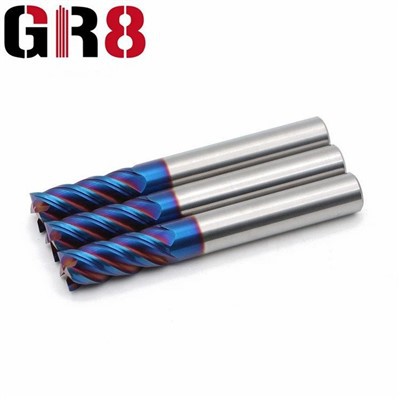
Hey there! As a supplier of roughing end mills, I've seen a lot of different products out there, and I know how important it is to evaluate the quality of these tools. Whether you're a professional machinist or just someone who likes to tinker in the workshop, getting a high - quality roughing end mill can make a world of difference in your projects. So, let's dive into how you can evaluate the quality of a roughing end mill.
1. Material and Coating
First off, the material of the roughing end mill is crucial. Most roughing end mills are made from high - speed steel (HSS) or carbide. HSS is a common choice because it's relatively inexpensive and can handle a wide range of materials. However, carbide is the go - to for heavy - duty and high - precision work. Carbide end mills are harder, more wear - resistant, and can withstand higher cutting speeds.
The coating on the end mill also plays a big role. A good coating can reduce friction, increase wear resistance, and improve chip evacuation. For example, titanium nitride (TiN) coating is one of the most common. It gives the end mill a gold color and provides a decent level of protection. Titanium aluminum nitride (TiAlN) coating is even better. It can handle higher temperatures, which is great for high - speed machining.
When you're looking at a roughing end mill, check what material it's made of and what kind of coating it has. If you're doing a lot of high - speed cutting or working with tough materials, a carbide end mill with a TiAlN coating might be your best bet.


2. Number of Flutes
The number of flutes on a roughing end mill affects its performance in different ways. Generally, roughing end mills can have 2, 3, or more flutes. For roughing operations, a 3 - flute design is quite popular.
3 Flutes Roughing Milling Cutter is a great option. The three - flute design allows for efficient chip removal while still providing enough cutting edges to make quick work of the material. It strikes a good balance between the amount of material that can be removed per pass and the ability to clear chips from the cutting area.
3 Flutes Roughing End Mill is also a product that showcases the advantages of the 3 - flute design. With three flutes, the end mill can cut through the material smoothly, reducing the chances of clogging and improving the overall cutting efficiency.
3. Helix Angle
The helix angle of a roughing end mill is another important factor. The helix angle refers to the angle at which the flutes are twisted around the body of the end mill. A higher helix angle, say 45 degrees or more, is better for chip evacuation. It helps the chips to flow out of the cutting area more easily, preventing them from getting stuck and causing damage to the end mill or the workpiece.
On the other hand, a lower helix angle, around 30 degrees, provides more strength to the cutting edges. This is useful when you're working with tough materials or need to take deep cuts. So, depending on your specific application, you'll want to choose an end mill with an appropriate helix angle.
4. Cutting Edge Geometry
The geometry of the cutting edges is super important. A sharp and well - defined cutting edge is essential for clean and efficient cutting. Look at the rake angle and the clearance angle of the end mill.
The rake angle affects how the end mill cuts into the material. A positive rake angle makes the cutting process easier, as it reduces the cutting force required. However, it also makes the cutting edge more fragile. A negative rake angle, on the other hand, provides more strength to the cutting edge but requires more cutting force.
The clearance angle is there to prevent the end mill from rubbing against the workpiece. A proper clearance angle ensures that the end mill only cuts where it's supposed to and doesn't cause unnecessary friction and heat.
5. Runout and Concentricity
Runout and concentricity are two technical terms, but they're important to understand. Runout refers to the amount of deviation of the cutting edges from a perfect circular path as the end mill rotates. A high runout means that the end mill won't cut evenly, which can lead to poor surface finish and premature wear of the end mill.
Concentricity is related to how well the end mill is centered in the tool holder. If the end mill isn't concentric, it can cause uneven cutting forces and vibration during the machining process. When you're evaluating a roughing end mill, ask the supplier about the runout and concentricity specifications. A high - quality end mill should have low runout and good concentricity.
6. Chip Breaker Design
In roughing operations, dealing with chips is a big deal. A good roughing end mill should have an effective chip breaker design. Chip breakers are features on the cutting edges that break the chips into smaller, more manageable pieces. This makes it easier to clear the chips from the cutting area and reduces the chances of chip jams.
Some end mills have built - in chip breakers, while others rely on the geometry of the flutes to break the chips. When you're looking at a roughing end mill, check if it has a chip breaker design that suits your needs. If you're working with materials that produce long, stringy chips, a well - designed chip breaker can be a lifesaver.
7. Performance Testing
One of the best ways to evaluate the quality of a roughing end mill is to test it out. Of course, as a supplier, I understand that not everyone can do a full - scale performance test. But if possible, try to get a sample of the end mill and run it on a test piece of material similar to what you'll be working with in your actual projects.
Look at how well it cuts, the surface finish it leaves on the workpiece, and how long it lasts before it starts to wear. You can also pay attention to the cutting forces and the amount of vibration during the cutting process. A high - quality end mill should cut smoothly, leave a good surface finish, and have a long tool life.
8. Supplier Reputation
Last but not least, the reputation of the supplier matters. A reliable supplier will stand behind their products and provide good customer service. They'll also have a quality control process in place to ensure that the roughing end mills they sell meet certain standards.
When you're choosing a supplier, look for reviews and testimonials from other customers. Ask about their warranty policy and after - sales support. A good supplier will be happy to answer your questions and provide you with the information you need to make an informed decision.
In conclusion, evaluating the quality of a roughing end mill involves looking at several factors, from the material and coating to the cutting edge geometry and supplier reputation. By considering all these aspects, you can choose a roughing end mill that will meet your needs and give you the best results in your machining projects.
If you're interested in purchasing high - quality roughing end mills, 3 Flutes Roughing Milling Cutter is just one of the great options we offer. Don't hesitate to reach out to us for more information or to start a procurement discussion. We're here to help you find the perfect roughing end mill for your specific requirements.
References
- "Machining Fundamentals" by various industry experts
- Technical manuals from leading end mill manufacturers