

As a dedicated supplier of 2 Flutes Flat End Mills, I've witnessed firsthand the profound impact that end face geometry has on the performance of these essential cutting tools. In this blog post, I'll delve into the intricate relationship between end face geometry and the functionality of 2 Flutes Flat End Mills, exploring how different geometric features can enhance or hinder their performance in various machining applications.
Understanding the Basics of 2 Flutes Flat End Mills
Before we dive into the details of end face geometry, let's briefly review the fundamentals of 2 Flutes Flat End Mills. These cutting tools are commonly used in milling operations to remove material from a workpiece, creating flat surfaces, slots, and contours. The two flutes on the end mill allow for efficient chip evacuation, reducing the risk of chip clogging and improving the overall cutting performance.
The end face of a 2 Flutes Flat End Mill is the part that comes into direct contact with the workpiece during machining. It plays a crucial role in determining the quality of the cut, the surface finish, and the tool's durability. By carefully designing the end face geometry, manufacturers can optimize the performance of the end mill for specific applications.
Key Geometric Features of the End Face
The end face geometry of a 2 Flutes Flat End Mill can vary significantly depending on the intended application. Some of the key geometric features that can affect the performance of the end mill include:
- Cutting Edge Angle: The cutting edge angle is the angle between the cutting edge and the axis of the end mill. A larger cutting edge angle can provide a more aggressive cut, while a smaller angle can result in a smoother finish.
- Rake Angle: The rake angle is the angle between the face of the cutting edge and a line perpendicular to the axis of the end mill. A positive rake angle can reduce cutting forces and improve chip flow, while a negative rake angle can increase the strength of the cutting edge and improve tool life.
- Relief Angle: The relief angle is the angle between the flank of the cutting edge and a line perpendicular to the axis of the end mill. A larger relief angle can reduce friction between the end mill and the workpiece, preventing the tool from rubbing and improving the surface finish.
- Corner Radius: The corner radius is the radius of the corner of the end mill. A larger corner radius can reduce stress concentrations at the corner of the end mill, improving tool life and preventing chipping.
Impact of End Face Geometry on Performance
The end face geometry of a 2 Flutes Flat End Mill can have a significant impact on its performance in various machining applications. Here are some of the ways in which different geometric features can affect the performance of the end mill:
- Cutting Efficiency: The cutting edge angle and rake angle can have a direct impact on the cutting efficiency of the end mill. A larger cutting edge angle and a positive rake angle can reduce cutting forces and improve chip flow, allowing the end mill to remove material more quickly and efficiently.
- Surface Finish: The relief angle and corner radius can affect the surface finish of the workpiece. A larger relief angle can reduce friction between the end mill and the workpiece, preventing the tool from rubbing and improving the surface finish. A larger corner radius can also reduce the risk of chipping at the corner of the end mill, resulting in a smoother finish.
- Tool Life: The rake angle, relief angle, and corner radius can all affect the tool life of the end mill. A negative rake angle can increase the strength of the cutting edge and improve tool life, while a larger relief angle and corner radius can reduce stress concentrations and prevent chipping, extending the life of the end mill.
- Chip Evacuation: The number of flutes and the flute geometry can affect the chip evacuation of the end mill. A 2 Flutes Flat End Mill is designed to provide efficient chip evacuation, reducing the risk of chip clogging and improving the overall cutting performance.
Choosing the Right End Face Geometry for Your Application
When choosing a 2 Flutes Flat End Mill, it's important to consider the specific requirements of your application. Here are some factors to consider when selecting the right end face geometry for your needs:
- Material: The type of material you're machining can have a significant impact on the performance of the end mill. Harder materials may require a more aggressive cutting edge angle and a negative rake angle to ensure efficient material removal, while softer materials may benefit from a smaller cutting edge angle and a positive rake angle for a smoother finish.
- Cutting Conditions: The cutting conditions, such as the cutting speed, feed rate, and depth of cut, can also affect the performance of the end mill. Higher cutting speeds and feed rates may require a more robust end face geometry to withstand the increased forces, while lower cutting speeds and feed rates may allow for a more delicate end face geometry for a finer finish.
- Surface Finish Requirements: The surface finish requirements of your application will also play a role in determining the right end face geometry. If you require a smooth surface finish, you may need to choose an end mill with a smaller cutting edge angle, a positive rake angle, and a larger relief angle and corner radius.
Our Range of 2 Flutes Flat End Mills
As a leading supplier of 2 Flutes Flat End Mills, we offer a wide range of products to meet the diverse needs of our customers. Our end mills are designed with precision and manufactured using high-quality materials to ensure optimal performance and durability.
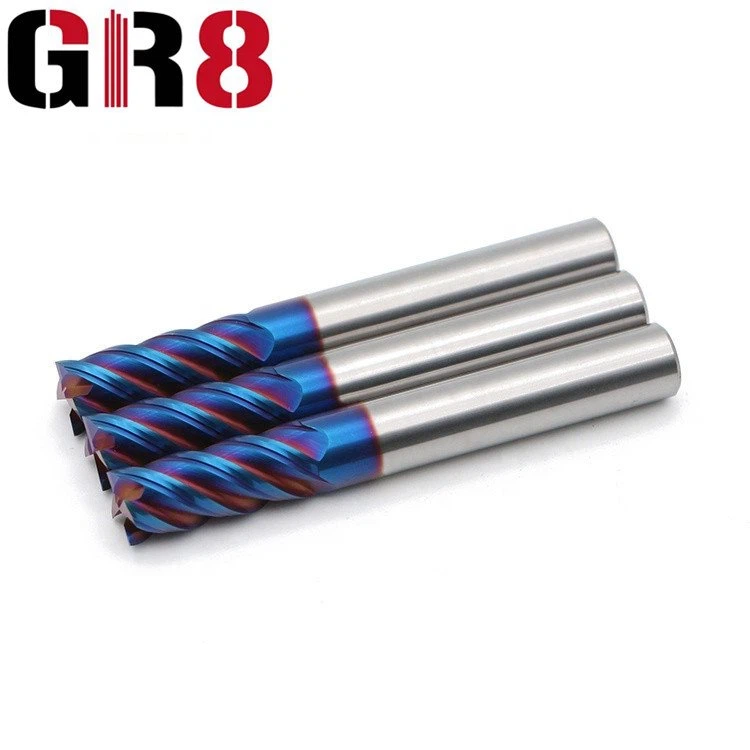
In addition to our standard 2 Flutes Flat End Mills, we also offer a variety of specialized end mills, including 65HRC 4 Flutes Flat End Mill and Door Frame Bit Set. These specialized end mills are designed to provide superior performance in specific applications, allowing you to achieve the best results with your machining operations.

Contact Us for Your 2 Flutes Flat End Mill Needs
If you're looking for high-quality 2 Flutes Flat End Mills that offer superior performance and durability, look no further than our company. We're committed to providing our customers with the best products and services, and we're always happy to help you find the right end mill for your needs.
Whether you're a small business or a large corporation, we have the expertise and resources to meet your requirements. Contact us today to learn more about our 2 Flutes Flat End Mill products and to discuss your specific needs with one of our knowledgeable sales representatives. We look forward to working with you!
References
- Smith, J. (2018). Machining Fundamentals. Industrial Press Inc.
- Boothroyd, G., & Knight, W. A. (2006). Fundamentals of Machining and Machine Tools. CRC Press.
- Trent, E. M., & Wright, P. K. (2000). Metal Cutting. Butterworth-Heinemann.


