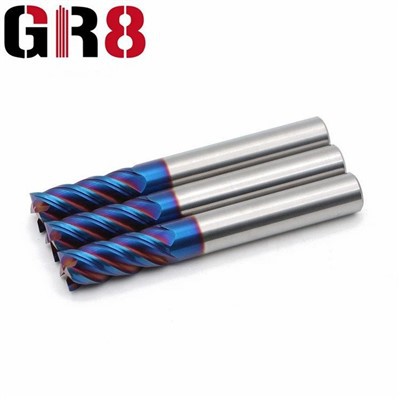
Hey there! I'm a supplier of 2 Flutes Flat End Mills, and today I wanna talk about how the flute rake angle affects the performance of these handy tools.
First off, let's get a basic understanding of what a 2 Flutes Flat End Mill is. It's a cutting tool commonly used in machining operations, like milling, to shape and cut materials. The "2 flutes" part means it has two cutting edges, which helps in efficient material removal. You can check out our range of 2 Flutes Flat End Mill on our website.
Now, the flute rake angle is a crucial parameter that can significantly impact the performance of the end mill. The rake angle is the angle between the face of the cutting edge and a reference plane. There are two main types of rake angles: positive and negative.
A positive rake angle means the cutting edge is slanted in a way that it cuts into the material more easily. When the end mill has a positive rake angle, it requires less cutting force. This is great because it reduces the load on the machine and the tool itself. With less force needed, the end mill can cut through materials at a higher speed, which boosts productivity. For example, when you're working with soft materials like aluminum or plastics, a positive rake angle can make the cutting process smooth and fast. You'll notice that the chips produced during cutting are also more likely to flow out smoothly, preventing chip clogging, which can damage the tool and the workpiece.
On the other hand, a negative rake angle makes the cutting edge more robust. The cutting edge is more perpendicular to the material, which gives it more strength. This is useful when dealing with hard materials like stainless steel or titanium. These materials are tough to cut, and they can put a lot of stress on the cutting edge. A negative rake angle helps the end mill withstand this stress and prevents the cutting edge from chipping or breaking. However, the downside is that a negative rake angle requires more cutting force. So, the machine has to work harder, and the cutting speed might be a bit slower compared to using a positive rake angle on softer materials.
Let's dig deeper into the effects of different rake angles on specific aspects of the end mill's performance.
Chip Formation
The rake angle plays a huge role in how chips are formed during the cutting process. With a positive rake angle, the chips are usually thinner and longer. They form in a more continuous manner, and as I mentioned earlier, they flow out of the cutting area more easily. This is because the positive rake angle allows the cutting edge to shear the material more effectively. In contrast, a negative rake angle often results in thicker and shorter chips. The chips may be more segmented, and they might not flow as smoothly. This can lead to chip packing in the flutes of the end mill, which can cause overheating and tool wear.


Surface Finish
The surface finish of the workpiece is another important factor. A positive rake angle generally provides a better surface finish. Since it cuts more smoothly and with less force, there's less chance of leaving rough marks on the workpiece. The smooth chip flow also helps in maintaining a clean cutting area, which contributes to a better finish. When using a negative rake angle, the surface finish might not be as good. The higher cutting force can cause vibrations, which can result in a rougher surface. However, if the material is very hard, the trade - off for using a negative rake angle to prevent tool damage might be worth it.
Tool Life
Tool life is a major concern for any machining operation. A positive rake angle can extend the tool life when used with appropriate materials. Since it requires less cutting force, there's less wear and tear on the cutting edge. The smooth chip flow also reduces the chance of abrasion caused by chips rubbing against the tool. But if you use a positive rake angle on a hard material, the cutting edge might wear out quickly due to the high stress. A negative rake angle, when used with hard materials, can actually increase the tool life. The stronger cutting edge can withstand the high forces and stresses involved in cutting hard materials, preventing premature failure.
Power Consumption
Power consumption is directly related to the cutting force. As we know, a positive rake angle requires less cutting force, so it also consumes less power. This is beneficial from an economic point of view, as it reduces the energy costs associated with the machining operation. A negative rake angle, due to the higher cutting force, leads to higher power consumption. So, when choosing the rake angle, you need to consider the balance between the material, the required surface finish, and the power consumption.
In addition to positive and negative rake angles, there are also zero rake angles. A zero rake angle means the cutting edge is perpendicular to the reference plane. It's a compromise between the characteristics of positive and negative rake angles. It has some of the strength of a negative rake angle and can still cut relatively smoothly like a positive rake angle in some cases. However, it doesn't offer the extreme benefits of either a positive or a negative rake angle.
When it comes to choosing the right flute rake angle for your 2 Flutes Flat End Mill, you need to consider the material you're working with, the desired surface finish, the cutting speed, and the power available from your machine. If you're not sure which rake angle is best for your specific application, don't hesitate to reach out to us. We've got a team of experts who can help you make the right choice.
We also offer other related products, like Other Handrail Bit and Recoveralbe Bead Glass Door Bit Set. These products are designed to meet different machining needs, and you can explore them on our website.
If you're in the market for high - quality 2 Flutes Flat End Mills or any of our other products, we're here to help. Whether you're a small - scale workshop or a large manufacturing plant, we can provide you with the right tools at competitive prices. Contact us for a free consultation and let's start a great business relationship.
References
- Boothroyd, G., & Knight, W. A. (2006). Fundamentals of machining and machine tools. Marcel Dekker.
- Kalpakjian, S., & Schmid, S. R. (2009). Manufacturing engineering and technology. Pearson Prentice Hall.