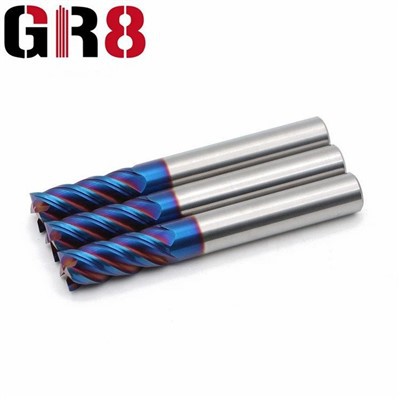
The spindle speed is a critical factor that significantly influences the performance of a flat end mill. As a trusted supplier of flat end mills, we understand the importance of optimizing this parameter to achieve the best results in various machining operations. In this blog post, we will delve into how spindle speed affects the performance of a flat end mill, exploring the implications for cutting quality, tool life, and overall productivity.
Cutting Quality
One of the most noticeable effects of spindle speed on a flat end mill is its impact on cutting quality. When the spindle speed is too low, the flat end mill may not be able to cut through the material efficiently. This can lead to a phenomenon known as rubbing, where the tool simply grinds against the workpiece rather than cleanly shearing it. Rubbing generates excessive heat, which can cause the material to deform, resulting in poor surface finish. The machined surface may appear rough, with visible tool marks and unevenness.
On the other hand, if the spindle speed is too high, the flat end mill can experience excessive vibration. This vibration can cause the tool to chatter, leading to a wavy or scalloped surface finish. Chattering also increases the risk of tool breakage, as the sudden impacts can put stress on the cutting edges. Additionally, high spindle speeds can cause the material to melt or burn, especially when machining soft metals or plastics. This can leave behind a discolored and damaged surface, reducing the aesthetic and functional quality of the finished part.
To achieve the best cutting quality, it is essential to select an appropriate spindle speed based on the material being machined, the diameter of the flat end mill, and the depth of cut. For example, when machining aluminum, a relatively soft material, a higher spindle speed can be used to achieve a smooth surface finish. However, when machining steel, a harder material, a lower spindle speed may be necessary to prevent excessive tool wear and maintain cutting accuracy.
Tool Life
Spindle speed also has a direct impact on the tool life of a flat end mill. When the spindle speed is too low, the tool is subjected to more friction and heat, which can cause the cutting edges to wear down more quickly. This is because the slower speed means that the tool spends more time in contact with the workpiece, increasing the chances of abrasion and adhesion. As the cutting edges wear, the tool becomes less effective at cutting, leading to a decrease in cutting quality and an increase in the risk of tool breakage.
Conversely, when the spindle speed is too high, the tool is exposed to excessive forces and heat, which can cause the cutting edges to chip or break. High spindle speeds generate more vibration and impact, which can weaken the tool structure and cause premature failure. Additionally, the high heat generated at high speeds can cause the tool material to soften, reducing its hardness and wear resistance. This can lead to a rapid deterioration of the cutting edges, shortening the overall tool life.


To maximize tool life, it is crucial to find the optimal spindle speed that balances cutting efficiency with tool durability. This requires considering factors such as the material properties, the cutting conditions, and the tool geometry. For example, using a coolant or lubricant can help to reduce friction and heat, allowing for higher spindle speeds without sacrificing tool life. Additionally, choosing a flat end mill with a high-quality tool material and a proper coating can improve its wear resistance and extend its lifespan.
Productivity
In addition to cutting quality and tool life, spindle speed also affects the productivity of a machining operation. A higher spindle speed generally allows for faster cutting, which can reduce the machining time and increase the output. However, as mentioned earlier, increasing the spindle speed too much can lead to poor cutting quality and tool breakage, which can actually decrease productivity in the long run.
To optimize productivity, it is important to find the sweet spot where the spindle speed is high enough to achieve a reasonable cutting rate but not so high that it compromises the quality and durability of the tool. This may involve conducting some trial and error to determine the best spindle speed for a particular application. Additionally, using advanced machining techniques such as high-speed machining or trochoidal milling can help to increase productivity by reducing the cutting forces and improving the chip evacuation.
Choosing the Right Spindle Speed
Selecting the appropriate spindle speed for a flat end mill requires a combination of knowledge, experience, and experimentation. Here are some general guidelines to help you choose the right spindle speed:
- Refer to the Manufacturer's Recommendations: Most flat end mill manufacturers provide recommended spindle speeds for different materials and cutting conditions. These recommendations are based on extensive testing and can serve as a good starting point.
- Consider the Material Properties: Different materials have different hardness, toughness, and thermal conductivity, which can affect the optimal spindle speed. For example, softer materials generally require higher spindle speeds, while harder materials require lower spindle speeds.
- Factor in the Tool Diameter: The diameter of the flat end mill also plays a role in determining the spindle speed. Larger diameter tools typically require lower spindle speeds to maintain cutting accuracy and prevent vibration.
- Adjust for the Depth of Cut: The depth of cut can also influence the spindle speed. Deeper cuts generally require lower spindle speeds to prevent excessive tool wear and maintain cutting stability.
- Use a Spindle Speed Calculator: There are many online spindle speed calculators available that can help you determine the appropriate spindle speed based on the material, tool diameter, and other factors. These calculators can be a useful tool for quickly getting an estimate of the optimal speed.
Conclusion
In conclusion, the spindle speed is a crucial parameter that affects the performance of a flat end mill in terms of cutting quality, tool life, and productivity. By understanding how spindle speed impacts these factors and following the guidelines for selecting the appropriate speed, you can achieve the best results in your machining operations. As a flat end mill supplier, we are committed to providing high-quality tools and technical support to help you optimize your machining processes. If you have any questions or need assistance in choosing the right flat end mill or determining the appropriate spindle speed, please do not hesitate to [contact us for a procurement discussion]. We look forward to working with you to meet your machining needs.
References
- Smith, J. (2018). Machining Handbook. Industrial Press.
- Jones, A. (2020). Tooling Technology for Machining. McGraw-Hill.
- Brown, C. (2019). Advanced Machining Processes. Wiley.