What is the cutting efficiency improvement potential of flat carbide cutting tools?
In the realm of machining and manufacturing, flat carbide cutting tools have long been recognized as indispensable assets. As a supplier of flat carbide cutting tools, I have witnessed firsthand the transformative impact these tools can have on production processes. This blog aims to explore the significant potential for improving cutting efficiency with flat carbide cutting tools, delving into various aspects such as material properties, tool design, and application techniques.
Material Properties and Their Impact on Cutting Efficiency
One of the primary factors contributing to the high cutting efficiency of flat carbide cutting tools is the exceptional material properties of carbide. Carbide is a composite material composed of tungsten carbide particles embedded in a metallic binder, typically cobalt. This unique combination results in a material that exhibits remarkable hardness, wear resistance, and heat resistance.
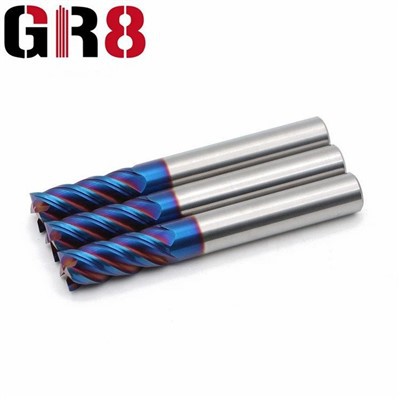
The hardness of carbide allows flat cutting tools to maintain their sharp cutting edges for extended periods, even when machining hard materials such as stainless steel, titanium, and hardened steels. This reduces the frequency of tool changes, minimizing downtime and increasing overall productivity. For example, a 65HRC 4 Flutes Flat End Mill made from high - quality carbide can withstand the high cutting forces and temperatures generated during high - speed machining, ensuring consistent performance and dimensional accuracy.
Wear resistance is another crucial property of carbide. During the cutting process, the tool is subjected to abrasive forces from the workpiece material. Carbide's high wear resistance means that the tool experiences less wear and tear, resulting in longer tool life. This not only reduces tooling costs but also improves the surface finish of the machined parts. When a tool wears unevenly, it can cause surface roughness and dimensional inaccuracies. With flat carbide cutting tools, these issues are minimized, leading to higher - quality products.
Heat resistance is essential, especially in high - speed machining operations. As the cutting speed increases, the temperature at the cutting edge can rise significantly. Carbide's ability to withstand high temperatures without losing its hardness and strength allows for higher cutting speeds and feeds, which directly translates into increased cutting efficiency. By reducing the cutting time per part, manufacturers can produce more parts in less time, improving their overall production capacity.
Tool Design for Enhanced Cutting Efficiency
In addition to the material properties, the design of flat carbide cutting tools plays a vital role in improving cutting efficiency. Modern tool designers employ advanced techniques and technologies to optimize the geometry of the tools for specific applications.
One key aspect of tool design is the number of flutes. Flutes are the channels on the cutting tool that allow chips to be removed from the cutting zone. A flat end mill with more flutes, such as the 65HRC 4 Flutes Flat End Mill, can remove more material per revolution, increasing the material removal rate. However, more flutes also mean less space for chip evacuation. Therefore, the number of flutes needs to be carefully selected based on the workpiece material, cutting conditions, and the desired surface finish.
The helix angle of the flutes is another important design parameter. A larger helix angle can improve chip evacuation and reduce cutting forces, allowing for higher cutting speeds. It also helps to prevent chip clogging, which can lead to tool breakage and poor surface finish. Different helix angles are suitable for different materials and cutting operations. For example, a larger helix angle is often preferred for machining soft materials, while a smaller helix angle may be more appropriate for hard materials.
The cutting edge geometry, such as the rake angle and the clearance angle, also affects cutting efficiency. A positive rake angle reduces cutting forces and power consumption, while a proper clearance angle prevents the tool from rubbing against the workpiece, reducing heat generation and wear. Tool manufacturers use advanced grinding and coating techniques to optimize these angles for maximum performance.


Application Techniques for Maximizing Cutting Efficiency
Proper application techniques are essential for realizing the full potential of flat carbide cutting tools. Machinists need to select the right cutting parameters, such as cutting speed, feed rate, and depth of cut, based on the tool material, workpiece material, and the specific machining operation.
Cutting speed is a critical parameter that directly affects the material removal rate and tool life. A higher cutting speed can increase the material removal rate, but it also generates more heat and wear on the tool. Therefore, it is important to find the optimal cutting speed for each application. For example, when machining aluminum with a flat carbide end mill, a relatively high cutting speed can be used, while a lower cutting speed is required for machining hardened steels.
Feed rate refers to the distance the tool travels per revolution. A higher feed rate can increase the material removal rate, but it also increases the cutting forces. If the feed rate is too high, it can cause tool breakage or poor surface finish. Machinists need to balance the feed rate with the cutting speed and the depth of cut to achieve the best results.
Depth of cut is the thickness of the material removed in each pass of the tool. A larger depth of cut can increase the material removal rate, but it also requires more power and can cause greater tool wear. By carefully adjusting the depth of cut, machinists can optimize the cutting process and improve efficiency.
Another important application technique is coolant usage. Coolant helps to reduce the temperature at the cutting edge, flush away chips, and improve the surface finish of the machined parts. There are different types of coolants available, such as water - based coolants and oil - based coolants. The choice of coolant depends on the workpiece material, the cutting operation, and environmental considerations.
Specific Applications and Their Efficiency Gains
Flat carbide cutting tools are used in a wide range of applications, from woodworking to metalworking. Let's take a look at some specific applications and how these tools can improve cutting efficiency.
In woodworking, Ogee Door Frame Bit Set and Other Handrail Bit made from carbide offer several advantages. Carbide bits can cut through wood more smoothly and cleanly than traditional steel bits. They maintain their sharpness for longer periods, reducing the need for frequent sharpening. This allows woodworkers to produce high - quality door frames and handrails more quickly and efficiently. The precise cutting edges of carbide bits also result in a better surface finish, eliminating the need for extensive sanding and finishing work.
In metalworking, flat carbide end mills are used for milling, profiling, and slotting operations. In high - speed machining of aerospace components made from titanium or aluminum alloys, flat carbide cutting tools can significantly reduce the machining time. By using high - speed cutting techniques and optimizing the cutting parameters, manufacturers can achieve high material removal rates while maintaining dimensional accuracy and surface quality.
Conclusion
The cutting efficiency improvement potential of flat carbide cutting tools is substantial. Through their exceptional material properties, advanced tool design, and proper application techniques, these tools can revolutionize machining and manufacturing processes. Whether it is in woodworking or metalworking, flat carbide cutting tools offer longer tool life, higher material removal rates, and better surface finishes.
As a supplier of flat carbide cutting tools, I am committed to providing high - quality products and technical support to our customers. If you are interested in improving your cutting efficiency and exploring the potential of our flat carbide cutting tools, I encourage you to contact us for a detailed discussion. We can work together to select the right tools and application techniques for your specific needs, helping you to achieve greater productivity and profitability in your manufacturing operations.
References
- Kalpakjian, S., & Schmid, S. R. (2009). Manufacturing Engineering and Technology. Pearson Prentice Hall.
- Boothroyd, G., Dewhurst, P., & Knight, W. A. (2011). Product Design for Manufacturing and Assembly. CRC Press.
- Trent, E. M., & Wright, P. K. (2000). Metal Cutting. Butterworth - Heinemann.