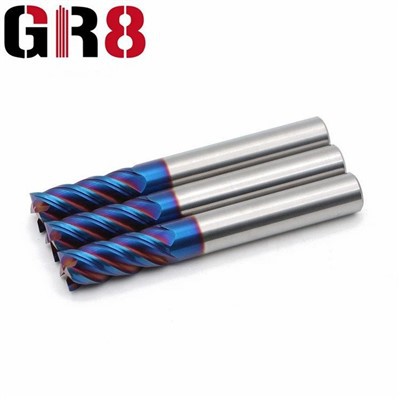
Hey there! As a supplier of roughing end mills, I've spent a ton of time diving into the ins and outs of these tools. One aspect that often gets overlooked but is super important is the acoustic characteristics during the cutting process of a roughing end mill. So, let's dig in and explore what's going on when these bad boys are doing their thing.
First off, why should we even care about the acoustic stuff? Well, the sounds a roughing end mill makes during cutting can tell us a whole lot about how it's performing. It's like a little window into what's happening at the cutting edge. By listening to these sounds, we can spot issues early on, like if the tool is wearing out too fast, if there's a problem with the workpiece material, or if the cutting parameters are all wrong.
When a roughing end mill starts cutting, it's basically like a mini symphony of mechanical sounds. There are a few key acoustic characteristics that we can break down and analyze.
One of the most noticeable things is the frequency of the sound. The frequency is directly related to how fast the end mill is rotating and how many teeth it has. For example, a 3 Flutes Roughing End Mill will have a different frequency pattern compared to a 4 - flute or 5 - flute end mill. A higher - speed rotation generally means a higher - frequency sound. If the frequency starts to change during the cutting process, it could be a sign that something's up. Maybe the end mill is hitting a hard spot in the material, or it's starting to lose its sharpness.
Another important characteristic is the amplitude of the sound. The amplitude is all about how loud the sound is. A really loud cutting sound can indicate a lot of things. It might mean that there's too much force being applied to the end mill, which could lead to premature wear or even breakage. On the other hand, a very quiet sound might seem like a good thing, but it could also mean that the cutting is not as efficient as it should be. Maybe the feed rate is too slow, or the depth of cut is too shallow.
The stability of the sound is also crucial. A stable, consistent sound is usually a good sign that the cutting process is going smoothly. But if you start to hear fluctuations or irregularities in the sound, it's a red flag. These fluctuations could be caused by vibrations in the machine, uneven material hardness, or improper tool holding. For instance, if the end mill isn't properly secured in the collet, it can wobble during cutting, creating an inconsistent sound.
Now, let's talk about how these acoustic characteristics can vary depending on the type of roughing end mill. Take the 3 Flutes Roughing Milling Cutter. The three - flute design is popular because it offers a good balance between chip evacuation and cutting force. During cutting, a 3 - flute roughing end mill tends to produce a relatively smooth and consistent sound. The three flutes work together to remove material evenly, which helps to keep the vibrations and noise levels in check.
However, if you're using a 3 Flutes Roughing End Mill on a tough material like stainless steel, you might notice some changes in the acoustic characteristics. The harder material requires more force to cut, so the sound might get louder and the frequency might increase slightly. You might also hear some high - pitched screeching if the cutting speed is too high or the tool isn't sharp enough.
As a supplier, I've seen firsthand how important it is for our customers to understand these acoustic characteristics. By paying attention to the sounds their roughing end mills are making, they can make adjustments to their cutting processes in real - time. This can lead to longer tool life, better surface finish on the workpiece, and increased productivity.
For example, if a customer notices that the sound of their roughing end mill is getting louder and more irregular, they can first check the cutting parameters. Maybe they need to reduce the feed rate or the cutting speed. If that doesn't solve the problem, they can inspect the end mill for signs of wear or damage. In some cases, it might be time to replace the tool.
We also offer training and support to our customers to help them make the most of our roughing end mills. We teach them how to listen for the different acoustic signals and what they mean. This hands - on approach has really helped our customers improve their machining operations.


If you're in the market for high - quality roughing end mills and want to learn more about how to optimize their performance through understanding acoustic characteristics, I'd love to hear from you. Whether you're a small - scale workshop or a large manufacturing plant, we've got the right tools and expertise to meet your needs. Get in touch with us to start a conversation about your specific requirements and how we can help you take your cutting processes to the next level.
References
- "Machining Technology: An Introduction" by Paul DeGarmo, J. T. Black, and Ronald Kohser.
- "Cutting Tool Engineering Handbook" by Society of Manufacturing Engineers.