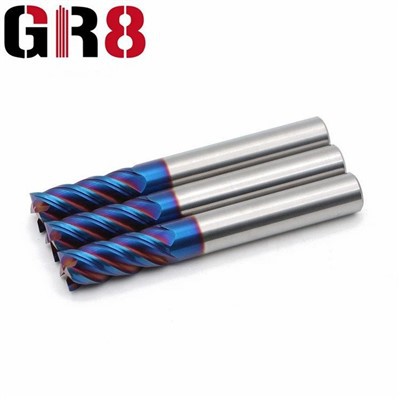
Hey there! As a supplier of flat milling cutters, I've had my fair share of experience when it comes to using these tools for milling non-ferrous metals. Non-ferrous metals, like aluminum, brass, and copper, have unique properties that require some special considerations. In this blog, I'll share some key points you should keep in mind when using a flat milling cutter for non-ferrous metals.
1. Material Compatibility
First off, you gotta make sure your flat milling cutter is compatible with the non-ferrous metal you're working with. Different non-ferrous metals have different hardness levels, and using the wrong cutter can lead to a whole bunch of problems. For example, aluminum is relatively soft, so you can use a high-speed steel (HSS) flat milling cutter. HSS cutters are cost-effective and work well for general milling of softer non-ferrous metals.
On the other hand, if you're dealing with harder non-ferrous metals like brass or bronze, you might want to consider a carbide flat milling cutter. Carbide cutters are more durable and can handle the higher cutting forces required for harder materials. They also have a longer tool life, which can save you money in the long run.
2. Cutter Geometry
The geometry of the flat milling cutter plays a crucial role in the milling process. One important aspect is the number of flutes. For non-ferrous metals, a cutter with fewer flutes can be a good choice. A 2 Flutes Flat End Mill is often preferred because it allows for better chip evacuation. Non-ferrous metals tend to produce long, stringy chips, and if these chips aren't removed properly, they can cause problems like built-up edge and poor surface finish.
The helix angle of the cutter is another factor to consider. A higher helix angle can help with chip evacuation and reduce cutting forces. This is especially important when milling non-ferrous metals at high speeds.
3. Cutting Speed and Feed Rate
Getting the right cutting speed and feed rate is essential for a successful milling operation. When milling non-ferrous metals, you can generally use higher cutting speeds compared to ferrous metals. For example, when milling aluminum, you can run your flat milling cutter at speeds of up to 2000 surface feet per minute (SFM). However, you need to adjust the feed rate accordingly. A too-high feed rate can cause the cutter to overload and break, while a too-low feed rate can result in poor surface finish and longer machining times.
It's a good idea to refer to the manufacturer's recommendations for cutting speeds and feed rates based on the specific non-ferrous metal and the flat milling cutter you're using. You can also do some test cuts to fine-tune these parameters for your particular application.
4. Coolant and Lubrication
Using the right coolant or lubricant is important when milling non-ferrous metals. Coolants help to reduce heat generated during the cutting process, which can improve tool life and surface finish. For non-ferrous metals, a water-soluble coolant is often a good choice. It provides good cooling and lubrication properties and is relatively easy to clean up.
In some cases, you might also want to use a lubricant spray. This can be especially useful when milling materials like brass, which can be prone to galling. The lubricant spray helps to reduce friction between the cutter and the workpiece, preventing the metal from sticking to the cutter.
5. Surface Finish Requirements
The surface finish you need will also influence your choice of flat milling cutter and the milling parameters. If you're looking for a smooth surface finish, you might need to use a finer pitch cutter and lower feed rates. For example, a 65HRC 4 Flutes Flat End Mill can provide a better surface finish compared to a 2-flute cutter, especially when used at the right cutting parameters.
You also need to consider the type of milling operation. For roughing cuts, you can use a more aggressive approach to remove material quickly, but for finishing cuts, you'll need to be more precise to achieve the desired surface finish.


6. Tool Holding
Proper tool holding is essential for accurate and efficient milling. Make sure your flat milling cutter is securely held in the toolholder. A loose cutter can cause vibration, which can lead to poor surface finish and premature tool wear. You might want to use a high-quality toolholder that provides good concentricity and rigidity.
7. Special Applications
There are some special applications when milling non-ferrous metals that require additional considerations. For example, if you're milling a non-ferrous metal for a flooring application, you might need a specific type of flat milling cutter. A Flooring & V Joint Set can be used to create the necessary joints and profiles for flooring materials. These cutters are designed to provide a precise and clean cut, which is important for a professional-looking finish.
Conclusion
In conclusion, using a flat milling cutter for milling non-ferrous metals requires careful consideration of several factors, including material compatibility, cutter geometry, cutting speed and feed rate, coolant and lubrication, surface finish requirements, tool holding, and special applications. By keeping these points in mind, you can ensure a successful milling operation and achieve the best results.
If you're in the market for high-quality flat milling cutters for non-ferrous metals, we've got you covered. We offer a wide range of flat milling cutters designed specifically for non-ferrous metal applications. Whether you need a 2-flute cutter for aluminum or a carbide cutter for brass, we have the right tool for the job.
If you have any questions or need help choosing the right flat milling cutter for your non-ferrous metal milling application, feel free to reach out to us. We're here to assist you with your procurement needs and ensure that you get the best value for your money.
References
- "Machining Non-Ferrous Metals: Best Practices and Tips." Manufacturing Engineering Magazine.
- "Cutting Tools for Non-Ferrous Metals." Tooling Today Journal.