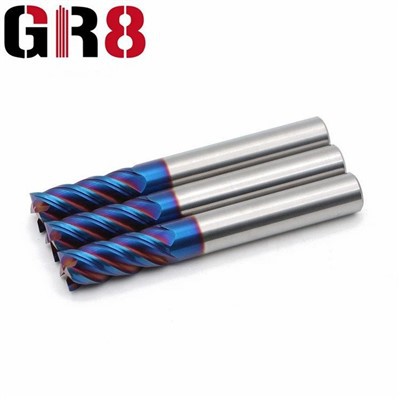
Hey there! As a supplier of Corn End Mills, I've seen my fair share of issues when it comes to using these tools. One of the most common problems that users face is vibration. Vibration can not only affect the quality of your work but also reduce the lifespan of your tool. In this blog post, I'm gonna share some tips on how to prevent vibration when using a Corn End Mill.
Understanding the Causes of Vibration
Before we dive into the solutions, it's important to understand what causes vibration in the first place. There are several factors that can contribute to vibration when using a Corn End Mill:
- Tool Geometry: The shape and design of the end mill can have a significant impact on vibration. For example, a tool with a large diameter or a high helix angle may be more prone to vibration than a smaller, lower helix tool.
- Cutting Parameters: The speed, feed rate, and depth of cut that you use can also affect vibration. If you're cutting too fast or too deep, it can cause the tool to chatter and vibrate.
- Workpiece Material: Different materials have different properties that can affect how they cut. For example, hard or brittle materials may be more difficult to cut and may cause more vibration than softer materials.
- Machine Rigidity: The rigidity of your machine can also play a role in vibration. If your machine is not properly secured or if it has a lot of play in the spindle or bearings, it can cause the tool to vibrate.
Tips for Preventing Vibration
Now that we understand the causes of vibration, let's take a look at some tips for preventing it:
Choose the Right Tool
The first step in preventing vibration is to choose the right tool for the job. When selecting a Corn End Mill, consider the following factors:
- Diameter: Choose a tool with a diameter that is appropriate for the size of the workpiece and the depth of cut that you need to make. A smaller diameter tool will generally be less prone to vibration than a larger one.
- Helix Angle: The helix angle of the tool can also affect vibration. A lower helix angle will generally be less prone to vibration than a higher one.
- Number of Flutes: The number of flutes on the tool can also affect vibration. A tool with more flutes will generally be less prone to vibration than a tool with fewer flutes.
For example, if you're working with a soft material like wood, you may want to consider using a Straight Flutes Engraving End Mills. These tools are designed specifically for woodworking and are less prone to vibration than other types of end mills.
Optimize Your Cutting Parameters
Once you've chosen the right tool, the next step is to optimize your cutting parameters. Here are some tips to help you do that:
- Speed: Make sure you're cutting at the right speed for the tool and the material. Cutting too fast can cause the tool to overheat and wear out quickly, while cutting too slow can cause the tool to chatter and vibrate.
- Feed Rate: The feed rate is the speed at which the workpiece moves past the tool. Make sure you're using the right feed rate for the tool and the material. Cutting too fast can cause the tool to break, while cutting too slow can cause the tool to chatter and vibrate.
- Depth of Cut: The depth of cut is the amount of material that you're removing with each pass of the tool. Make sure you're using the right depth of cut for the tool and the material. Cutting too deep can cause the tool to break, while cutting too shallow can cause the tool to chatter and vibrate.
Use the Right Workholding
Using the right workholding is also important for preventing vibration. Make sure your workpiece is securely clamped to the table or fixture to prevent it from moving during the cutting process. If your workpiece is not properly secured, it can cause the tool to chatter and vibrate.
Maintain Your Machine
Finally, it's important to maintain your machine to prevent vibration. Make sure your machine is properly lubricated and that the spindle and bearings are in good condition. If your machine has a lot of play in the spindle or bearings, it can cause the tool to vibrate.
Conclusion
Vibration can be a frustrating problem when using a Corn End Mill, but it doesn't have to be. By choosing the right tool, optimizing your cutting parameters, using the right workholding, and maintaining your machine, you can prevent vibration and achieve better results.


If you're in the market for a high-quality Corn End Mill, be sure to check out our selection of Corn End Mill. We offer a wide range of tools to suit your needs, and our team of experts is always available to help you choose the right tool for the job.
If you have any questions or would like to learn more about our products, please don't hesitate to contact us. We'd love to hear from you and help you find the perfect tool for your next project.
References
- "Machining Handbook," Industrial Press Inc.
- "Cutting Tool Engineering," Society of Manufacturing Engineers.