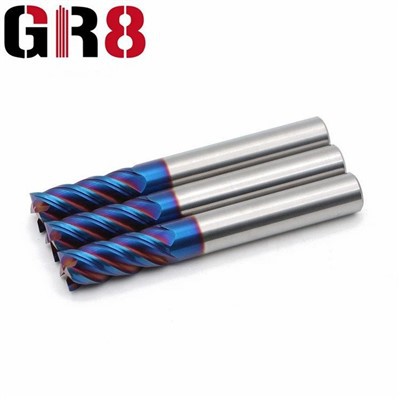
What are the features of a square carbide cutter compared to other cutters?
In the realm of cutting tools, the choice of cutter can significantly impact the efficiency, precision, and quality of a machining operation. Among the wide array of cutters available, square carbide cutters stand out as a versatile and high - performing option. As a supplier of square carbide cutters, I am well - versed in their unique features and advantages over other types of cutters.
1. Material and Durability
Square carbide cutters are made from carbide, a composite material composed of tungsten carbide particles bonded together with a metallic binder, usually cobalt. This material gives square carbide cutters exceptional hardness and wear resistance. In contrast, high - speed steel (HSS) cutters, which are also commonly used, are not as hard as carbide. HSS cutters can lose their cutting edge more quickly when used for high - speed machining or when cutting hard materials.
For example, when machining stainless steel, a square carbide cutter can maintain its sharpness for a much longer time compared to an HSS cutter. This durability means that square carbide cutters can be used for more extended periods without the need for frequent replacement, reducing downtime and overall production costs.
2. Cutting Performance
One of the most significant features of square carbide cutters is their excellent cutting performance. They can achieve high cutting speeds and feeds, which leads to increased productivity. The sharp cutting edges of square carbide cutters can make clean and precise cuts, resulting in a better surface finish on the workpiece.
In comparison, some traditional cutters, such as those made of carbon steel, may not be able to handle high - speed cutting. They are more prone to overheating and losing their cutting ability, which can lead to rough surface finishes and dimensional inaccuracies. Square carbide cutters, on the other hand, can operate at high speeds while maintaining their cutting integrity, allowing for faster and more accurate machining.
3. Geometric Design
The square shape of the cutter provides several advantages. Square carbide cutters have four cutting edges, which means that when one edge becomes dull, the cutter can be rotated to expose a new sharp edge. This feature extends the useful life of the cutter and provides cost - effective machining solutions.
In contrast, some round - shaped cutters may have only one or two cutting edges. Once these edges are worn out, the cutter needs to be replaced. The square design also allows for better stability during cutting operations. It can withstand higher cutting forces without deflecting, which is crucial for maintaining precision in machining.
4. Versatility
Square carbide cutters are highly versatile and can be used for a wide range of applications. They are suitable for both roughing and finishing operations. Whether you are machining wood, plastics, metals, or composites, square carbide cutters can deliver excellent results.


For instance, in the woodworking industry, square carbide cutters can be used to create intricate designs on furniture, doors, and cabinets. In the metalworking industry, they are used for milling, drilling, and turning operations. Other cutters may be more specialized and may not be as adaptable to different materials and machining tasks.
5. Compatibility with Modern Machining Technologies
In today's manufacturing environment, modern machining technologies such as CNC (Computer Numerical Control) machining are widely used. Square carbide cutters are well - suited for these advanced machining processes. They can be programmed to perform complex cutting operations with high precision.
The accuracy and repeatability of square carbide cutters make them ideal for CNC machining, where tight tolerances are required. Other cutters may not be able to meet the demands of these high - tech machining processes, limiting their use in modern manufacturing facilities.
Comparison with Other Specific Cutters
Other Handrail Bit
Other Handrail Bit is designed specifically for handrail manufacturing. While it is excellent for creating the unique profiles required for handrails, it has a more limited application compared to square carbide cutters. Square carbide cutters can be used not only for handrail - like profiles but also for a wide variety of other machining tasks, making them a more versatile choice for general machining workshops.
Ogee Door Frame Bit Set
Ogee Door Frame Bit Set is specialized for creating ogee profiles on door frames. These bits are optimized for a particular type of woodworking application. Square carbide cutters, however, can be used to create ogee profiles as well as many other shapes and profiles. They offer more flexibility in terms of the types of projects they can be used for.
2 Flutes Flat End Mill
2 Flutes Flat End Mill is a common type of milling cutter. It has its own advantages, such as being suitable for light - duty milling operations. But square carbide cutters, with their multiple cutting edges and high - performance material, can handle heavier cutting loads and are more suitable for high - speed and high - precision milling operations.
Conclusion and Call to Action
In conclusion, square carbide cutters offer a range of features that make them superior to many other types of cutters. Their durability, cutting performance, geometric design, versatility, and compatibility with modern machining technologies make them an ideal choice for various industries.
If you are looking for high - quality cutting tools for your machining operations, I encourage you to consider our square carbide cutters. We are committed to providing the best products and services to meet your specific needs. Whether you are a small - scale workshop or a large - scale manufacturing facility, our square carbide cutters can help you improve your productivity and the quality of your products. Please feel free to contact us for more information and to discuss your procurement requirements. We look forward to partnering with you in your machining endeavors.
References
- "Cutting Tool Technology Handbook", Industrial Press Inc.
- "Machining Fundamentals", Society of Manufacturing Engineers