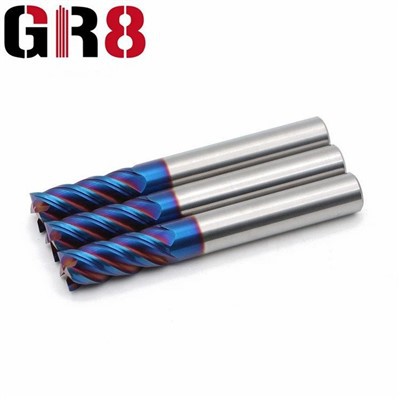
In the field of machining, understanding the chip formation process when using flat carbide cutting tools is crucial for both manufacturers and end - users. As a supplier of flat carbide cutting tools, I have witnessed firsthand the significance of this process in achieving high - quality machining results.
The Basics of Flat Carbide Cutting Tools
Flat carbide cutting tools are widely used in various machining operations due to their excellent hardness, wear resistance, and heat resistance. Carbide, typically a combination of tungsten carbide and a binder metal such as cobalt, provides the necessary strength and durability to withstand the high - stress conditions encountered during cutting. Flat - end mills, which are a common type of flat carbide cutting tool, are used for milling flat surfaces, slots, and pockets in materials such as metals, plastics, and composites.
The Chip Formation Process
The chip formation process can be divided into three main stages: elastic deformation, plastic deformation, and chip separation.
Elastic Deformation
When the flat carbide cutting tool comes into contact with the workpiece, the initial stage is elastic deformation. The material of the workpiece is subjected to a force from the cutting edge of the tool, and it responds by deforming elastically. This means that the material will return to its original shape once the force is removed. During this stage, the atomic bonds within the material are stretched but not broken. The magnitude of the elastic deformation depends on the properties of the workpiece material, such as its modulus of elasticity, and the cutting force applied by the tool.
Plastic Deformation
As the cutting force increases, the material reaches its yield point, and plastic deformation begins. In plastic deformation, the atomic bonds within the material are broken, and the material undergoes permanent deformation. The shear stress at the shear plane, which is the plane along which the material is being sheared, exceeds the shear strength of the material. The plastic deformation is a complex process that involves the movement of dislocations within the crystal structure of the material. The flat carbide cutting tool continuously pushes and shears the material, causing it to flow in the direction of the cutting edge.
Chip Separation
Once the plastic deformation reaches a certain extent, the material finally separates from the workpiece to form a chip. The separation occurs when the shear stress at the shear plane is high enough to cause the material to fracture. The shape and size of the chip depend on several factors, including the cutting conditions (such as cutting speed, feed rate, and depth of cut), the properties of the workpiece material, and the geometry of the cutting tool.
There are different types of chips that can be formed during the cutting process:
- Continuous Chips: These chips are formed when machining ductile materials such as aluminum and mild steel under certain cutting conditions. Continuous chips are long and unbroken, and they are characterized by a smooth surface. They are generally desirable as they indicate a stable cutting process. However, continuous chips can sometimes cause problems, such as chip entanglement around the cutting tool, which can affect the surface finish of the workpiece and even damage the tool.
- Segmented Chips: Segmented chips are formed when the cutting speed is relatively low or the feed rate is high. These chips are composed of discrete segments, and they are typically formed in materials with medium ductility. The segmentation occurs due to the periodic cracking and fracture of the material during the chip formation process.
- Discontinuous Chips: Discontinuous chips are formed when machining brittle materials such as cast iron. These chips are small and irregular in shape, and they are the result of the sudden fracture of the brittle material during the cutting process.
Factors Affecting Chip Formation
Several factors can significantly affect the chip formation process when using flat carbide cutting tools:
Workpiece Material
The properties of the workpiece material, such as its hardness, ductility, and microstructure, play a vital role in chip formation. Ductile materials tend to form continuous chips, while brittle materials form discontinuous chips. For example, when machining a high - strength alloy steel, the high hardness of the material may require higher cutting forces, which can affect the chip formation and may lead to the formation of segmented chips.
Cutting Conditions
- Cutting Speed: An increase in cutting speed generally leads to a decrease in the chip thickness and an increase in the chip flow velocity. At high cutting speeds, the heat generated during the cutting process can also affect the chip formation. For some materials, high cutting speeds can cause the material to soften due to the heat, resulting in a more continuous chip formation.
- Feed Rate: A higher feed rate increases the chip thickness. If the feed rate is too high, it can lead to the formation of larger and more irregular chips, which may cause problems such as poor surface finish and increased tool wear.
- Depth of Cut: The depth of cut affects the amount of material being removed per pass. A larger depth of cut generally results in a larger chip volume. However, increasing the depth of cut also increases the cutting force, which can influence the chip formation process.
Tool Geometry
The geometry of the flat carbide cutting tool, including the rake angle, clearance angle, and cutting edge radius, has a significant impact on chip formation. The rake angle affects the shear angle and the cutting force. A positive rake angle reduces the cutting force and promotes the flow of the chip, while a negative rake angle increases the cutting force but provides more strength to the cutting edge. The clearance angle prevents the tool from rubbing against the workpiece, which can affect the chip formation and the surface finish of the workpiece. The cutting edge radius also affects the chip formation, especially in the case of micro - machining, where a smaller cutting edge radius can lead to more precise chip formation.


Applications of Understanding Chip Formation
Understanding the chip formation process when using flat carbide cutting tools has several practical applications:
- Tool Design: By understanding how chips are formed, tool designers can optimize the geometry of the flat carbide cutting tools to improve chip evacuation, reduce cutting forces, and increase tool life. For example, designing a tool with a special chip breaker can help control the shape and size of the chips, preventing chip entanglement and improving the overall cutting performance.
- Machining Process Optimization: Manufacturers can use the knowledge of chip formation to select the appropriate cutting conditions for different workpiece materials. By adjusting the cutting speed, feed rate, and depth of cut, they can achieve better surface finish, higher productivity, and lower tool wear. For instance, when machining a difficult - to - machine material, such as titanium alloy, proper selection of cutting conditions based on the chip formation characteristics can significantly improve the machining efficiency.
Our Flat Carbide Cutting Tools
As a supplier of flat carbide cutting tools, we offer a wide range of products to meet the diverse needs of our customers. Our Carbide End Mills are made from high - quality carbide materials and are designed with advanced geometries to ensure excellent cutting performance. We also provide Other Handrail Bit and Door Frame Bit Set for specific applications.
Our team of experts is constantly researching and developing new products to improve the chip formation process and overall machining performance. We understand that different customers have different requirements, and we are committed to providing customized solutions. Whether you are a small - scale workshop or a large - scale manufacturing enterprise, we can offer you the right flat carbide cutting tools for your machining needs.
Contact Us for Procurement
If you are interested in our flat carbide cutting tools or have any questions about the chip formation process, please feel free to contact us. We are more than happy to discuss your requirements and provide you with detailed information about our products. Our professional sales team will guide you through the procurement process and ensure that you get the best value for your investment.
References
- Shaw, M. C. (2005). Metal Cutting Principles. Oxford University Press.
- Trent, E. M., & Wright, P. K. (2000). Metal Cutting. Butterworth - Heinemann.
- Kalpakjian, S., & Schmid, S. R. (2010). Manufacturing Engineering and Technology. Pearson Prentice Hall.