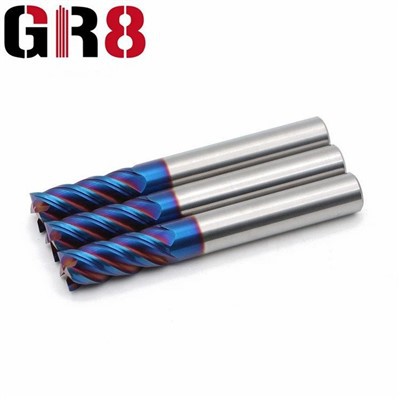
As a supplier of Compression End Mills, I often get asked about the various factors that contribute to the performance of these cutting tools. One aspect that is frequently overlooked but plays a crucial role is the flute length. In this blog post, I'll delve into the importance of flute length in a Compression End Mill and how it impacts machining operations.
Understanding Compression End Mills
Before we discuss the flute length, let's briefly understand what a Compression End Mill is. Compression End Mills are specialized cutting tools designed for machining materials such as wood, plastics, and composites. They feature a unique design with both up - cutting and down - cutting flutes. The up - cutting flutes at the bottom of the tool pull the chips upward, while the down - cutting flutes at the top push the chips downward. This dual - action helps to reduce chipping and splintering on both the top and bottom surfaces of the workpiece, resulting in a cleaner and more precise cut.

Role of Flute Length
The flute length of a Compression End Mill refers to the length of the cutting edges on the tool. It is an important parameter that affects several aspects of the machining process, including chip evacuation, cutting forces, and tool life.

Chip Evacuation
One of the primary functions of the flutes in an end mill is to evacuate the chips generated during the cutting process. Longer flute lengths provide more space for the chips to accumulate and be removed from the cutting zone. In a Compression End Mill, proper chip evacuation is crucial because if the chips are not removed efficiently, they can become trapped between the tool and the workpiece. This can lead to increased cutting forces, poor surface finish, and even tool breakage.
For example, when machining thick workpieces, a Compression End Mill with a longer flute length can handle the larger volume of chips produced. The up - cutting and down - cutting flutes work in tandem to ensure that the chips are moved out of the cutting area, preventing chip recutting and reducing the risk of overheating.
Cutting Forces
Flute length also has a significant impact on the cutting forces exerted during machining. Shorter flute lengths generally result in higher cutting forces because there is less area for the chips to spread out. As a result, the tool has to work harder to remove the material, which can lead to increased wear and tear on the tool and the machine.
On the other hand, longer flute lengths distribute the cutting forces over a larger area, reducing the stress on the tool. This allows for smoother cutting operations and can improve the overall stability of the machining process. For instance, when performing high - speed machining, a Compression End Mill with an appropriate flute length can help to maintain the cutting forces within acceptable limits, reducing the risk of tool deflection and improving the accuracy of the cut.
Tool Life
The tool life of a Compression End Mill is directly related to the amount of wear it experiences during machining. Longer flute lengths can help to extend the tool life by reducing the cutting forces and improving chip evacuation. When the cutting forces are lower, there is less friction between the tool and the workpiece, which reduces the heat generated during cutting. Excessive heat can cause the tool material to soften and wear out more quickly.
Additionally, efficient chip evacuation prevents the chips from rubbing against the tool surface, which can also contribute to wear. By choosing a Compression End Mill with the right flute length, manufacturers can reduce the frequency of tool changes, saving time and money in the long run.
Choosing the Right Flute Length
Selecting the appropriate flute length for a Compression End Mill depends on several factors, including the material being machined, the depth of cut, and the machining operation.

Material Type
Different materials have different chip formation characteristics, which can influence the choice of flute length. For example, materials like softwoods and plastics tend to produce long, stringy chips. In such cases, a longer flute length may be required to ensure proper chip evacuation. On the other hand, harder materials like hardwoods and composites may produce shorter, more brittle chips, and a shorter flute length may be sufficient.
Depth of Cut
The depth of cut is another important consideration when choosing the flute length. If the depth of cut is shallow, a shorter flute length may be adequate. However, for deeper cuts, a longer flute length is necessary to ensure that the chips can be removed from the entire cutting depth.
Machining Operation
The type of machining operation also plays a role in determining the flute length. For operations such as profiling and contouring, a longer flute length may be preferred to provide better access to the workpiece and to ensure smooth cutting along the edges. In contrast, for operations like face milling, a shorter flute length may be more suitable.
Comparing with Other Types of End Mills
It's interesting to compare the flute length requirements of Compression End Mills with other types of end mills, such as Straight Flutes End Mills and Straight Flutes Engraving End Mills.

Straight Flutes End Mills typically have a simpler design with straight cutting edges. They are often used for general - purpose machining operations. The flute length in straight flutes end mills also affects chip evacuation and cutting forces, but the design does not have the dual - action of a Compression End Mill. As a result, the flute length requirements may be different depending on the specific application.
Straight Flutes Engraving End Mills are designed for detailed engraving work. They usually have shorter flute lengths to provide more control and precision during the engraving process. In comparison, Compression End Mills are more focused on reducing chipping and providing a clean cut on both surfaces of the workpiece, which may require a different approach to flute length selection.
Conclusion
In conclusion, the flute length of a Compression End Mill is a critical factor that can significantly impact the performance of the tool. It affects chip evacuation, cutting forces, and tool life, all of which are essential for achieving high - quality machining results. By understanding the importance of flute length and considering factors such as material type, depth of cut, and machining operation, manufacturers can select the right Compression End Mill for their specific needs.
If you are in the market for high - quality Compression End Mills or have any questions about flute length or other aspects of these cutting tools, I encourage you to reach out to us for more information and to discuss your procurement needs. Our team of experts is ready to assist you in finding the perfect solution for your machining operations.
References
- "Cutting Tool Engineering Handbook", various authors, multiple editions.
- Industry whitepapers on end mill design and performance.
- Technical documentation from leading end mill manufacturers.