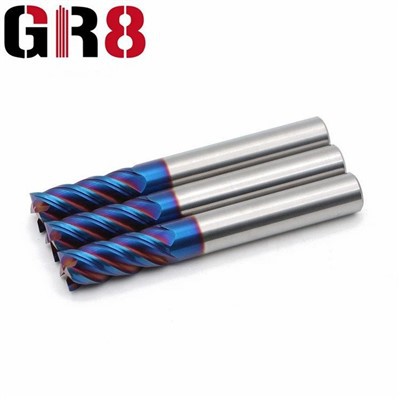
Hey there! As a supplier of One Spiral Flute Bits, I often get asked about the recommended spindle speed for these bits. It's a crucial question because getting the spindle speed right can make a huge difference in the quality of your work, the lifespan of the bit, and overall efficiency. So, let's dive into it.
Understanding One Spiral Flute Bits
First off, let's talk a bit about One Spiral Flute Bits. These bits are pretty cool. They have a single flute that spirals around the shaft. This design offers some unique advantages. For example, it allows for better chip evacuation compared to some other types of bits. When you're cutting through materials, chips can build up quickly, and if they're not removed properly, they can cause all sorts of problems like overheating the bit and creating a rough finish on your workpiece. One Spiral Flute Bits do a great job of getting those chips out of the way.
You can check out our range of One Spiral Flute Bits on our website. We've got different sizes and configurations to suit various applications.
Factors Affecting Spindle Speed
Now, when it comes to determining the recommended spindle speed for One Spiral Flute Bits, there are several factors you need to consider.
Material Being Cut
The type of material you're cutting is probably the most important factor. Different materials have different hardness and density, which means they require different spindle speeds. For example, if you're cutting softwoods like pine or cedar, you can generally use a higher spindle speed compared to when you're cutting hardwoods like oak or maple. Softwoods are less dense, so the bit can move through them more easily without getting overloaded.
Metals are a whole different ballgame. Cutting metals like aluminum or brass requires a different approach. You need to be more cautious with the spindle speed because metals can generate a lot of heat, and if the speed is too high, it can cause the bit to wear out quickly or even break.
Bit Diameter
The diameter of the One Spiral Flute Bit also plays a role in determining the spindle speed. Generally, larger diameter bits require a lower spindle speed compared to smaller diameter bits. This is because the outer edge of a larger bit travels at a faster speed than the outer edge of a smaller bit when they're both rotating at the same RPM (revolutions per minute). So, to keep the cutting speed consistent across different bit sizes, you need to adjust the spindle speed accordingly.
Cutting Depth and Width
The depth and width of the cut you're making also affect the recommended spindle speed. If you're making a shallow cut, you can usually get away with a higher spindle speed. But if you're making a deep or wide cut, you'll need to slow down the spindle speed to prevent the bit from getting overloaded. A deep or wide cut requires more force to remove the material, and if the spindle speed is too high, the bit may not be able to handle the load, leading to poor cutting performance or even damage to the bit.
General Guidelines for Spindle Speed
While there's no one-size-fits-all answer to the recommended spindle speed for One Spiral Flute Bits, here are some general guidelines based on the material being cut:
Wood
- Softwoods: For softwoods like pine or cedar, a spindle speed of around 10,000 - 18,000 RPM is usually a good starting point. You can adjust the speed based on the specific type of softwood, the bit diameter, and the cutting depth and width.
- Hardwoods: When cutting hardwoods like oak or maple, you'll want to slow down the spindle speed to around 8,000 - 12,000 RPM. Hardwoods are denser and more difficult to cut, so a lower speed helps to prevent the bit from overheating and wearing out too quickly.
Plastics
Plastics can vary widely in terms of their hardness and density. For softer plastics like acrylic or polycarbonate, a spindle speed of 12,000 - 20,000 RPM is often suitable. For harder plastics, you may need to reduce the speed to around 8,000 - 15,000 RPM.
Metals
- Aluminum: When cutting aluminum, a spindle speed of 6,000 - 12,000 RPM is a good range to start with. Aluminum is a relatively soft metal, but it can still generate a lot of heat, so it's important to keep the speed in check.
- Brass: For brass, a slightly lower spindle speed of 4,000 - 8,000 RPM is recommended. Brass is harder than aluminum, so a lower speed helps to ensure a clean cut and prevent the bit from wearing out too quickly.
Testing and Adjusting
These are just general guidelines, and the actual recommended spindle speed may vary depending on your specific setup and the quality of the One Spiral Flute Bit. It's always a good idea to do some test cuts on a scrap piece of material before starting your actual project. This allows you to see how the bit performs at different spindle speeds and make any necessary adjustments.
Start with the recommended speed range for your material and bit size, and then gradually increase or decrease the speed based on the results of your test cuts. Look for signs of overheating, such as a burnt smell or discoloration on the bit or the workpiece. Also, pay attention to the quality of the cut. If the cut is rough or there are tear-outs, it may be a sign that the spindle speed is too high or too low.
Comparing with Other Types of Bits
It's also interesting to compare the recommended spindle speeds for One Spiral Flute Bits with other types of bits, like 2 Flutes Flat Bits and 2 Flutes Ball Nose Bits.


Two-flute bits generally have a different cutting action compared to One Spiral Flute Bits. They can often handle higher feed rates and deeper cuts, but they may also require a different spindle speed. Two-flute flat bits are commonly used for flat-bottomed cuts, while two-flute ball nose bits are great for creating curved or rounded surfaces.
The recommended spindle speeds for these two-flute bits are also influenced by the same factors as One Spiral Flute Bits, such as the material being cut, the bit diameter, and the cutting depth and width. However, due to their different flute designs, the optimal spindle speeds may vary slightly.
Conclusion
In conclusion, determining the recommended spindle speed for One Spiral Flute Bits is a bit of a balancing act. You need to take into account the material being cut, the bit diameter, the cutting depth and width, and other factors. By following the general guidelines and doing some test cuts, you can find the optimal spindle speed for your specific application.
If you're interested in purchasing One Spiral Flute Bits or have any questions about spindle speeds or our products, feel free to reach out. We're here to help you get the best results with your cutting projects.
References
- Woodworking Machinery Handbook
- Metal Cutting Principles and Applications
- Plastic Machining Techniques