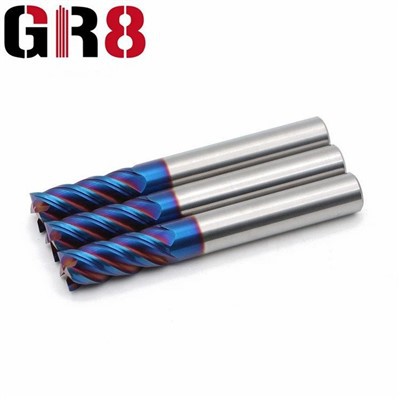
When it comes to woodworking, choosing the right cutting tool is crucial for achieving the desired results. Among the various options available, carbide end mills are a popular choice due to their durability and precision. Two common types of carbide end mills for wood are up - cut and down - cut end mills. In this blog, as a supplier of Carbide End Mills for Wood, I'll explore the differences between these two types to help you make an informed decision for your woodworking projects.
Cutting Direction and Chip Evacuation
The most fundamental difference between up - cut and down - cut carbide end mills lies in their cutting direction, which in turn affects chip evacuation.
An up - cut end mill rotates in a direction that pulls the chips upward. As the end mill cuts into the wood, the flutes of the up - cut mill grab the chips and lift them out of the cut. This is highly beneficial for deep cuts because it ensures efficient chip removal. When chips are not properly evacuated, they can accumulate in the cut, causing overheating and potentially damaging the tool and the workpiece. With an up - cut end mill, the upward flow of chips helps to keep the cutting area clean, reducing friction and extending the life of the end mill.
On the other hand, a down - cut end mill rotates in a direction that pushes the chips downward. This type of end mill is excellent for finishing cuts on the top surface of the wood. By pushing the chips down, it minimizes the risk of tear - out on the top layer of the workpiece. Tear - out occurs when the wood fibers are pulled out rather than cleanly cut, leaving a rough and uneven surface. Down - cut end mills are often used when a smooth, professional finish is required on the top of the wood piece.
Surface Finish
The cutting direction also has a significant impact on the surface finish of the wood.
Up - cut end mills tend to leave a rougher finish on the top surface of the wood. Since the chips are being pulled upward, there is a greater chance of tear - out occurring on the top layer. However, the bottom surface of the cut is usually very smooth. This makes up - cut end mills ideal for applications where the bottom surface quality is more important, such as in dado cuts or when creating slots.
In contrast, down - cut end mills produce a smooth finish on the top surface of the wood. The downward pressure of the chips helps to keep the wood fibers in place during the cutting process, reducing the likelihood of tear - out. But the bottom surface of the cut may be rougher compared to the top. Down - cut end mills are commonly used for edge profiling and face milling where a high - quality finish on the visible surface is essential.
Applications
Based on their characteristics, up - cut and down - cut end mills are suitable for different woodworking applications.


Up - cut end mills are well - suited for roughing operations. They can quickly remove large amounts of material from the wood due to their efficient chip evacuation. For example, when creating deep grooves or pockets in a wooden workpiece, an up - cut end mill can get the job done faster. They are also commonly used in through - cuts, where the end mill passes completely through the wood. The upward chip flow helps to prevent the chips from getting trapped inside the cut. You can explore our Straight Flutes End Mills which include up - cut options for such applications.
Down - cut end mills are more appropriate for finishing operations. They are often used in projects where a smooth and clean top surface is required, such as in cabinet making, furniture construction, and decorative woodworking. For instance, when creating a decorative edge on a wooden tabletop or a cabinet door, a down - cut end mill can provide a professional - looking finish. Our Corn End Mill and Corn End Mill options offer down - cut variations that are perfect for these types of finishing tasks.
Tool Life
Tool life is an important consideration when choosing between up - cut and down - cut end mills.
Up - cut end mills generally have a longer tool life when used for appropriate applications. The efficient chip evacuation reduces the amount of heat generated during the cutting process. Heat is one of the main factors that can cause wear and damage to the cutting edges of the end mill. By keeping the cutting area cool, up - cut end mills are less likely to experience premature wear and can be used for a longer period before needing to be replaced.
Down - cut end mills, while excellent for achieving a smooth finish, may experience more wear on the cutting edges. The downward pressure on the chips can sometimes cause the chips to rub against the cutting edges, leading to increased friction and wear. However, with proper use and maintenance, down - cut end mills can still provide a reasonable tool life.
Choosing the Right End Mill
When selecting between an up - cut and a down - cut carbide end mill for your woodworking project, you need to consider several factors.
First, think about the type of cut you need to make. If you are doing a roughing cut or a through - cut where chip evacuation is crucial, an up - cut end mill is the better choice. If you are focusing on a finishing cut and need a smooth top surface, a down - cut end mill is more appropriate.
Second, consider the quality of the wood. Softer woods are more prone to tear - out, so a down - cut end mill may be a better option for achieving a clean finish. Harder woods can withstand more aggressive cutting, and an up - cut end mill may be suitable for both roughing and finishing operations depending on the specific requirements.
Finally, think about the overall design of your project. If the bottom surface of the cut is more visible or important, an up - cut end mill might be the way to go. If the top surface is the focus, then a down - cut end mill should be your preference.
Conclusion
In conclusion, up - cut and down - cut carbide end mills for wood have distinct differences in terms of cutting direction, chip evacuation, surface finish, applications, and tool life. Understanding these differences is essential for selecting the right end mill for your woodworking projects. As a supplier of Carbide End Mills for Wood, we offer a wide range of up - cut and down - cut end mills to meet your specific needs. Whether you are a professional woodworker or a hobbyist, we can provide you with high - quality tools that will help you achieve excellent results.
If you are interested in purchasing our carbide end mills for wood, we invite you to contact us for more information and to discuss your specific requirements. Our team of experts is ready to assist you in finding the perfect end mill for your next project.
References
- "Woodworking Tools and Techniques" by Tom Begnal
- "The Complete Guide to Carbide Tools" by John Smith
- Industry reports on woodworking tool performance and usage.