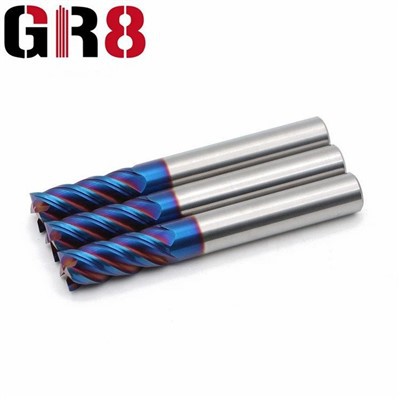
Hey there! As a supplier of Compression End Mills, I often get asked about the cost of these nifty tools. So, let's dig into what goes into the price of a Compression End Mill and why it might vary.
First off, what the heck is a Compression End Mill? Well, it's a specialized cutting tool used in milling operations, especially when working with materials like wood, plastics, and composites. Unlike regular end mills, a Compression End Mill has a unique design that combines up - cut and down - cut flutes. This design helps to reduce chip evacuation problems and minimize tear - out on both the top and bottom surfaces of the workpiece.
Now, onto the cost. There are several factors that can influence how much a Compression End Mill will set you back.
Material Quality
The material used to make the end mill is a major cost driver. High - quality carbide is the go - to material for most Compression End Mills. Carbide is extremely hard, wear - resistant, and can maintain its sharpness for a long time. This means you'll get more cuts out of a carbide end mill before it needs to be replaced. However, high - grade carbide isn't cheap. The raw materials themselves are expensive, and the manufacturing process to turn that carbide into a precision cutting tool requires advanced technology and skilled labor.
On the other hand, there are also end mills made from less expensive materials like high - speed steel (HSS). HSS end mills are more affordable upfront, but they don't last as long as carbide ones. They dull faster, especially when used on hard materials, and you'll end up replacing them more frequently. So, while the initial cost might be lower, the long - term cost could be higher.


Coating
Many Compression End Mills come with a special coating. Coatings can enhance the performance of the end mill in several ways. For example, a titanium nitride (TiN) coating can increase the hardness of the tool, reduce friction, and improve chip flow. A diamond - like carbon (DLC) coating can provide excellent wear resistance and is great for cutting non - ferrous materials.
Applying these coatings adds to the cost of the end mill. The coating materials are expensive, and the coating process requires specialized equipment and expertise. But the benefits can be well worth it. A coated end mill can last longer, cut more smoothly, and produce better - quality finishes, which can save you time and money in the long run.
Size and Geometry
The size and geometry of the Compression End Mill also play a role in its cost. Larger end mills generally cost more than smaller ones because they require more material to manufacture. Additionally, the number of flutes on the end mill can affect the price. End mills with more flutes can provide a smoother finish and higher feed rates, but they are also more complex to manufacture and thus more expensive.
The helix angle of the flutes is another factor. A higher helix angle can improve chip evacuation and reduce cutting forces, but it also requires more precise manufacturing. Specialized geometries, such as those designed for specific applications like profiling or slotting, can also drive up the cost.
Brand and Reputation
You've probably heard the saying, "You get what you pay for." This is especially true when it comes to Compression End Mills. Well - known brands with a good reputation for quality and performance often charge more for their products. These brands have invested a lot in research and development, quality control, and customer support. They also have a track record of producing reliable tools that meet or exceed industry standards.
While you might be tempted to go for a cheaper, lesser - known brand, keep in mind that you could end up with a tool that doesn't perform as well or breaks down quickly. It's often worth paying a bit more for a brand that you can trust.
Market Demand and Supply
Like any other product, the cost of Compression End Mills is also influenced by market demand and supply. If there's a high demand for a particular type of end mill and the supply is limited, the price is likely to go up. On the other hand, if there's an oversupply of end mills in the market, prices may be more competitive.
Now, let's talk about some specific types of end mills and how their costs might compare.
Corn End Mill
A Corn End Mill is a type of end mill with a rounded tip. It's great for contouring and profiling operations. Corn End Mills can vary in cost depending on the factors we've discussed above. A high - quality carbide Corn End Mill with a special coating will be more expensive than a basic HSS one. But if you're doing a lot of contouring work, the investment in a good Corn End Mill can pay off in terms of better finishes and longer tool life.
Straight Flutes End Mills
Straight Flutes End Mills are another common type. They have straight flutes that run parallel to the axis of the tool. These end mills are often used for slotting and side milling. The cost of Straight Flutes End Mills can also vary widely. A carbide Straight Flutes End Mill with a high helix angle and a wear - resistant coating will be pricier than a simple HSS one.
Straight Flutes Engraving End Mills
Straight Flutes Engraving End Mills are designed for fine - detail engraving work. They need to be extremely precise and sharp. As a result, they tend to be more expensive than general - purpose end mills. The cost is justified by the high level of precision and the ability to create intricate designs.
So, how much should you expect to pay for a Compression End Mill? Well, it's hard to give a specific number because there are so many variables. A basic HSS Compression End Mill might cost anywhere from $10 to $50, while a high - end carbide end mill with a special coating could cost $100 or more.
When you're considering the cost of a Compression End Mill, it's important to look at the big picture. Don't just focus on the upfront price. Think about how long the end mill will last, how well it will perform, and how much it will save you in terms of time and labor. A more expensive end mill might actually be a better investment in the long run.
If you're in the market for Compression End Mills, I'd love to help you find the right tool for your needs. Whether you're a small - scale woodworker or a large - scale manufacturer, I have a range of options to suit different budgets and applications. Feel free to reach out to me to discuss your requirements and get a quote. I'm here to make sure you get the best value for your money.
References
- "Tool Materials and Coatings" - Machinery's Handbook
- "Milling Operations and Cutting Tools" - Industrial Technology Textbook