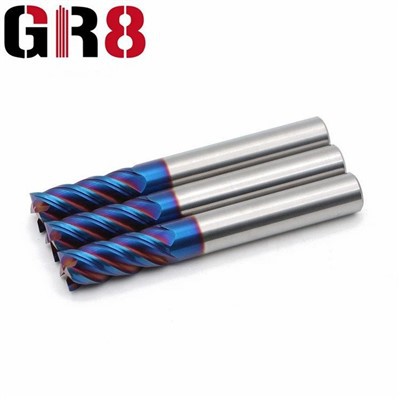
Hey there! As a supplier of flat milling cutters, I've gotten a ton of questions about the vibration situation when using these tools. So, I thought I'd sit down and write this blog to share some insights with you all.
First off, let's talk about what vibration is in the context of using a flat milling cutter. Vibration is basically the back - and - forth or oscillating movement of the cutter during the milling process. It can be a real pain in the neck because it can affect the quality of the cut, the lifespan of the cutter, and even the overall efficiency of the operation.
One of the main factors that cause vibration when using a flat milling cutter is the cutting parameters. If you're running the cutter too fast or with too much feed rate, it can lead to excessive vibration. For example, if you set the spindle speed way too high for the material you're cutting, the cutter will start to vibrate like crazy. The cutter might not be able to handle the high - speed rotation, and this can cause uneven cutting forces, which in turn result in vibration.
The material being cut also plays a huge role. Different materials have different hardness, density, and grain structures. When you're using a flat milling cutter on a hard material like stainless steel, it requires more force to cut through it. If your cutter isn't up to the task, it can start vibrating. On the other hand, if you're cutting a soft material like aluminum, but you're using a cutter that's too aggressive, that can also cause vibration.
Another important factor is the cutter's design and geometry. For instance, the number of flutes on a flat milling cutter can affect its vibration characteristics. A 2 Flutes Flat End Mill is often used for roughing operations. It has fewer flutes, which means it can remove material quickly. However, because it has fewer cutting edges, the cutting forces are more concentrated, and this can sometimes lead to more vibration compared to a cutter with more flutes.
A 65HRC 4 Flutes Flat End Mill, on the other hand, has four flutes. This type of cutter distributes the cutting forces more evenly across the cutting edges. As a result, it can generally produce a smoother cut with less vibration. The higher hardness rating (65HRC) also means it can withstand the forces involved in cutting harder materials without vibrating as much.
The condition of the cutter itself is also crucial. If the cutter is dull, it will require more force to cut through the material. This extra force can cause the cutter to vibrate. A dull cutter can also leave a rough surface finish on the workpiece, which is a sign that vibration might be an issue. Regularly checking and replacing dull cutters is a must to keep vibration under control.
The machine setup is yet another aspect to consider. If the milling machine isn't properly calibrated or if the cutter isn't installed correctly, it can lead to vibration. For example, if the cutter isn't centered in the spindle, it will rotate unevenly, causing vibration. Also, if the machine's bearings are worn out, it can't provide a stable platform for the cutter, and this can result in excessive vibration.
Now, let's talk about the effects of vibration. First of all, it can reduce the quality of the cut. When the cutter vibrates, it can cause uneven surfaces on the workpiece. You might end up with wavy patterns or rough edges, which are definitely not what you want, especially if you're aiming for a high - precision finish.
Vibration can also shorten the lifespan of the cutter. The constant back - and - forth movement puts extra stress on the cutting edges. This can cause the edges to chip or break, reducing the cutter's effectiveness and forcing you to replace it more often.
In terms of efficiency, vibration can slow down the milling process. You might have to reduce the cutting parameters, such as the feed rate and spindle speed, to minimize the vibration. This means it will take longer to complete the job, and your overall productivity will go down.
So, how can we reduce vibration when using a flat milling cutter? Well, first, make sure you select the right cutter for the job. Consider the material you're cutting, the required finish, and the cutting parameters. As I mentioned earlier, a cutter with the appropriate number of flutes and hardness rating can make a big difference.
Properly maintaining your cutters is also essential. Keep them sharp and clean. Regularly inspect them for any signs of wear and tear, and replace them when necessary.
On the machine side, ensure that it's properly calibrated and maintained. Check the spindle alignment, the bearings, and the overall stability of the machine. A well - maintained machine will provide a more stable platform for the cutter, reducing the chances of vibration.


Another thing you can do is use vibration - damping tools or techniques. Some machines come with built - in vibration - damping features, or you can use external damping devices. These can help absorb the vibrations and make the cutting process smoother.
If you're in the market for a high - quality flat milling cutter, we've got a great selection. For example, our Ogee Door Frame Bit Set is designed to provide a smooth and precise cut with minimal vibration. It's perfect for those who are working on door frame milling projects.
In conclusion, understanding the vibration situation when using a flat milling cutter is crucial for achieving high - quality cuts, extending the lifespan of your cutters, and improving overall efficiency. By considering the factors that cause vibration, its effects, and the ways to reduce it, you can make the most out of your milling operations.
If you have any questions about our flat milling cutters or need advice on reducing vibration in your milling processes, don't hesitate to reach out. We're here to help you find the best solutions for your specific needs. Whether you're a small - scale workshop or a large - scale manufacturing plant, we've got the right cutters for you. Let's start a conversation and see how we can work together to improve your milling operations.
References
- Metal Cutting Principles, by Kalpakjian and Schmid
- Machining Handbook, by Society of Manufacturing Engineers